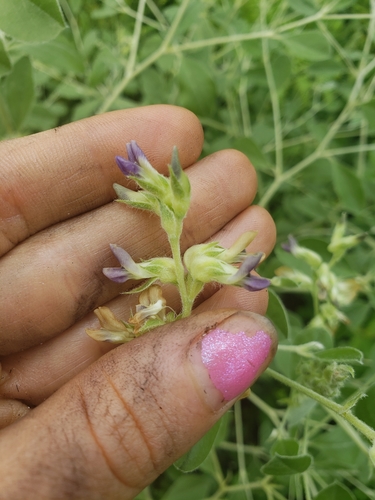
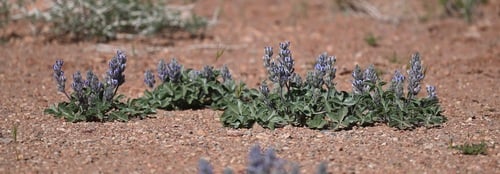
Genista sagittalis
L.
iNaturalist· cc-by-nc
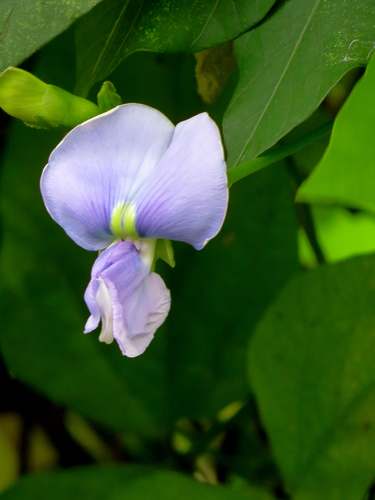
(c) Sebastian J. Dunkl, some rights reserved (CC BY-NC), uploaded by Sebastian J. Dunkl
iNaturalist· cc-by-nc
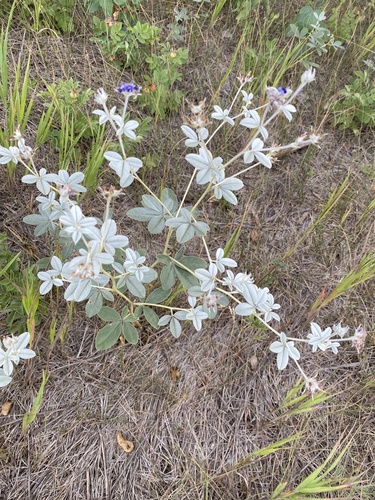
(c) Sebastian J. Dunkl, some rights reserved (CC BY-NC), uploaded by Sebastian J. Dunkl
iNaturalist· cc-by-nc
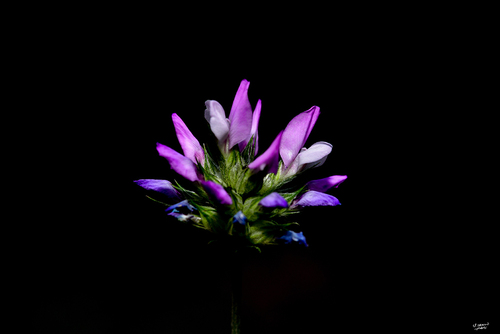
(c) Annette Geiser-Barkhausen, some rights reserved (CC BY-NC), uploaded by Annette Geiser-Barkhausen
Summary
Source: WikipediaGenista sagittalis, called the arrow-jointed broom and winged broom, is a species of flowering plant in the genus Genista, native to central and southern Europe, Ukraine, and Anatolia. Its subspecies Genista sagittalis subsp. delphinensis, called rock broom, has gained the Royal Horticultural Society's Award of Garden Merit.
Description
A deciduous shrub 0.3 m (1 ft) high by 0.9 m (3 ft) wide, growing at a medium rate with a hardy mat-forming habit suited to rock gardens. Nitrogen-fixing plant that attracts wildlife. Adapts to sandy and loamy soils with good drainage and tolerates poor fertility. Grows across mildly acidic, neutral, mildly alkaline, and very alkaline soils. Performs in semi-shade or full sun and tolerates dry, moist, and drought conditions. Hardy to UK zone 4.
Edible Uses
None known.
Medicinal Uses
None known.
Distribution
It is a temperate plant. It suits hardiness zones 5-8.
Where It Grows
Europe, Luxembourg, USA,
Cultivation
A prostrate, very hardy, sometimes spiny, deciduous shrub or small tree that forms a wide mat of flattened, upright stems. It requires full sun and a very well-drained soil. Soil: Sand, Chalk, Loam. In the wild, it often grow on limestone but in cultivation, it is not too particular about soil pH as long as it is not too acidic. pH: Acid, Alkaline, Neutral. Exposure: Exposed or Sheltered. Upper elevation limit:2,700 metres. Lower elevation limit: 0 metres. Blooming Period: April in the south to July in the north. A clumping mat former. Forming a dense prostrate carpet with a limited spread.
Propagation
Seed germinates readily. Cover seed and germinate at 13–18°C (55–65°F). Chipping and soaking may improve germination. Do not transplant once established. Cuttings can be taken in summer or by simple layering. Tip cuttings of about 3–6cm may be taken in mid-summer and rooted in a mist chamber or shaded frame.
Other Uses
A good high-density ground cover and nitrogen fixer. This very hardy, mat-forming plant is well suited to the rock garden and works in borders, mass planting, wildlife gardens, and woodland gardens. Beneficial to insects and other arthropods, providing shelter as well as nectar and pollen.
Synonyms
Also Known As
Winged broom, arrow-jointed broom, hare's foot greenweed
References (1)
- Jackes, D. A., Edible Forest Gardens