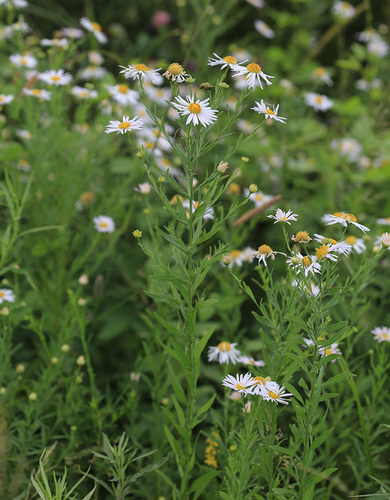
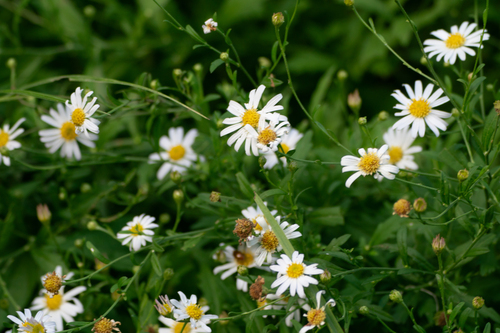
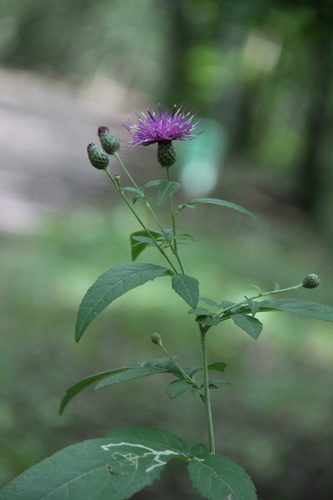
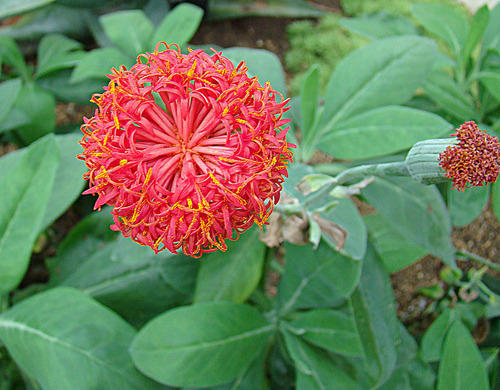
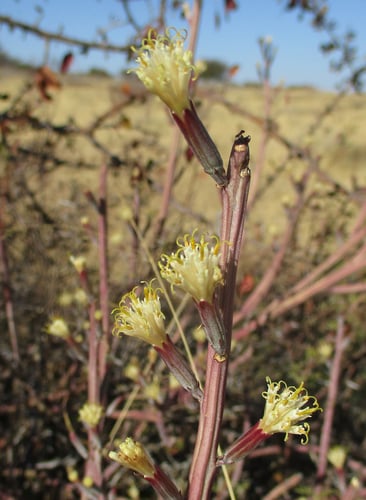
Picris hieracioides
L.
Hawkweed Picris, Hawkweed oxtongue
iNaturalist· cc-by-sa
(c) Gilles San Martin, some rights reserved (CC BY-SA), uploaded by Gilles San Martin
iNaturalist· cc-by-nc
(c) kemushi54, some rights reserved (CC BY-NC)
iNaturalist· cc-by-nc
(c) Marcel, some rights reserved (CC BY-NC), uploaded by Marcel
Summary
Source: WikipediaPicris hieracioides, or hawkweed oxtongue, is a species of flowering plant in the family Asteraceae.
Description
A herb. It can grow for 2 or for several years. It grows 60-90 cm tall. The leaves are divided or have large teeth. They are bristly on the veins underneath. The leaves near the base are fattened sword shaped and 7-20 cm long. They narrow at the base to a short leaf stalk. The leaves higher up clasp the stem. The flower is bright yellow. Possibly now Picris angustifolia
Edible Uses
Young leaves can be eaten raw or cooked as a pot-herb. They are not particularly good raw and are somewhat better when cooked, with a rather bitter flavour.
Traditional Uses
The root is used as a famine food. The leaves are used in vegetable soup. The young leaves and stems are eaten in salads. The fruit are eaten raw.
Medicinal Uses
The bitter leaves have been used as a febrifuge. The plant is mixed with Swertia pedicellata, pounded to a paste, and applied to the forehead to treat headaches.
Distribution
It is a temperate plant. It grows in grassy habitats and scrub. In China it is on sandy soils between 200-3,600 m above sea level. In Sichuan and Yunnan.
Where It Grows
Andorra, Armenia, Asia, Australia, Bhutan, Britain, Caucasus, Central Asia, China, Czech Republic, Europe, France, Greece, Hawaii, Himalayas, India, Italy, Kazakhstan, Luxembourg, Mediterranean, Mongolia, Myanmar, New Zealand, Norfolk Island, North America, Pacific, Russia, SE Asia, Sicily, Slovenia, South Africa, Tasmania, Tibet, Vietnam,
Cultivation
Prefers a dryish soil but succeeds in most soils. Dislikes shade. Wild plants are an indicator of calcareous soils. Seed is often produced apomictically. Any seedlings from this seed will be genetically identical to the parent plant.
Propagation
Sow seed in spring directly in situ, covering it only very lightly. Germination should occur fairly quickly.
Other Uses
None known Special Uses
Other Information
It is sold in local markets.
Notes
There are about 45 Picris species. The plant listed in Tasmania by Curtis is Picris angustifolia.
Synonyms
Also Known As
Cicore ciucci, Darnitch, Horeil jestrabnikovity, Jia luo bing bing, Kumaicai, Ox-Tongue, Radicchio peloso, Spurraine
References (24)
- Ambasta, S.P. (Ed.), 2000, The Useful Plants of India. CSIR India. p 455
- Biscotti, N. & Pieroni, A., 2015, The hidden Mediterranean diet: wild vegetables traditionally gathered and consumed in the Gargano area, Apulia, SE Italy. Acta Societatis Botanicorum Poloniae 84 (3): 327-338
- Biscotti, N. et al, 2018, The traditional food use of wild vegetables in Apulia (Italy) in the light of Italian ethnobotanical literature. Italian Botanist 5:1-24
- Blamey, M and Grey-Wilson, C., 2005, Wild flowers of the Mediterranean. A & C Black London. p 463
- Cerne, M., 1992, Wild Plants from Slovenia used as Vegetables. Acta Horticulturae 318
Show all 24 references Hide references
- Chen, W., et al, 2021, Wild plants used by the Lhoba people in Douyu Village, characterized by high mountains and valleys, in southeastern Tibet, China. Journal of Ethnobiology and Ethnomedicine (2021) 17:46
- Cribb, A.B. & J.W., 1976, Wild Food in Australia, Fontana. p 152
- Crowe, A., 1997, A Field Guide to the Native Edible Plants of New Zealand. Penguin. p 94
- Curtis, W.M., 1963, The Students Flora of Tasmania Vol 2 p 383
- Flora of Australia Volume 49, Oceanic Islands 1, Australian Government Publishing Service, Canberra. (1994) p 369
- Hedrick, U.P., 1919, (Ed.), Sturtevant's edible plants of the world. p 495
- Kang, Y., et al, 2012, Wild food plants and wild edible fungi in two valleys on the Qinling Mountains (Shaanxi, central China) Journal of Ethnobiology and Ethnomedicine; 9:26
- Lazarides, M. & Hince, B., 1993, Handbook of Economic Plants of Australia, CSIRO. p 189
- Nanagulyan, S., et al, 2020, Wild plants and fungi sold in the markets of Yerevan (Armenia). Journal of Ethnobiology and Ethnomedicine 16:26
- PARMENTIER,
- Pasta, S., et al, 2020, An Updated Checklist of the Sicilian Native Edible Plants: Preserving the Traditional Ecological Knowledge of Century-Old Agro-Pastoral Landscapes. Frontiers in Plant Science. Volume 11|Article 388
- Pieroni, A., 1999, Gathered wild food plants in the Upper Valley of the Serchio River (Garfagnana), Central Italy. Economic Botany 53(3) pp 327-341
- Plants for a Future database, The Field, Penpol, Lostwithiel, Cornwall, PL22 0NG, UK. http://www.scs.leeds.ac.uk/pfaf/
- Sansanelli, S., et al, 2017, Ethnobotanical survey of wild food plants traditionally collected and consumed in the Middle Agri Valley (Basilicata region, southern Italy). Journal of Ethnobiology and Ethnomedicine (2017) 13:50
- Sasi, R. & Rajendran, A., 2012, Diversity of Wild Fruits in Nilgiri Hills of the Southern Western Ghats - Ethnobotanical Aspects. IJABPT, 3(1) p 82-87
- Simkova, K. et al, 2014, Ethnobotanical review of wild edible plants used in the Czech Republic. Journal of Applied Botany and Food Quality 88, 49-67
- Singh, H.B., Arora R.K.,1978, Wild edible Plants of India. Indian Council of Agricultural Research, New Delhi. p 32
- Sp. pl. 2:792. 1753
- Urgamal, M., Oyuntsetseg, B., Nyambayar, D. & Dulamsuren, Ch. 2014. Conspectus of the vascular plants of Mongolia. (Editors: Sanchir, Ch. & Jamsran, Ts.). Ulaanbaatar, Mongolia. “Admon“ Press. 334pp. (p. 199-230).