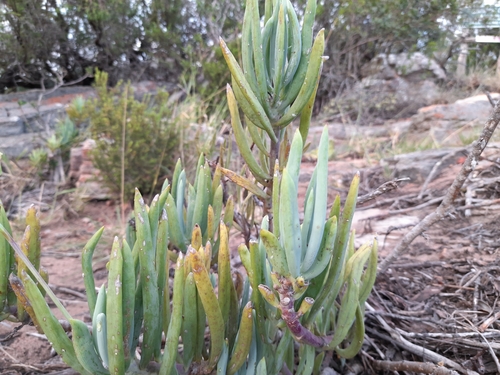
Artemisia absinthium
Linnaeus
Wormwood, Absinth
iNaturalist· cc-by-nc
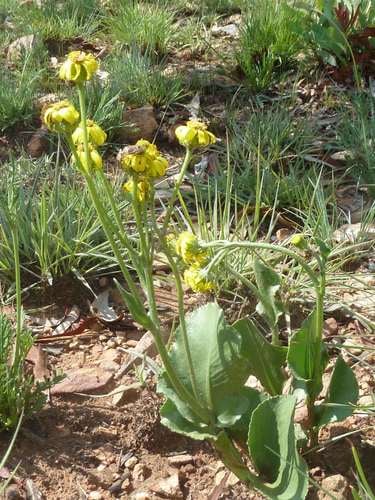
(c) Татьяна Губина, some rights reserved (CC BY-NC), uploaded by Татьяна Губина
iNaturalist· cc-by-nc
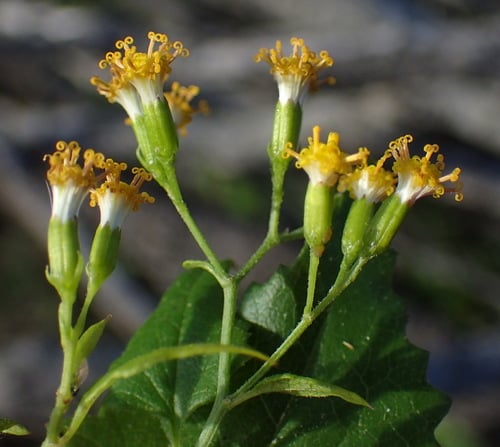
(c) ekenitr, some rights reserved (CC BY-NC)
iNaturalist· cc-by-sa
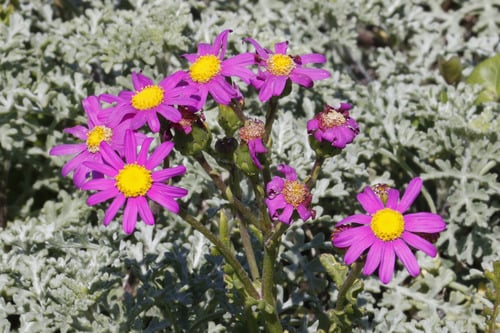
(c) Matt Lavin, some rights reserved (CC BY-SA)
Summary
Source: WikipediaArtemisia absinthium, otherwise known as common wormwood, is a species of Artemisia native to North Africa and temperate regions of Eurasia, and widely naturalized in Canada and the northern United States. It is grown as an ornamental plant and is used as an ingredient in the spirit absinthe and some other alcoholic beverages.
Description
A perennial herb. It grows 60-90 cm high and 50-60 cm wide. It has a woody base. The leaves are finely divided and silvery. It spread by rhizomes or underground stems. The stems above ground can also form roots. The flowers are in flower heads which occur in sprays. They are dull yellow.
Edible Uses
Edible Parts: Edible Uses: Condiment Leaves are occasionally used as a flavouring. Caution is advised, prolonged use is known to have a detrimental effect - see the notes above on toxicity. Absinthe - a distilled, highly alcoholic drink usually produced in France, Switzerland, Australia, Spain, and the Czech Republic.
Traditional Uses
CAUTION: The plant is poisonous. Absinthe oil and alcohol can cause death. The leaves have been used to flavour sauces. The leaves are cooked. The flowers are also used for herbal teas. The above ground parts are used for spirits. The flowering tops are used to make geese and duck dishes less greasy.
Medicinal Uses
Anthelmintic Antiseptic Antispasmodic Appetizer Carminative Cholagogue Emmenagogue Febrifuge Homeopathy Hypnotic Stimulant Stomachic Tonic Vermifuge Wormwood is a very bitter plant with a long history of use as a medicinal herb. It is valued especially for its tonic effect on the liver, gallbladder and digestive system, and for its vermicidal activity. It is an extremely useful medicine for those with weak and under-active digestion. It increases stomach acid and bile production, improving digestion and the absorption of nutrients. It also eases wind and bloating and, if taken regularly, helps the body return to full vitality after a prolonged illness. The leaves and flowering shoots are anthelmintic, anti-inflammatory, antiseptic, antispasmodic, antitumor, carminative, cholagogue, emmenagogue, febrifuge, hypnotic, stimulant, stomachic, tonic and vermifuge. The plant is harvested as it is coming into flower and then dried for later use. Use with caution, the plant should be taken internally in small doses for short-term treatment only, preferably under the supervision of a qualified practitioner. It should not be prescribed for children or pregnant women. See also the notes above on toxicity. The extremely bitter leaves are chewed to stimulate the appetite. The bitter taste on the tongue sets off a reflex action, stimulating stomach and other digestive secretions. The leaves have been used with some success in the treatment of anorexia nervosa. The plant is applied externally to bruises and bites. A warm compress has been used to ease sprains and strained muscles. A homeopathic remedy is made from the leaves. It is used to stimulate bile and gastric juice production and to treat disorders of the liver and gall bladder.
Known Hazards
Most chemotypes of A. absinthium contain (−)-α- and/or (+)-β-thujone, though some do not. (−)-α-Thujone by itself is a GABAA receptor antagonist that can cause convulsions when administered in large amounts to animals and humans. However, there is only one case of documented toxicity of wormwood, in which a 31-year-old man drank 10 mL of steam-distilled pure volatile oil of wormwood, wrongly believing it was absinthe liqueur. Medicinal extracts of wormwood have not been shown to cause seizures or other adverse effects at usual doses. Thujones have not been shown to be the cause of excessive doses' toxicity for any kind of wormwood extracts, including absinthe.
Distribution
It is a temperate plant. It grows on hillsides, steppe, scrub, forest margins between 1100-1500 m altitude in China. It is frost hardy. In Argentina it grows from sea level to 1,000 m above sea level. It suits hardiness zones 4-10.
Where It Grows
Afghanistan, Africa, Albania, Algeria, Andorra, Argentina, Armenia, Asia, Australia, Balkans, Belarus, Belgium, Bolivia, Brazil, Britain, Bulgaria, Cambodia, Canada, Caucasus, Central Asia, Chile, China, Colombia, Crete, Croatia, Cuba, Czech Republic, Denmark, Dominican Republic, Ecuador, Egypt, Eritrea, Estonia, Ethiopia, Europe*, Finland, France, Georgia, Germany, Greece, Greenland, Guatemala, Haiti, Hawaii, Himalayas, Honduras, Hungary, Iceland, India, Indonesia, Iran, Iraq, Ireland, Italy, Jamaica, Japan, Kazakhstan, Kyrgyzstan, Latvia, Lebanon, Libya, Lithuania, Luxembourg, Macedonia, Mediterranean, Mexico, Moldova, Mongolia, Morocco, Myanmar, Netherlands, New Zealand, North Africa, North America, Pacific, Pakistan, Paraguay, Poland, Portugal, Puerto Rico, Romania, Russia, Sahara, Serbia, Siberia, Slovenia, South America, Spain, SW Asia, Switzerland, Syria, Taiwan, Tajikistan, Tasmania, Thailand, Tibet, Tunisia, Turkey, Türkiye, Turkmenistan, Ukraine, Uruguay, USA, Uzbekistan, Venezuela, Vietnam, West Indies, Xinjiang, Yugoslavia,
Cultivation
Succeeds in any soil but it is best in a poor dry one with a warm aspect. Established plants are very drought tolerant. Plants are longer lived, more hardy and more aromatic when they are grown in a poor dry soil. Easily grown in a well-drained circumneutral or slightly alkaline loamy soil, preferring a sunny position. Prefers a shady situation according to another report. Tolerates a pH in the range 4.8 to 8.2. Wormwood is occasionally grown in the herb garden, there are some named forms. The growing plant is said to inhibit the growth of fennel, sage, caraway, anise and most young plants, especially in wet years. Wormwood is a good companion for carrots, however, helping to protect them from root fly. This herb was at one time the principal flavouring in the liqueur 'Absinthe' but its use has now been banned in most countries since prolonged consumption can lead to chronic poisoning, epileptiform convulsions and degeneration of the central nervous system. The scent of the plant attracts dogs. Members of this genus are rarely if ever troubled by browsing deer. The aerial parts can be harvested in summer when they are in full bloom, while roots can be harvested in autumn. Artemisia typically flowers in summer. Artemisia species can vary in growth rate, but many are moderately fast-growing, reaching maturity within 1-2 years under optimal conditions.
Propagation
Seed - surface sow from late winter to early summer in a greenhouse. The seed usually germinates within 2 - 26 weeks at 15°c. When they are large enough to handle, prick the seedlings out into individual pots. They can be planted out in the summer, or kept in pots in a cold frame for the winter and then planted out in the spring. Cuttings of half-ripe wood, July/August in a frame. Division in spring or autumn.
Other Uses
Repellent Strewing Agroforestry uses: Artemisia species are often used for soil improvement, as ground cover, and in companion planting due to their pest-repellent properties. Some species are also used for erosion control. The fresh or dried shoots are said to repel insects and mice, they have been laid amongst clothing to repel moths and have also been used as a strewing herb. An infusion of the plant is said to discourage slugs and insects. The plant contains substances called sesquiterpene lactones, these are strongly insecticidal. 1. Nectary - Flowers rich in nectar and pollen: Yes – Artemisia species produce flowers that can provide nectar and pollen, attracting various pollinators, including bees. 2. Wildlife - Food (Fruit, Seeds, Leaf litter, Shelter, Nesting, Roosting): Yes – The leaves of some Artemisia species are consumed by various insects and herbivores. Additionally, the plant can provide cover for small wildlife. 3. Invertebrate Shelter (Overwintering sites, Leaf litter, Groundcover): Yes – The dense foliage can offer shelter and overwintering sites for beneficial insects, and the leaf litter can provide habitat for various invertebrates. 4. Pest Confuser (Smell): Yes – Many Artemisia species are aromatic and can confuse or repel pests due to their strong scent, which may deter some insects. Special Uses
Other Information
It is sold in local markets. It is cultivated.
Notes
It is used in medicine. There are about 300 Artemisia species. The thujone in absinthe is addictive.
Synonyms
Also Known As
Abzinda, Ajenjo, Axenxo, Ch'igun, Damar, Donzell, Erbo bon, Erbo bono, Ferer urom, Gieshi, Havshan, Incienso, Indhana, Koirohi, Machipattri, Madderwood, Mastaru, Moshipatri, Mugwort, Nilampala, Oshindr, Osjenac, Panul, Polyn', Pravi pelin, Serpana, Tartiha, Tethwen, Tirunitripachcha, Urittige, Uruvalu, Vermeles, Vilayathi afsanthin
References (52)
- Ambasta S.P. (Ed.), 2000, The Useful Plants of India. CSIR India. p 55
- Bircher, A. G. & Bircher, W. H., 2000, Encyclopedia of Fruit Trees and Edible Flowering Plants in Egypt and the Subtropics. AUC Press. p 42
- Bodkin, F., 1991, Encyclopedia Botanica. Cornstalk publishing, p 104
- Bonet, M. A. & Valles, J., 2002, Use of non-crop food vascular plants in Montseny biosphere reserve (Catalonia, Iberian Peninsula). International Journal of Food Sciences and Nutrition (2002) 53, 225–248
- Bremness, L., 1994, Herbs. Collins Eyewitness Handbooks. Harper Collins. p 150
Show all 52 references Hide references
- Brickell, C. (Ed.), 1999, The Royal Horticultural Society A-Z Encyclopedia of Garden Plants. Convent Garden Books. p 140
- Brouk, B., 1975, Plants Consumed by Man. Academic Press, London. p 333
- Brown, D., 2002, The Royal Horticultural Society encyclopedia of Herbs and their uses. DK Books. p 132
- Bussman, R. W., et al, 2016, A comparative ethnobotany of Khevsureti, Samtskhe-Javakheti, Tusheti, Svaneti, and Racha-Lechkhumi, Republic of Georgia (Sakartvelo), Caucasus. Journal of Ethnobiology and Ethnomedicine (2016) 12:4
- Bussman, R. W., et al, 2021, Unity in diversity—food plants and fungi of Sakartvelo (Republic of Georgia), Caucasus. Journal of Ethnobiology and Ethnomedicine (2021) 17:72 p 6
- Cerne, M., 1992, Wild Plants from Slovenia used as Vegetables. Acta Horticulturae 318
- Ciocarlan, N. & Ghendov, V., 2015, Ethnobotanical and Ecological Studies of Wild Edible Plants from Bugeac Steppe, Republic of Moldova. Journal of EcoAgriTourism. Cailta terra Vol. 11(2):
- Cundall, P., (ed.), 2004, Gardening Australia: flora: the gardener's bible. ABC Books. p 190
- Denes, A., et al, 2012, Wild plants used for food by Hungarian ethnic groups living in the Carpathian Basin. Acta Societatis Botanicorum Poloniae 81 (4): 381-396
- Dogan, Y., et al, 2004, The Use of Wild Edible Plants in Western and Central Anatolia (Turkey). Economic Botany 58(4) pp. 684-690
- Dolina, K. & Luczaj, L., 2014, Wild food plants used on the Dubrovnik coast (south-eastern Croatia) Acta Soc Bot Pol 83(3):175–181
- Ertug, F, Yenen Bitkiler. Resimli Türkiye Florası -I- Flora of Turkey - Ethnobotany supplement
- Esperanca, M. J., 1988. Surviving in the wild. A glance at the wild plants and their uses. Vol. 1. p 21
- Facciola, S., 1998, Cornucopia 2: a Source Book of Edible Plants. Kampong Publications, p 33
- Hedrick, U.P., 1919, (Ed.), Sturtevant's edible plants of the world. p 73
- Hibbert, M., 2002, The Aussie Plant Finder 2002, Florilegium. p 33
- INFOODSUpdatedFGU-list.xls
- Joyce, D., 1998, The Garden Plant Selector. Ryland, Peters and Small. p 207
- Kalle, R. & Soukand, R., 2012, Historical ethnobotanical review of wild edible plants of Estonia (1770s-1960s) Acta Societatis Botanicorum Poloniae 81(4):271-281
- Kew Plants of the World Online
- Kiple, K.F. & Ornelas, K.C., (eds), 2000, The Cambridge World History of Food. CUP p 434, 1883
- Kybal, J., 1980, Herbs and Spices, A Hamlyn Colour Guide, Hamlyn Sydney p 46
- Ling Yuou-ruen & C. J. Humphries, ASTERACEAE (Draft), Tribe ANTHEMIDEAE Cassini, in Flora of China
- Luizza, M. W., et al., 2013, Local Knowledge of Plants and their uses among Women in the Bale Mountains, Ethiopia. Ethnobotany Research & Applications 11:315-339
- Lukasz, L., et al, 2013, Wild edible plants of Belarus: from Rostafiński’s questionnaire of 1883 to the present. Journal of Ethnobiology and Ethnomedicine 2013, 9:21
- Mabey, R., 1973, Food for Free. A Guide to the edible wild plants of Britain, Collins. p 142
- Miguel, E., et al, 1989, A checklist of the cultivated plants of Cuba. Kulturpflanze 37. 1989, 211-357
- Nanagulyan, S., et al, 2020, Wild plants and fungi sold in the markets of Yerevan (Armenia). Journal of Ethnobiology and Ethnomedicine 16:26
- Paczkowska, G. & Chapman, A.R., 2000, The Western Australian Flora. A Descriptive Catalogue. Western Australian Herbarium. p 155
- Pieroni, A., 1999, Gathered wild food plants in the Upper Valley of the Serchio River (Garfagnana), Central Italy. Economic Botany 53(3) pp 327-341
- Pieroni, A. & Soukand, R., 2017, The disappearing wild food and medicinal plant knowledge in a few mountain villages of North-Eastern Albania. Journal of Applied Botany and Food Quality 90, 58 - 67
- Pieroni, A. & Soukand, R., 2018, Forest as Stronghold of Local Ecological Practice: Currently Used Wild Food Plants in Polesia, Northern Ukraine. Economic Botany, XX(X) pp. 1-21
- Pieroni, A., et al, 2020, Wild food plants traditionally gathered in central Armenia: archaic ingredients or future sustainable foods? Environment, Development and Sustainability. Springer p 7
- Plants of Haiti Smithsonian Institute http://botany.si.edu
- Pruse, B., et al, 2021, Active Wild Food Practices among Culturally Diverse Groups in the 21st Century across Latgale, Latvia. Biology 2021, 10, 551.
- Rexhepi, B., et al, 2018, Ethnobotanical Study of Wild Edible Plants in Pelagonia Region (Southwestern Macedonia) International Journal of Advances in Science Engineering and Technology, Vol. 6 (1) p 57
- Seidemann J., 2005, World Spice Plants. Economic Usage, Botany, Taxonomy. Springer. p 52
- Shikov, A. N. et al, 2017, Traditional and Current Food Use of Wild Plants Listed in the Russian Pharmacopoeia. Frontiers in Pharmacology. Vol. 8 Article 841
- Soukand, R., et al, 2017, Multi-functionality of the few: current and past uses of wild plants for food and healing in Liubań region, Belarus. Journal of Ethnobiology and Ethnomedicine (2017) 13:10
- Sp. pl. 2:848. 1753
- Staples, G.W. and Herbst, D.R., 2005, A tropical Garden Flora. Bishop Museum Press, Honolulu, Hawaii. p 154
- Tardio, J., et al, 2006, Ethnobotanical review of wild edible plants in Spain. Botanical J. Linnean Soc. 152, 27-71
- Tozer, F., 2007, The Uses of Wild Plants. Green Man Publishing. p 37
- Trendafilova, A., et al, 2020, Research Advances on Health Effects of Edible Artemisia Species and Some Sesquiterpene Lactones Constituents. Foods 2021, 10, 65. p 4
- van Wyk, B., 2005, Food Plants of the World. An illustrated guide. Timber press. p 73
- Wiersema, J. H. & Leon, B., 2013, World Economic Plants. A Standard Reference CRC Press. 2nd Ed. p 71
- Young, J., (Ed.), 2001, Botanica's Pocket Trees and Shrubs. Random House. p 106