Physalis pruinosa
L.
Ground cherry, Strawberry tomato, Husk tomato
iNaturalist· cc-by-nc
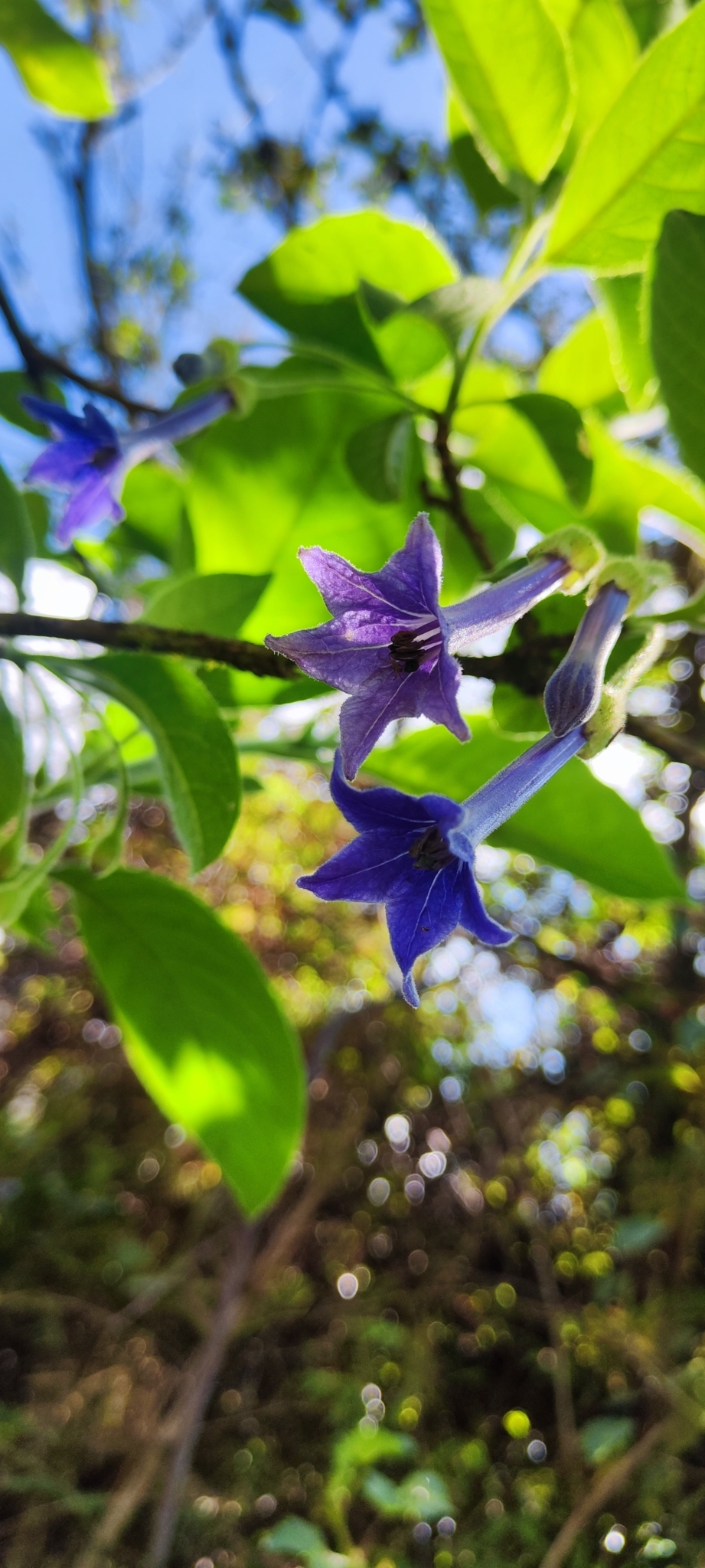
(c) Sindy Monserrat Cortes Echeagaray, some rights reserved (CC BY-NC), uploaded by Sindy Monserrat Cortes Echeagaray
iNaturalist· cc-by-nc
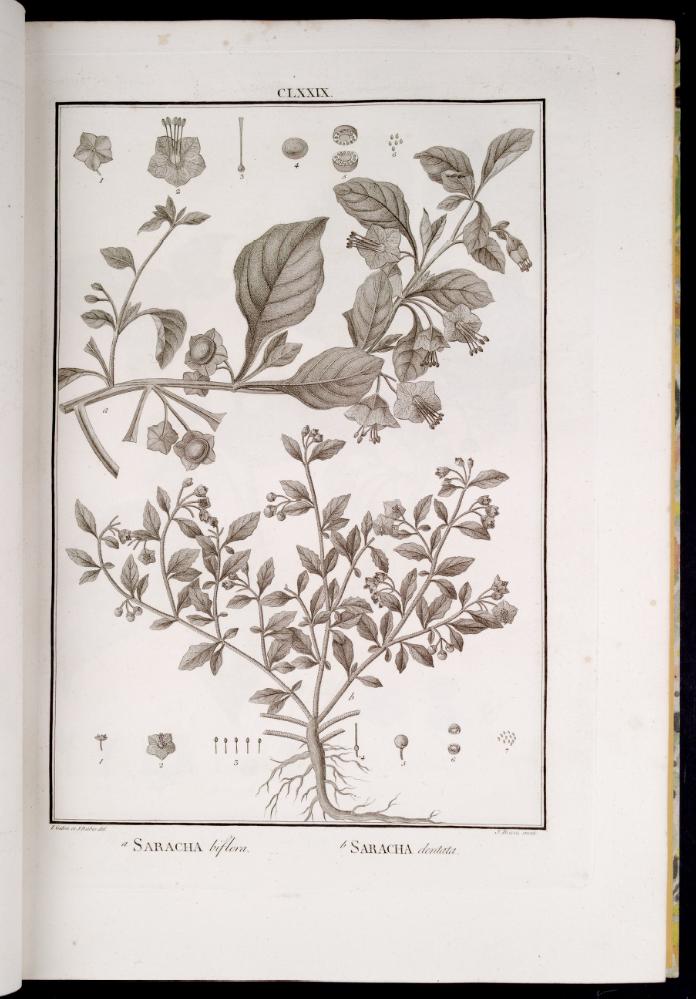
(c) Luis Humberto Vicente-Rivera, some rights reserved (CC BY-NC), uploaded by Luis Humberto Vicente-Rivera
iNaturalist· cc-by-nc
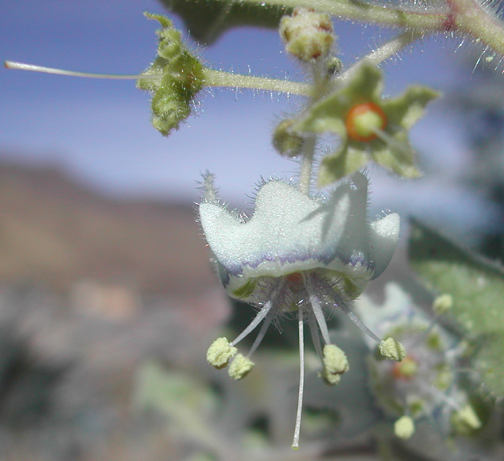
(c) Umar Musa, some rights reserved (CC BY-NC), uploaded by Umar Musa
Summary
Source: WikipediaPhysalis pruinosa is a plant in the genus Physalis in the nightshade family Solanaceae, often referred to as ground cherry or husk tomato. It is a native species in a range extending from northern Mexico through Central America. The plant has a low, spreading habit, and fruits develop in a papery husk, as is characteristic of the genus. While most parts of the plant are toxic to humans due to the presence of solanine and solanidine, the fruit becomes edible (and sweet) once it has ripened to yellow. (The papery husk, a calyx, remains toxic and should not be eaten.) The fruit's flavor is similar in some respects to that of a ripe tomatillo, but notably has a strong flavor of pineapple as well, a fact reflected in the name of a common commercial variety, "Cossack Pineapple". The ripe fruit of Physalis pruinosa var. argentina J. M. Toledo & Barboza is a food source for the Pilagá ethnic group. It is currently the subject of research into the possibility of developing a genetically modified variety for industrialized agriculture. The research involves CRISPR genome editing which may be able to accelerate the domestication process.
Description
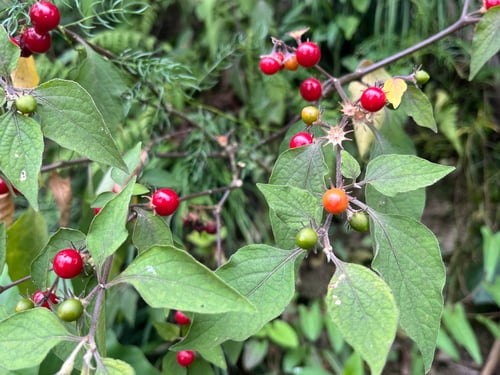
A herb. It is like tomatillo but smaller. Plants grow 30 cm tall. The leaves are oval or heart shaped. The flowers are yellow-white. The flowers have both sexes and are self-fertile. Plants are pollinated by insects but one plant will set fruit. The fruit are orange-red. They are 1.5-2 cm across.
Edible Uses
The fruit can be eaten raw or used in pies and preserves, and has a delicious bittersweet flavour. Each fruit is naturally enclosed in a papery calyx that protects it from pests and the elements — however, this calyx is toxic and must not be eaten.
Traditional Uses
The ripe fruit is eaten after the husk is removed. It can be eaten fresh or used in desserts. It can be used for jams, conserves, pies, sauces and cakes.
Medicinal Uses
None known
Known Hazards
The calyx (papery husk) is toxic and should not be consumed.
Distribution
It is a temperate plant. They do best in full sun or light shade. Plants are sensitive to frost. It needs a fertile soil.
Where It Grows
Australia, Mexico, North America, South America, USA,
Cultivation
Plants are easily grown from seed. Plants should be spaced 60-90 cm apart.
Propagation
Sow seed in March or April in a greenhouse, barely covering it. Germination is typically quick and prolific. Diurnal temperature fluctuations assist germination. Once seedlings are large enough to handle, prick them out into individual pots of fairly rich soil and plant out after the last expected frosts, providing cloche protection until they are growing away well.
Other Uses
None known Special Uses
Production
Plants produce in the first year.
Notes
There are about 75-100 Physalis species. Physalis pubescens and Physalis pruinosa have been confused. See Taxon refrence. Physalis pubescens in in North America.
Nutrition
| Part | Moisture | kJ | kcal | Protein | Vit A | Vit C | Iron | Zinc |
|---|---|---|---|---|---|---|---|---|
| Fruit | 79.2 | 297 | 71 | 2.8 | — | — | — | — |
Synonyms
Also Known As
Tomate de culebra
References (13)
- Bodkin, F., 1991, Encyclopedia Botanica. Cornstalk publishing, p 790
- Facciola, S., 1998, Cornucopia 2: a Source Book of Edible Plants. Kampong Publications, p 235 (See Physalis pubescens)
- Flowerdew, B., 2000, Complete Fruit Book. Kyle Cathie Ltd., London. p 110
- Food Composition Tables for the Near East. http://www/fao.org/docrep No. 478
- Gouldstone, S., 1983, Growing your own Food-bearing Plants in Australia. Macmillan p 130
Show all 13 references Hide references
- John, L., & Stevenson, V., 1979, The Complete Book of Fruit. Angus & Robertson p 95
- Kermath, B. M., et al, 2014, Food Plants in the Americas: A survey of the domesticated, cultivated and wild plants used for Human food in North, Central and South America and the Caribbean. On line draft. p 651
- Lyle, S., 2006, Discovering fruit and nuts. Land Links. p 323
- Martinez, M., 1993, The Correct Application of Physalis pruinosa L. (Solanaceae) Taxon, Vol. 42, No. 1, pp. 103-104
- Plants for a Future database, The Field, Penpol, Lostwithiel, Cornwall, PL22 0NG, UK. http://www.scs.leeds.ac.uk/pfaf/
- Samuels, J., 2015, Biodiversity of Food Species of the Solonaceae Family: A Preliminary Taxonomic Inventory of Subfamily Solanoideae. Resources 2015, 4. 277-322
- Segura, S., et al, 2018, The edible fruit species in Mexico. Genet Resour Crop Evol (2018) 65:1767–1793
- Sp. pl. 1:184. 1753