Phillyrea latifolia
L.
Mockpriveterinary, Phillyrea, Jasmine box
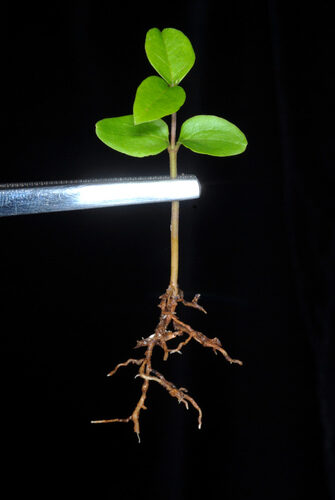
iNaturalist· cc-by-nc
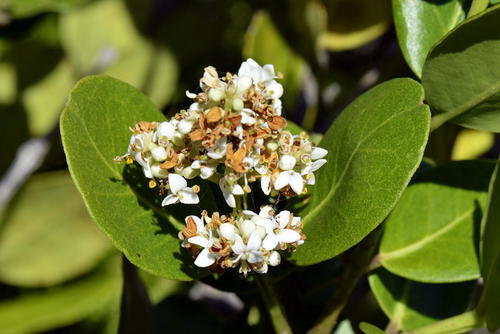
(c) Stefano Doglio, some rights reserved (CC BY-NC), uploaded by Stefano Doglio
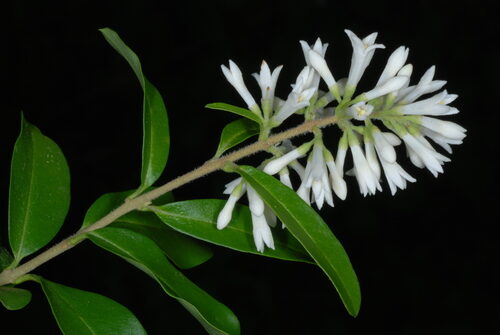
iNaturalist· cc-by-nc
(c) Stefano Doglio, some rights reserved (CC BY-NC), uploaded by Stefano Doglio
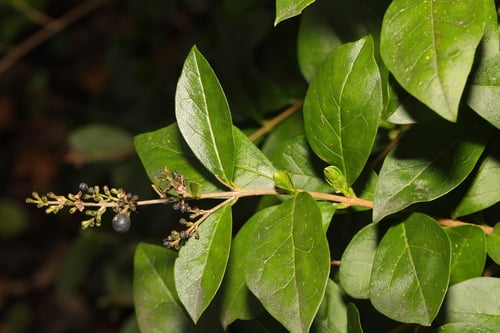
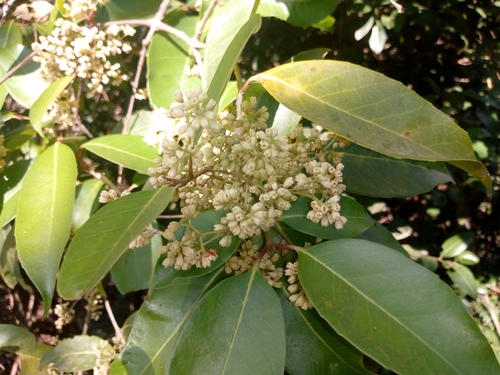
iNaturalist· cc-by
(c) Drepanostoma, some rights reserved (CC BY), uploaded by Drepanostoma
Summary
Source: WikipediaPhillyrea latifolia, commonly known as green olive tree or mock privet, is a species of tree in the family Oleaceae. It is native to the Mediterranean Basin, from Morocco and Portugal in the west, to the Levant in the east.
Description
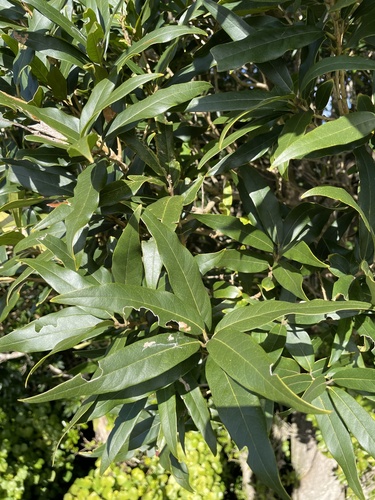
A rounded tree. It can be 9-10 m high. It spreads 8 m wide. It keeps its leaves throughout the year. The bark is smooth and lightly ridged. The leaves are oval to sword shaped and 5 cm long by 4 cm wide. The leaves are dark green and glossy on top. They have shallow teeth. Flowers grow in clusters in the axils of the upper leaves. The flowers are small and greenish white. The fruit are small and round. They are 1 cm across. They turn purple, then black. Each fruit contains a single seed.
Edible Uses
The fruit is olive-like and possibly edible. It is an ovoid drupe roughly 6mm in diameter containing a single seed.
Medicinal Uses
The plant has diuretic and emmenagogue properties and has also been used as a mouthwash.
Distribution
It is native to S. Europe. It will grow on most soils. It can tolerate salt winds. Kyneton Botanical Gardens. It suits hardiness zones 7-10.
Where It Grows
Australia, Britain, Europe*, France, Greece, Italy, Mediterranean, Portugal, Slovenia, Spain, Turkey, Türkiye,
Cultivation
Thrives in any soil of moderate quality. Prefers a neutral to acid soil but tolerates some lime. Succeeds in sun or semi-shade. Tolerates maritime exposure. Plants are hardy to about -15°c. A slow growing plant. The flowers have a rich fruity perfume. This species is cultivated for its edible olive-like fruit in southern Europe. (This report is possibly a mistake.) Plants in this genus are notably resistant to honey fungus.
Propagation
Seed is best sown in a cold frame as soon as it is ripe; stored seed should be sown as early in the year as possible. Prick seedlings into individual pots when large enough to handle and grow on in a greenhouse for at least their first winter, then plant out in late spring or early summer after the last frosts. Half-ripe wood cuttings of 7–10cm with a heel, taken in July or August in a frame, take 15 months to root at a high percentage. Layering in autumn takes around 12 months.
Other Uses
This plant takes pruning well and can be grown as a hedge, tolerating maritime exposure, though growth is fairly slow. Trimming is best done in spring. The wood is fine-grained and used in turning. Excellent charcoal can be obtained from the stems.
Synonyms
Also Known As
širokolistna zelenika
References (10)
- Blamey, M and Grey-Wilson, C., 2005, Wild flowers of the Mediterranean. A & C Black London. p 174
- Coombes, A.J., 2000, Trees. Dorling Kindersley Handbooks. p 231
- Cundall, P., (ed.), 2004, Gardening Australia: flora: the gardener's bible. ABC Books. p 1025
- Harris, E & J., 1983, Field Guide to the Trees and Shrubs of Britain. Reader's Digest. p 120
- Hedrick, U.P., 1919, (Ed.), Sturtevant's edible plants of the world. p 487
Show all 10 references Hide references
- http://www.botanic-gardens-ljubljana.com/en/plants
- Plants for a Future database, The Field, Penpol, Lostwithiel, Cornwall, PL22 0NG, UK. http://www.scs.leeds.ac.uk/pfaf/
- Ryan, S., 2008, Dicksonia. Rare Plants Manual. Hyland House. p 47
- Sfikas, G., 1984, Trees and shrubs of Greece. Efstathiadis Group. Athens. p 180
- Sp. pl. 1:8. 1753