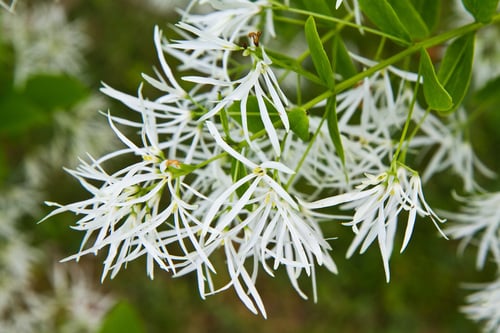
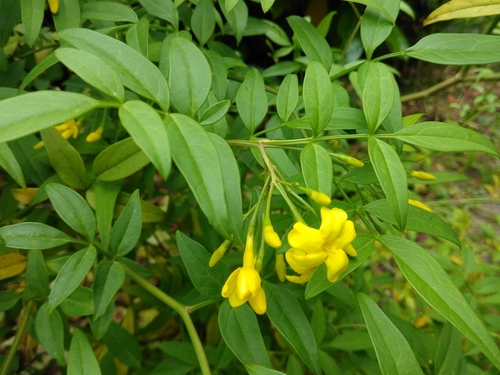
Forestiera neomexicana
A.Gray.
Wild Olive
gbif· cc0
Ingrid P. Lin
gbif· cc-by
Deaver Herbarium
gbif· cc-by
Deaver Herbarium
Description
Forestiera neomexicana is a deciduous Shrub growing to 3 m (9ft 10in). See above for USDA hardiness. It is hardy to UK zone 6. It is in flower from April to May, and the seeds ripen from July to September. The species is monoecious (individual flowers are either male or female, but both sexes can be found on the same plant). Suitable for: light (sandy), medium (loamy) and heavy (clay) soils and prefers well-drained soil. Suitable pH: mildly acid, neutral and basic (mildly alkaline) soils. It can grow in semi-shade (light woodland) or no shade. It prefers dry or moist soil.
Edible Uses
Fruit. Although only 4 - 8mm long, it has been suggested as a substitute for the true olive, Olea europaea.
Medicinal Uses
Miscellany. None known
Distribution
South-western N. America - Texas to New Mexico, west to California.
Where It Grows
NORTHERN AMERICA: United States (Oklahoma (west), Colorado, New Mexico, Texas, Arizona, California, Nevada (south), Utah (southeast)), Mexico (Baja California (Norte), Baja California Sur, Chihuahua, Coahuila de Zaragoza, Durango, Sonora, Zacatecas, Aguascalientes)
Cultivation
Succeeds in most soils. Requires a sunny position and a well-drained soil. Tolerates dry sites. Flowers are produced in the axils of the previous years leaves. Plants do not fruit well in Britain, probably due to a lack of sunshine.
Propagation
Seed - best sown as soon as it is ripe in a cold frame. When they are large enough to handle, prick the seedlings out into individual pots and grow them on in the greenhouse for at least their first winter. Plant them out into their permanent positions in late spring or early summer, after the last expected frosts. Cuttings of half-ripe wood, July/August in a frame. Easy. Cuttings of mature wood, November to February in a frame or sheltered outdoor bed.
Other Uses
Miscellany. Plants growing in the wild are used as indicators of underground water.