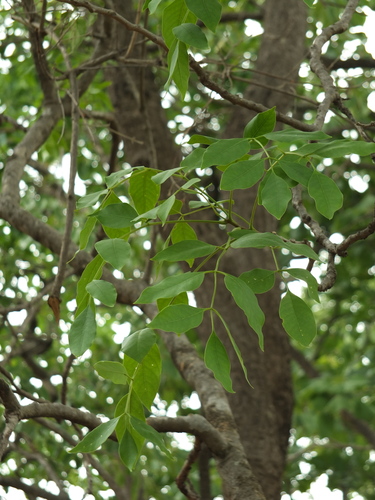
Forestiera pubescens
Nutt.
Wild olive, Desert olive, New Mexican Privet
iNaturalist· cc-by-nc
(c) bbenz, some rights reserved (CC BY-NC)
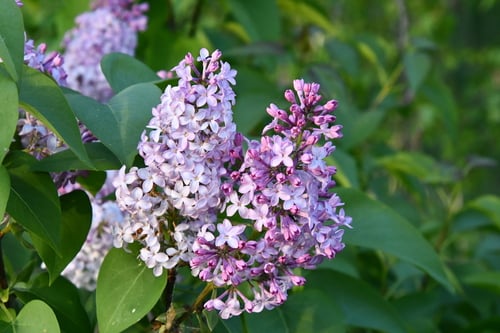
iNaturalist· cc-by-nc
(c) Suzette Rogers, some rights reserved (CC BY-NC), uploaded by Suzette Rogers
iNaturalist· cc-by-nc
(c) bbenz, some rights reserved (CC BY-NC)
Summary
Source: WikipediaForestiera pubescens, commonly known as stretchberry, desert olive, tanglewood, devil's elbow, elbow bush, spring goldenglow, spring herald, New Mexico privet, or Texas forsythia is a deciduous shrub or small tree native to the southwestern United States (Texas, Oklahoma, New Mexico, Arizona, Colorado, Utah, Nevada, California) and northern Mexico.
Description
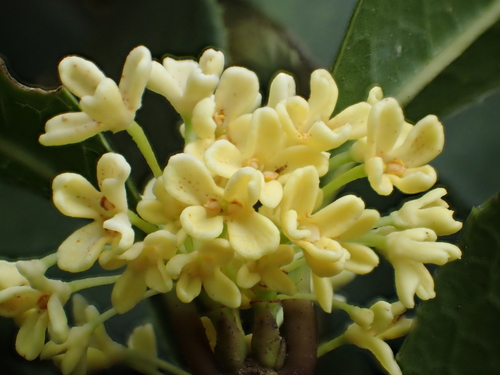
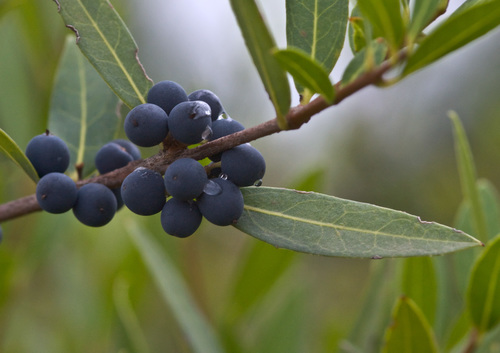
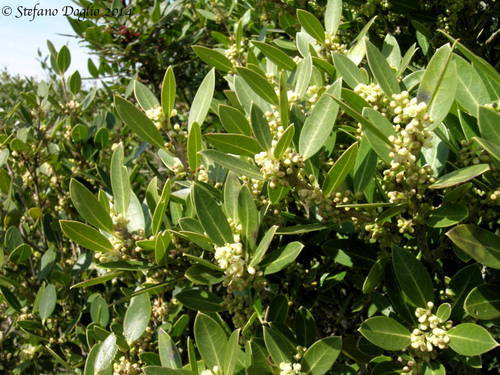
A small tree. It grows 3 m high and spreads 2.4 m wide. The leaves are small and smooth. They are green but turn yellow in autumn. The flowers are small and yellow. They appear before the leaves. The fruit are in clusters and are small and bluish-black.
Edible Uses
The fruit can be used like an olive.
Traditional Uses
The fruit can be used like an olive.
This uses section is brief — help expand it
Distribution
It suits hardiness zones 6-10.
Where It Grows
Australia, Britain, Europe, North America, USA,
Notes
There are 5 Forestiera species in tropical America.
Synonyms
References (6)
- Cundall, P., (ed.), 2004, Gardening Australia: flora: the gardener's bible. ABC Books. p 607
- Facciola, S., 1998, Cornucopia 2: a Source Book of Edible Plants. Kampong Publications, p 162 (As Forestiera neomexicana)
- Moerman, D. F., 2010, Native American Ethnobotany. Timber Press. p 233
- Plants for a Future database, The Field, Penpol, Lostwithiel, Cornwall, PL22 0NG, UK. http://www.scs.leeds.ac.uk/pfaf/ (As Forestiera neomexicana)
- Tanaka,
Show all 6 references Hide references
- Trans. Amer. Philos. Soc. ser. 2, 5:177. 1835