Persea schiedeana
Nees
Coyo, Guatemala avocado
iNaturalist· cc-by-nc
(c) Jaime Rivera, some rights reserved (CC BY-NC), uploaded by Jaime Rivera
iNaturalist· cc-by-nc-sa
(c) Manuel de Jesús Hernández Ancheita, some rights reserved (CC BY-NC-SA), uploaded by Manuel de Jesús Hernández Ancheita
iNaturalist· cc-by-nc
(c) Julio Segundo, some rights reserved (CC BY-NC), uploaded by Julio Segundo
Summary
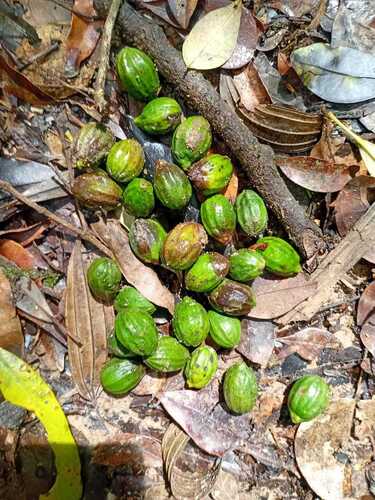
Source: WikipediaPersea schiedeana, the coyo, is an endangered, evergreen tree in the laurel family (Lauraceae), native to tropical forests of southern Mexico and Central America. Its edible fruit resembles that of the avocado (Persea americana), a related tree in the genus Persea. Other common names include aguacate de montaña, aguacatón, chinini, chupte and yas. Coyo is native to southern Mexico and parts of Central America. It occurs at altitudes up to 2800 meters in lowlands and montane tropical forests. It is cultivated for fruit and used as graft stock for common avocado. The tree grows to about 20 m high, occasionally reaching 50 m. Young branches are very hairy. The leaves are deciduous and the flowers are light greenish-yellow, with the stamens turning red with age. The fruit, closely resembling that of the avocado, is generally pear-shaped, with a thick, green, leathery skin. The flesh is oily with a milky juice and tastes like an avocado or coconut. The pear-shaped fruit is easily mistaken for an avocado. However, it contains a much larger central seed. The flesh has stone cells and a gritty texture that is generally considered unfavourable for edible consumption, despite its appealing taste. The cotyledons, unlike those of the avocado, are pink internally. The seeds of the tree are dispersed by wild animals that eat the fruit, including tepezcuintle (Cuniculus paca), tejón coati (Nasua narica) and agoutis (Dasyprocta sp.). This species is considered to be endangered due to loss of habitat as forests are cleared for agriculture.
Description
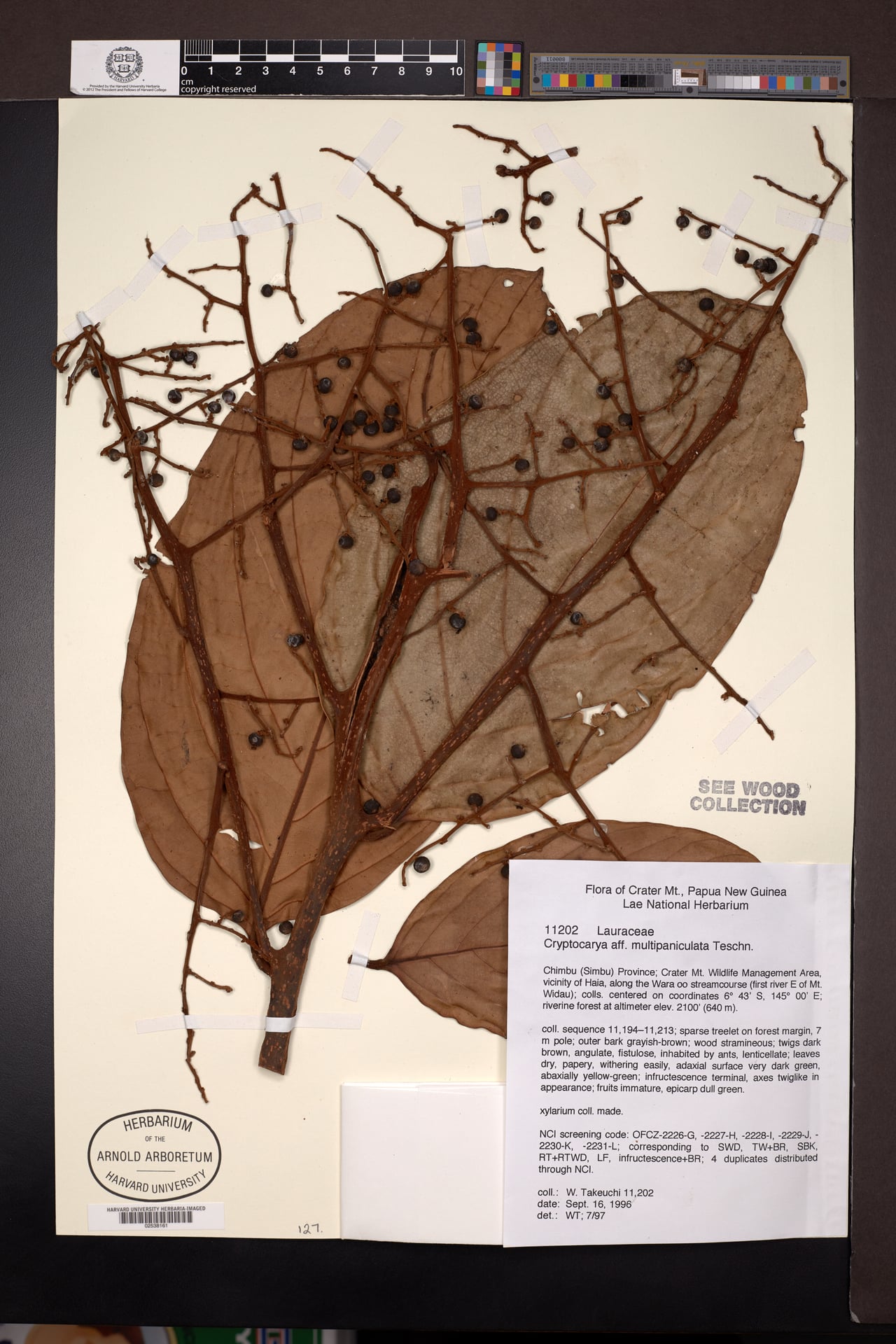
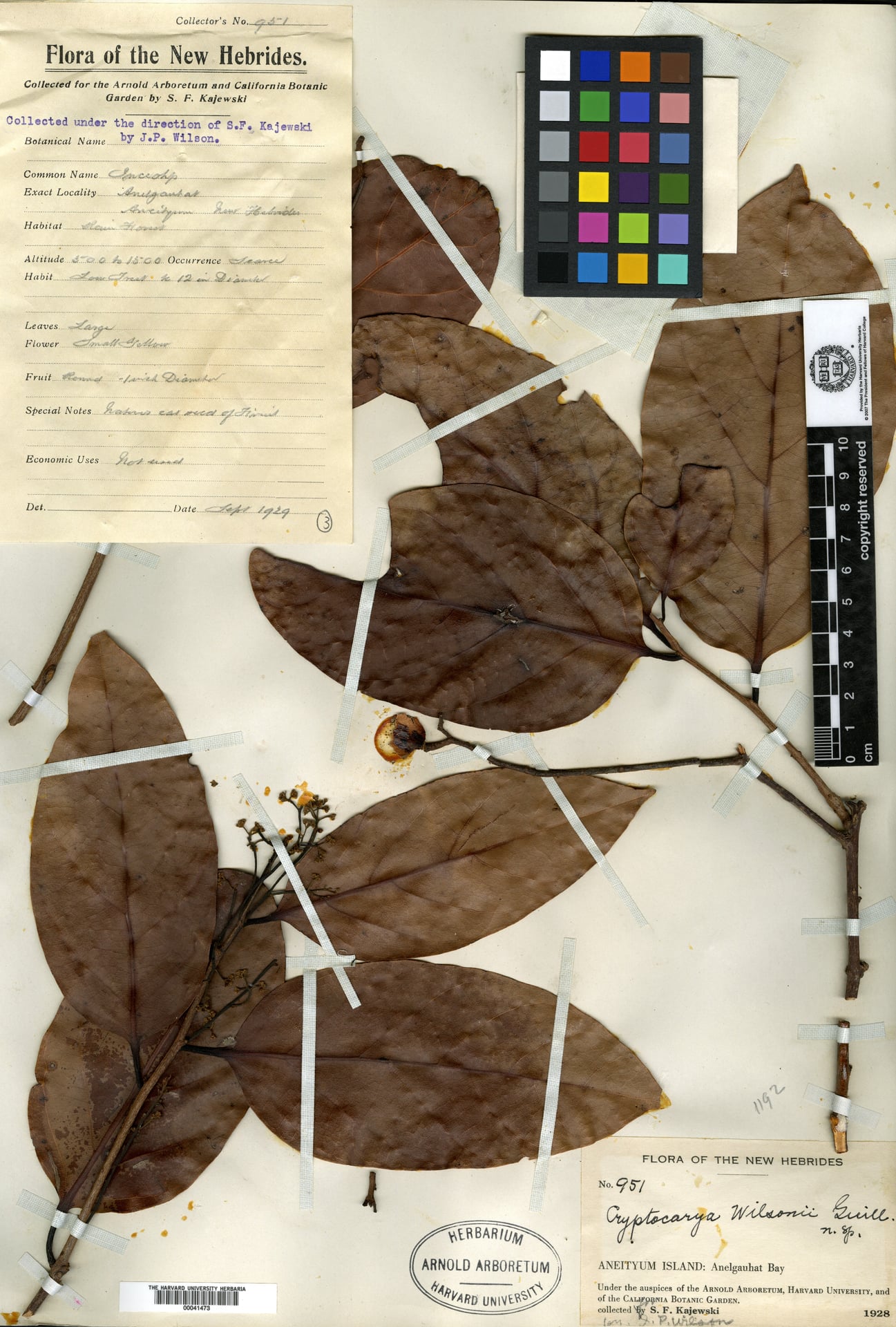
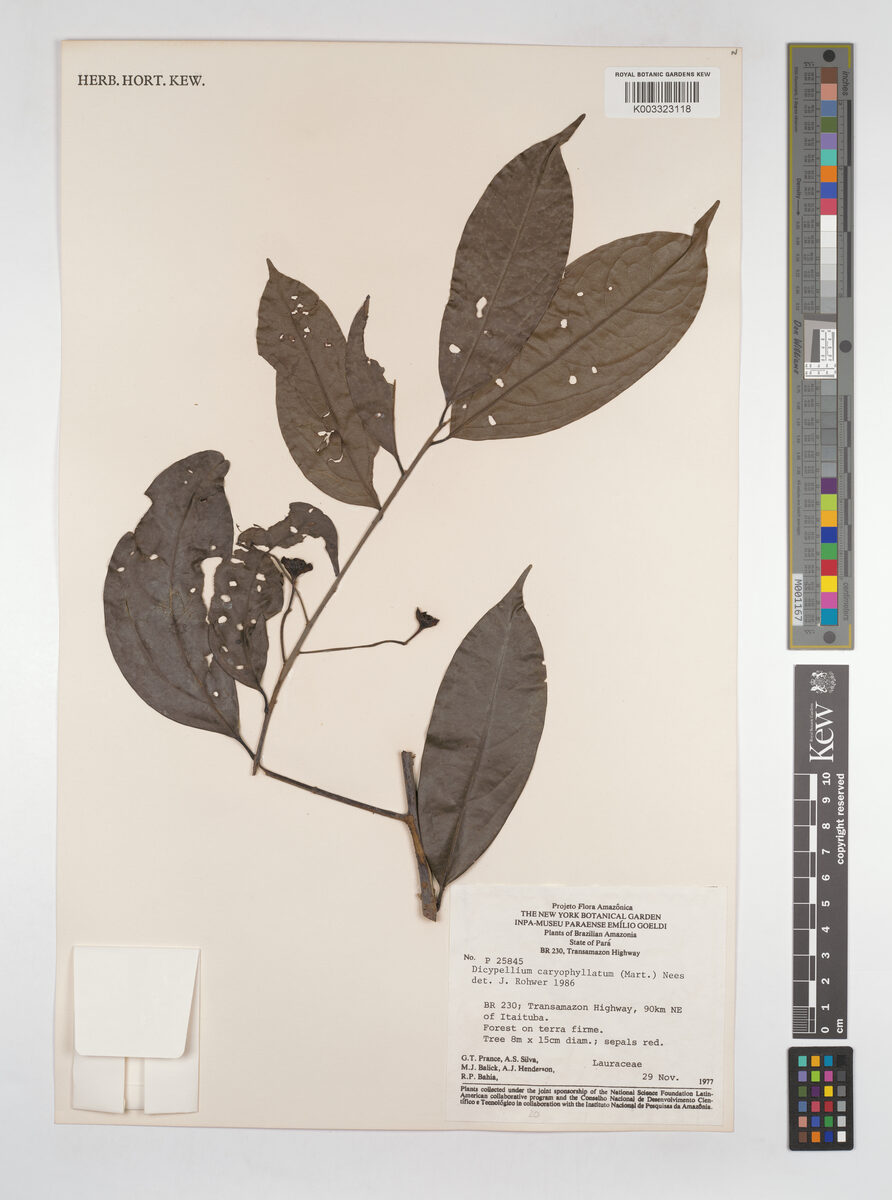
A tree. It grows 15-20 m tall. The young branches have dense brown hairs. It loses its leaves during the year. The leaves are oval and heart shaped at the base. They are 13-30 cm long by 7-15 cm wide. They have white hairs underneath. The flowers are downy. They are in groups. The flowers are light green to yellow. The fruit are like an avocado. They can be 200-400 g. The best fruit can be quite large and have a brownish pulp free from fibres. The skin is leathery and flexible. It has a large seed.
Edible Uses
Fruit - raw. A rich, nutty flavour, though the pulp can be fibrous. The fruit varies greatly in quality, that of most wild trees being unpleasantly fibrous and having scant flesh. However, the flavour is so good that the fruit is much appreciated. Some trees have large fruits in which the fibre is not conspicuous. A good source of oil and minerals. The pear-shaped fruit is 5 - 10cm in diameter, weighing 150 - 900g.
Traditional Uses
The fruit are eaten in salads.
This uses section is brief — help expand it
Distribution
A tropical plant. It grows in the tropical highlands with cool climates. In Central America it grows between 1,400-1,900 m altitude. Good soil drainage is essential.
Where It Grows
Belize, Central America*, Colombia, Costa Rica, El Salvador, Guatemala, Honduras, Mexico*, Nicaragua, North America, Panama, South America,
Cultivation
Trees are often grown from seed. The seed need to be planted while fresh. They can also be grafted.
Propagation
Seed - Grafting.
Production
Fruit weigh 150-900 g.
Other Information
It is a cultivated fruit tree.
Synonyms
Also Known As
Aguacate asca, Aguacate sucte, Aguacatillo, Cayo, Cojou, Chucte, Chinin, Chinine, Chinini, Chuti, Aguacaton, Coyo avocado, Cupte', Duga, Ihpaw, Koyow, Pagua Shucte, Yas, Ziw, Ziwtez
References (21)
- Chizmar Fernandez, C., et al, 2009, Plantas comestibles de Centroamerica. Instituto de Biodiversidad, Costa Rica. p 218
- D'Ambrosio, U., & Puri, R. K., 2016, Foodways in transition: food plants, diet and local perceptions of change in a Costa Rican Ngäbe community. Journal of Ethnobiology and Ethnomedicine (2016) 12:3 p 26
- Facciola, S., 1998, Cornucopia 2: a Source Book of Edible Plants. Kampong Publications, p 139
- FAO, 1993, Valor Nutritivo Y Usis en Alimantacion humana de Algunis Cultivos Autoctonos Subexplotados de Mesoamerica. FAO, Santiago, Chile. p 19
- Gonzalez-Espinosa, M. et al, 2011, The Red List of Mexican Cloud Forest Trees. Flora and Fauna International, Cambridge. p 46
Show all 21 references Hide references
- Grandtner, M. M., 2008, World Dictionary of Trees. Wood and Forest Science Department. Laval University, Quebec, Qc Canada. (Internet database http://www.wdt.qc.ca)
- Grandtner, M. M. & Chevrette, J., 2013, Dictionary of Trees, Volume 2: South America: Nomenclature, Taxonomy and Ecology. Academic Press p 492
- Hellmuth, N. M., 2011, Maya Ethnobotany. Complete Inventory of plants. Associacion FLAAR Mesoamerica. Tenth edition.
- Hermandez Bermejo, J.E., and Leon, J. (Eds.), 1994, Neglected Crops. 1492 from a different perspective. FAO Plant Production and Protection Series No 26. FAO, Rome. p15
- Ibarra-Manriquez, G., et al, 1997, Useful Plants of the Los Tuxtlas Rain Forest (Veracruz, Mexico): Considerations of their Market Potential. Economic Botany, Vol. 51, No. 4, pp. 362-376
- INFOODSUpdatedFGU-list.xls
- Kapelle, M., et al, 2000, Useful plants within a Campesino Community in a Costa Rican Montane Cloud Forest. Mountain Research and Development, 20(2): 162-171
- Kermath, B. M., et al, 2014, Food Plants in the Americas: A survey of the domesticated, cultivated and wild plants used for Human food in North, Central and South America and the Caribbean. On line draft. p 634
- Kew Plants of the World Online
- Martin, F. W., et al, 1987, Perennial Edible Fruits of the Tropics. USDA Handbook 642 p 32, 97
- Morton, J. F., 1987, Fruits of Warm Climates. Wipf & Stock Publishers p 102
- Pascual-Mendoza, S. et al, 2021, Traditional knowledge of edible plants in an indigenous community in the Sierra Norte of Oaxaca, Mexico. Plant Biosystems - An International Journal Dealing with all Aspects of Plant Biology
- Piedra-Malagón, E. M., et al, 2022, Edible native plants of the Gulf of Mexico Province. Biodiversity Data Journal 10: e80565 p 20
- Roa, J. A. G. & Boada, D. S. G., 2018, Fundación para el Fortalecimiento de la Fruticultura y Plantas Alimenticias no Convencionales en Colombia.
- Segura, S., et al, 2018, The edible fruit species in Mexico. Genet Resour Crop Evol (2018) 65:1767–1793
- Vazquez-Garcia. V., 2008, Gender, ethnicity, and economic status in plant management: Uncultivated edible plants among the Nahuas and Popolucas of veracruz, Mexico. Agriculture and Human Values 25: 65-77