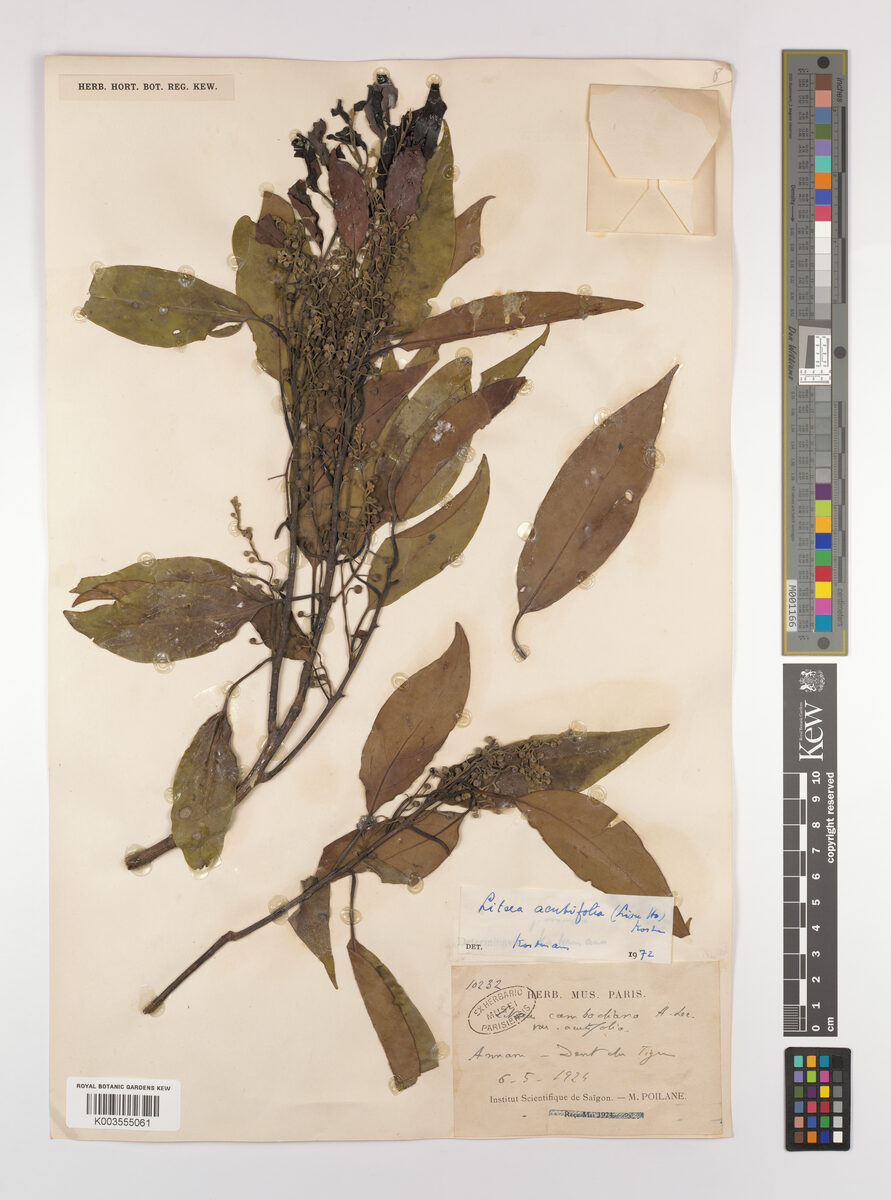
Cinnamomum tamala
(Buch.-Ham.) Nees & Eberm.
Indian cassia, Indian bark, Cassia leaves
iNaturalist· pd
Sonja Pauen, no known copyright restrictions (public domain)
iNaturalist· cc-by-nc
(c) Chandra sekhar, some rights reserved (CC BY-NC)
iNaturalist· cc-by-nc
(c) Arjaita,Anushka,RMG,Arushi,Rwiddhi, some rights reserved (CC BY-NC)
Summary
Source: WikipediaCinnamomum tamala, Indian bay leaf, also known as tejpat, tejapatta, Malabar leaf, Indian bark, Indian cassia, or malabathrum, is a tree in the family Lauraceae that is native to northern India (Assam and the Western Himalayas), Bangladesh, Nepal, Myanmar, Laos, Vietnam, and southwestern China. It can grow up to 20 m (66 ft) tall. Its leaves have a clove-like aroma with a hint of peppery taste; they are used for culinary and medicinal purposes. It is thought to have been one of the major sources of the medicinal plant leaves known in classic and medieval times as malabathrum (or malobathrum).
Description
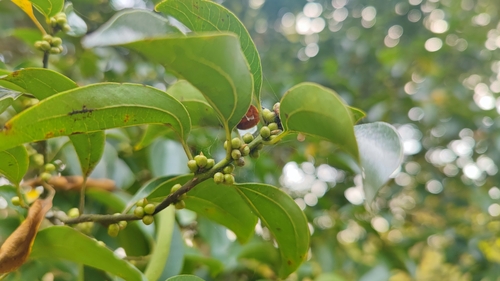
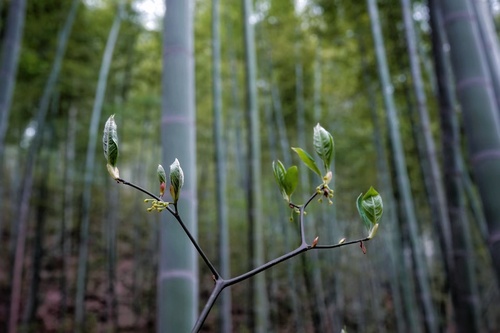
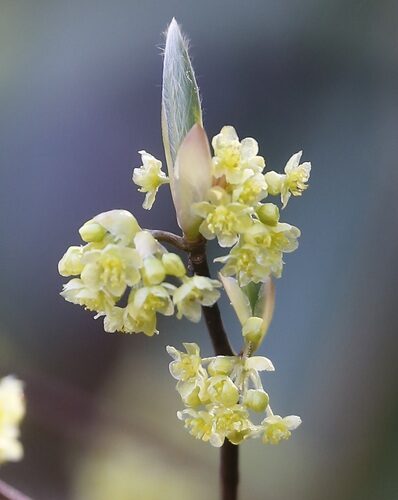
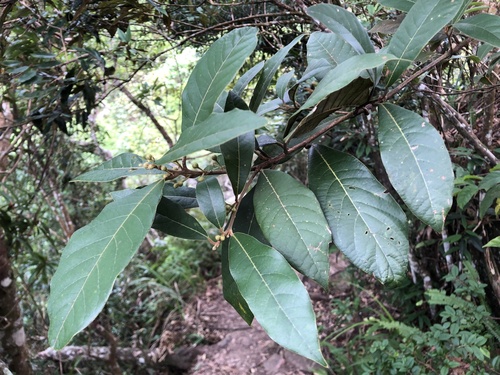
A tree. It grows to 15 m high. The bark is dark brown and wrinkled. The leaves are rounded at the base and taper to a tip. Leaves are 7.5-20 cm long by 3.5-6.5 cm wide. They are oval and long pointed. They are shiny above and pink when young. The flowers are yellow and hairy. The fruit are 1 cm long. They are fleshy with a stone inside. They are black when ripe.
Edible Uses
The dried bark and leaves are used as spices in curries and added to tea for flavour. The leaves serve as a substitute for betel leaf and bay leaf, and young leaves are sold in markets.
Traditional Uses
The bark and leaves are dried and used as spices in curries. They are also added to tea for flavour. The leaves are used as a substitute for Betel leaf and bay leaf.
Medicinal Uses
The dried bark is used in medicine.
Distribution
A tropical and subtropical plant. It grows in Nepal between 500-2000 m altitude. It grows on moist slopes of forested land. In India it grows between 800-1,600 m altitude usually in deep valleys. In Yunnan.
Where It Grows
Asia, Bangladesh, Bhutan, China, Himalayas, India, Indochina, Laos, Malaysia, Myanmar, Nepal, Northeastern India, NW India, Pakistan, SE Asia, Sikkim, Thailand, Vietnam,
Cultivation
Plants are grown by seed or shoot cuttings. Fresh seed are soaked in water overnight before sowing. Shoot cuttings 15-20 cm long can be used. Using rooting hormone helps. Seedlings can be transplanted after 1 year. Trees last 70-80 years. Leaves can be collected after 5-10 years.
Propagation
Seed - the seed of species in this genus generally has a short viability and is best sown as soon in containers as it is ripe. Remove the fruit pulp since this can inhibit germination. Soaking the seeds for 24 hours in lukewarm water hastens germination, which can take 1 - 6 months at 20°c. The germination rate of fresh seed is about 50%, falling to 25% for seed 6 months old, and zero for those 1 year old. Stored seed should be sown as soon as possible in containers. When they are large enough to handle, prick the seedlings out into individual pots and plant them out into their permanent positions when 10cm or more tall. Cuttings of semi-ripe side shoots, 7cm with a heel, in a frame with bottom heat.
Other Uses
The leaves yield around 2% essential oil with a specific gravity of 1.025. It is soluble in 1.2 volume of 70% alcohol. The oil resembles cinnamon leaf oil and contains phellandrene and 78% eugenol. The essential oil from the bark, known as 'cassia oil', is pale yellow, and contains 70 - 85% cinnamic aldehyde. The oil is used in perfuming soap and in medicine. However, trade in cassia oil has declined appreciably with the advent of synthetic cinnamic aldehyde. An extract from the leaves is an ingredient of commercial cosmetic preparations, where it is used as a skin conditioner. The essential oil obtained from the leaves has been shown to be an effective fungicide in treating pathogenic fungi on the cultivated plant Jatropha curcas. The leaf extracts are used as clarifiers in dyeing procedures with myrobalans or kamala.
Other Information
The young leaves are sold in markets. They are important in Bangladesh. It is cultivated.
Notes
There are about 250 Cinnamomum species. The dried bark is used in medicine.
Synonyms
Also Known As
Dalchini, Dieng-la-tyrpad, Dong-sumsor, Faresom, Kinken esing, Kokheisii, Lepu, Maza, Pinge, Rapi esing, Shing-nam, Shing-tsa, Siisitou, Sinkauli, Sinkoli, Taj, Talishappattiri, Talispatri, Tamalaka, Tamalapatra, Tegrapatra, Tejpaat, Tejpat, Tejpata, Tejpatra, Tejput, Tesh patta, Texpat, Thikya-bo, Thingthal, Thitchabo, Thit-kya-poe
References (65)
- Agarwal, R. & Chandra, V., 2019, Diversity of wild edible plants in the Mandal-Chopta forest, Uttarakhand. Journal of Medicinal Plants Studies 2019; 7(1): 89-92
- Ambasta, S.P. (Ed.), 2000, The Useful Plants of India. CSIR India. p 126
- Aryal, K. P., et al, 2018, Diversity and use of wild and non-cultivated edible plants in the Western Himalaya. Journal of Ethnobiology and Ethnomedicine (2018) 14:10
- Bahuguna, A. et al, 2010, Floristic Diversity and Indigenous uses of Forest Vegetation of Dabka Watershed in Indian Central Himalayas. Ethnobotanical Leaflets 14:491-510
- Balkrishna, A., et al, 2022, Indigenous Uses of Plants among Forest-dependent Communities of Seijosa, Arunachal Pradesh. International Journal of Economic Plants 2022, 9(1):064-080
Show all 65 references Hide references
- Bandyopadhyay, S. et al, 2009, Wild edible plants of Koch Bihar district, West Bengal. Natural Products Radiance 8(1) 64-72
- Brouk, B., 1975, Plants Consumed by Man. Academic Press, London. p 293
- Brown, D., 2002, The Royal Horticultural Society encyclopedia of Herbs and their uses. DK Books. p 169
- Burkill, I.H., 1966, A Dictionary of the Economic Products of the Malay Peninsula. Ministry of Agriculture and Cooperatives, Kuala Lumpur, Malaysia. Vol 1 (A-H) p 563
- Dandapat S., Kumar M., Kumar A., & Sinha M. P., 2013, Therapeutic efficacy and nutritional potentiality of Indian bay leaf (Cinnamomum tamala Buch - Hem.), International Journal of Pharmacy, 3(4), pp. 779-781.
- Dangol, D. R. et al, 2017, Wild Edible Plants in Nepal. Proceedings of 2nd National Workshop on CUAOGR, 2017.
- Das, T. & Das, A. K., 2005, Inventorying plant biodiversity in homegardens: A case study in Barak Valley, Assam, North East India. CURRENT SCIENCE, VOL. 89, NO. 1, 10 JULY 2005
- Facciola, S., 1998, Cornucopia 2: a Source Book of Edible Plants. Kampong Publications, p 138
- Flora of Pakistan. www.eFloras.org
- Ghimeray, A. K., Lamsal, K., et al, 2010, Wild edible angiospermic plants of the Illam Hills (Eastern Nepal) and their mode of use by local community. Korean J. Pl. Taxon. 40(1)
- Ghimire, S. K., et al, 2008, Non-Timber Forest Products of Nepal Himalaya. WWF Nepal p 89
- Handb. med.-pharm. Bot. 2:426. 1831
- Hedrick, U.P., 1919, (Ed.), Sturtevant's edible plants of the world. p 193
- Hemphill, I, 2002, Spice Notes. Macmillan. p 133
- Jha, P. K., et al, 1996, Plant genetic resources of Nepal: A guide for plant breeders of agricultural, horticultural and forestry crops. Euphytica 87:189-210
- Khakurel, D., et al, 2021, Foods from the wild: Local knowledge, use pattern and distribution in Western Nepal. PLOS ONE.
- Khan, M. & Hussain, S., 2014, Diversity of wild edible plants and flowering phenology of district Poonch (J & K) in the northwest Himalaya. Indian Journal of Sci, Res. 9(1): 032-038
- Kiple, K.F. & Ornelas, K.C., (eds), 2000, The Cambridge World History of Food. CUP p 1789
- Li Xi-wen, Li Jie, Huang Puhua, van der Werff, H., Lauraceae. Flora of China.
- Manandhar, N.P., 2002, Plants and People of Nepal. Timber Press. Portland, Oregon. p 153
- Medhi, P. & Borthakur, S. K., 2012, Phytoresources from North Cachur Hills of Assam -3: Edible plants sold at Hflong market. Indian Journal of Natural Products and Resources. 3(1) pp 84-109
- Mehta, P. S. et al, 2010, Native plant genetic resources and traditional foods of Uttarakhand Himalaya for sustainable food security and livelihood. Indian Journal or Natural products and Resources. Vol 1(1), March 2010 pp 89-96
- Miya, M. S. & Gautum, D., 2021, Checklist of floral species at the Institute of Forestry, Pokhara Campus, Pokhara, Nepal. Journal of Institute of Forestry, Nepal 18 (2021) 133-177
- Mukhia, P.K., et al, 2013, Wild plants as Non Wood Forest Products used by the rural community of Dagana, a southern foothill district of Bhutan, SAARC Journal, 27 pages
- Murtem, G. & Chaudhrey, P., 2016, An ethnobotanical note on wild edible plants of Upper Eastern Himalaya, India. Brazilian Journal of Biological Sciences, 2016, v. 3, no. 5, p. 63-81
- Patiri, B. & Borah, A., 2007, Wild Edible Plants of Assam. Geethaki Publishers. p 121
- Pegu, R., et al, 2013, Ethnobotanical study of Wild Edible Plants in Poba Reserved Forest, Assam, India. Research Journal of Agriculture and Forestry Sciences 1(3):1-10
- Peter, K. V. (Ed.), 2004, Handbook of Herbs and Spices Vol. 2 Woodhead Publishing and CRC Press.
- Pfoze, N. L., et al, 2012, Survey and assessment of floral diversity on wild edible plants from Senapati district of Manipur, Northeast India. Journal or Biodiversity and Environmental Sciences. 1(6):50-52
- Pham-Hoang Ho, 1999, An Illustrated Flora of Vietnam. Nha Xuat Ban Tre. p 349
- Polunin, O., & Stainton, A., 2006, Flowers of the Himalaya, Oxford India Paperbacks. p 351
- Pravin B., Krishnkant L., Shreyas J., Ajay K., and Priyanka G., 2013, Recent Pharmacological Review on Cinnamomum tamala, Research Journal of Pharmaceutical, Biological and Chemical Sciences, Volume 4 Issue 4, pp.916-917.
- Purseglove, J.W., 1968, Tropical Crops Dicotyledons, Longmans. p 187
- Radha, B., et al, 2013, Wild Edible Plant Resources of the Lohba Range of Kedarnath Forest Division (KFD), Garhwal Himalaya, India. Int. Res J. Biological Sci. Vol. 2 (11), 65-73
- Raghavan, S., 2007, Handbook of Spices, Seasonings, and Flavourings. Second Edition. CRC Press p 70
- Rahmatullah, M., et al, 2009, A survey of medicinal plants in two areas of Dinajpur district, Bangladesh including plants which can be used as functional foods. American-Eurasian Journal of Sustainable Agriculture, 3(4): 862-876
- Rajendra, K.C., 2014, Prominent Non-Wood Forest Products of Te- rai and Siwalik Regions in Nepal. Food and Agriculture Organization, Kathmandu, Nepal. p 111
- Rashid, H. E., 1977, Geography of Bangladesh. Westview. p 277
- Sahni, K.C., 2000, The Book of Indian Trees. Bombay Natural History Society. Oxford. p 140
- Sarma, H., et al, 2010, Updated Estimates of Wild Edible and Threatened Plants of Assam: A Meta-analysis. International Journal of Botany 6(4): 414-423
- Savita, et al, 2006, Studies on wild edible plants of ethnic people in east Sikkim. Asian J. of Bio Sci. (2006) Vol. 1 No. 2 : 117-125
- Sawian, J. T., et al, 2007, Wild edible plants of Meghalaya, North-east India. Natural Product Radiance Vol. 6(5): p 414
- Seidemann J., 2005, World Spice Plants. Economic Usage, Botany, Taxonomy. Springer. p 104
- Shin, T., et al, 2018, Traditional knowledge of wild edible plants with special emphasis on medicinal uses in Southern Shan State, Myanmar. Journal of Ethnobiology and Ethnomedicine (2018) 14:48
- Shrestha, S., 2021, Wild Edible Plants of Dhankuta, Eastern Nepal. Rupantaran : A Multidisciplinary Journal Vol. V : pp 100-109, September, 2021 p 103
- Singh, H.B., Arora R.K.,1978, Wild edible Plants of India. Indian Council of Agricultural Research, New Delhi. p 21
- Singh, P., et al, 2019 Plants of Indian Himalayan region. Part 1 Botanical Surbey of India. p 32
- Singh, S.R. and Singh, N.I., 1985, A Preliminary Ethnobotanical studies on wild edible plants in the markets of Manipur - 1. J. Econ. Tax. Bot. Vol. 6 No. 3 pp 699-703
- Sundriyal, M., et al, 2004, Dietary Use of Wild Plant Resources in the Sikkim Himalaya, India. Economic Botany 58(4) pp 626-638
- Swaminathan, M.S., and Kochnar, S.L., 2007, An Atlas of major Flowering Trees in India. Macmillan. p 231
- Tsering, J., et al, 2017, Ethnobotanical appraisal on wild edible plants used by the Monpa community of Arunchal Pradesh. Indian Journal of Traditional Knowledge. Vol 16(4), October 2017, pp 626-637
- Tyagi, R. K., et al, 2004, Conservation of Spices Germplasm in India. Indian J. Plant Genet. Resour. 17(3): 163-174
- Uprety, Y., et al, 2012, Diversity of use and local knowledge of wild edible plant resources in Nepal. Journal of Ethnobotany and Ethnomedicine 8:16
- Uprety, Y., et al, 2016, Traditional use and management of NTFPs in Kangchenjunga Landscape: implications for conservation and livelihoods. Journal of Ethnobiology and Ethnomedicine (2016) 12:19
- van Wyk, B., 2005, Food Plants of the World. An illustrated guide. Timber press. p 135 (As Cinnamomum tamale)
- Wiersema, J. H. & Leon, B., 2013, World Economic Plants. A Standard Reference CRC Press. 2nd Ed. p 176
- World Checklist of Useful Plant Species 2020. Royal Botanic Gardens, Kew
- www.efloras.org Flora of China Volume 7
- www.worldagroforestrycentre.org/treedb/
- Zeven, A. C. & de West, J. M. J., 1982, Dictionary of cultivated plants and their regions of diversity. Wageningen. p 75