Pentanisia schweinfurthii
Hiern.
Common pentanisia
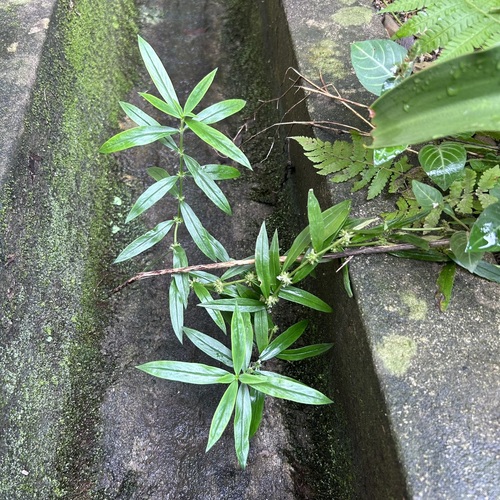
iNaturalist· cc-by-nc
(c) Bart Wursten, some rights reserved (CC BY-NC), uploaded by Bart Wursten
iNaturalist· cc-by-nc
(c) Morten Christensen, some rights reserved (CC BY-NC), uploaded by Morten Christensen
iNaturalist· cc-by-nc
(c) Alfredo Laquene Gotine, some rights reserved (CC BY-NC), uploaded by Alfredo Laquene Gotine
Description
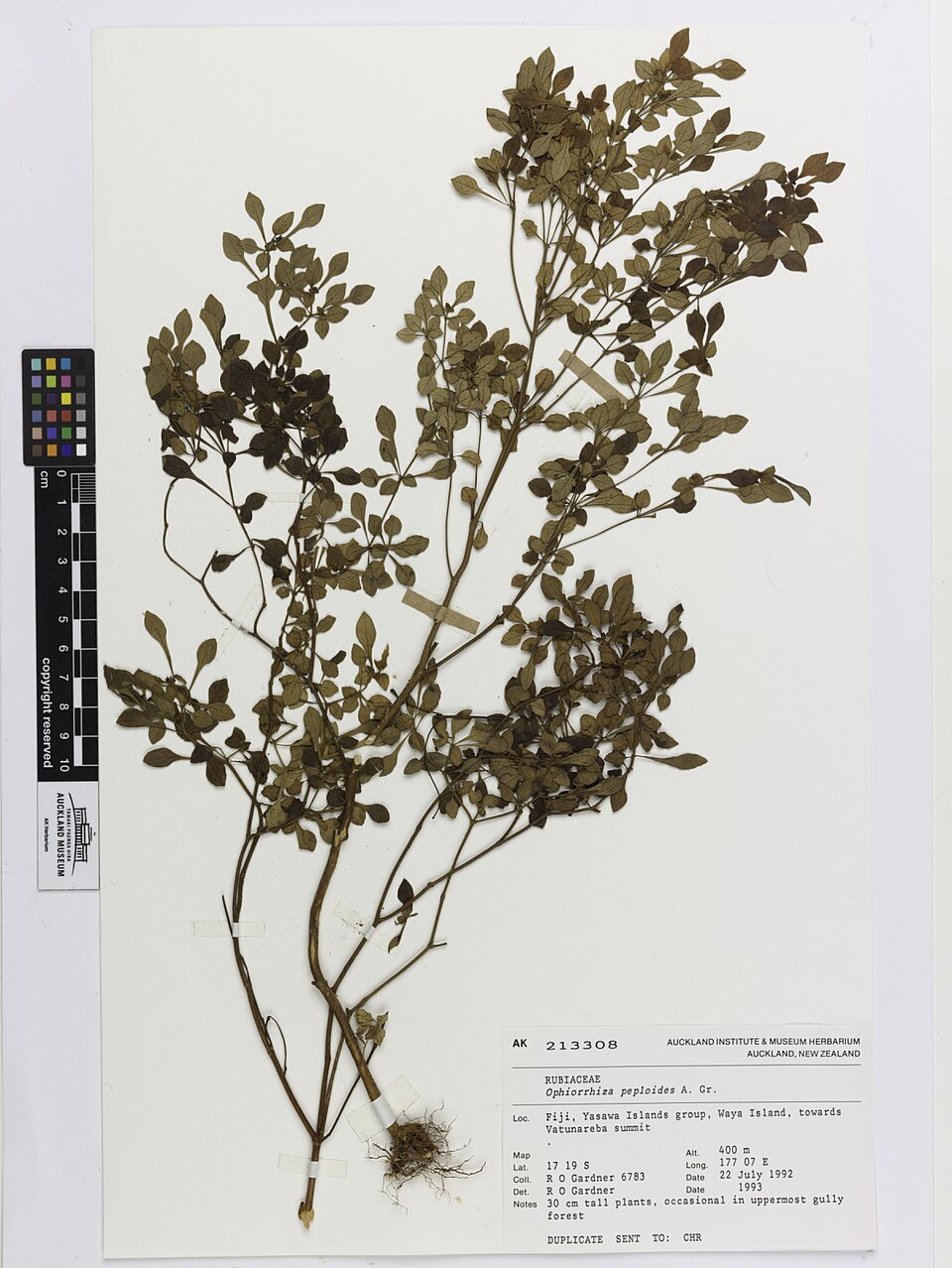
A small herb. It is erect and branched. It grows 25 cm tall. It grows from a fleshy root stock. The leaves are simple and borne in pairs. The leaves are oval and taper to the base. There is no leaf stalk. The leaves are about 2.5 cm long. The flowers are in heads. They are tube shaped and small and blue.
Edible Uses
The leaves and flowers are cooked and eaten as a vegetable, particularly during the dry season as a minor local vegetable.
Traditional Uses
The leaves are cooked and eaten.
This uses section is brief — help expand it
Medicinal Uses
A decoction of leaves and roots is taken to stop diarrhoea.
Distribution
A tropical plant. It grows at high elevations in Malawi. It can resist fire. Fire is probably needed to stimulate flowering. In Zimbabwe it grows between 800-2,250 m above sea level. It grows in grassland and open woodland.
Where It Grows
Africa, Angola, Central Africa, Congo, East Africa, Kenya, Malawi, Mozambique, Nigeria, Sudan, Tanzania, West Africa, Zambia, Zimbabwe,
Cultivation
The plant is a common weed of cultivation. The plant survives bush fires, regrowing quickly from the rootstock.
Production
They are used in the dry season.
Other Information
It is a minor vegetable of local importance in the dry season.
Nutrition
| Part | Moisture | kJ | kcal | Protein | Vit A | Vit C | Iron | Zinc |
|---|---|---|---|---|---|---|---|---|
| Leaves | 82 | 329 | 79 | 10.5 | — | — | — | — |
| Flowers | 78 | 306 | 73 | 14 | — | — | — | — |
Synonyms
Also Known As
Cisanki, Dambuli, Mlangaze, Ngulungundi, Sankimafuta
References (10)
- Burkill, H. M., 1985, The useful plants of west tropical Africa, Vol. 4. Kew.
- Fowler, D. G., 2007, Zambian Plants: Their Vernacular Names and Uses. Kew. p 57
- Grubben, G. J. H. and Denton, O. A. (eds), 2004, Plant Resources of Tropical Africa 2. Vegetables. PROTA, Wageningen, Netherlands. p 410
- Jardin, C., 1970, List of Foods Used In Africa, FAO Nutrition Information Document Series No 2.p 93
- Malaisse, F., 1997, Se nourrir en floret claire africaine. Approche ecologique et nutritionnelle. CTA., p 67
Show all 10 references Hide references
- Martin, F.W. & Ruberte, R.M., 1979, Edible Leaves of the Tropics. Antillian College Press, Mayaguez, Puerto Rico. p 217
- Mutie, F. M., et al, 2023, Important Medicinal and Food Taxa (Orders and Families) in Kenya, Based on Three Quantitative Approaches. Plants 2023, 12, 1145
- Peters, C. R., O'Brien, E. M., and Drummond, R.B., 1992, Edible Wild plants of Sub-saharan Africa. Kew. p 173
- Williamson, J., 2005, Useful Plants of Malawi. 3rd. Edition. Mdadzi Book Trust. p 192
- World Checklist of Useful Plant Species 2020. Royal Botanic Gardens, Kew