Psydrax latifolius
F. Muell. ex Benth.) S. T. Reynolds & R. J. F. Hend.
Bugs raisin, Native plum, Broad-leaf native currant
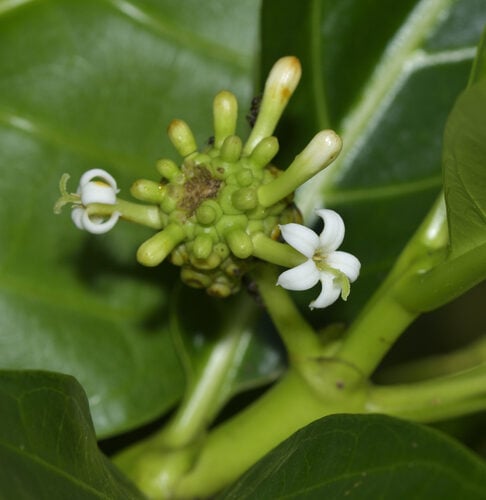
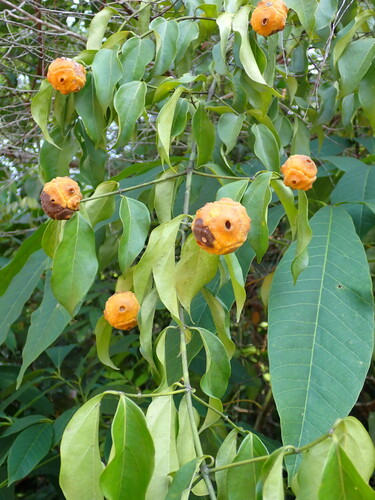
iNaturalist· cc-by-nc
(c) Indra Bone, some rights reserved (CC BY-NC)
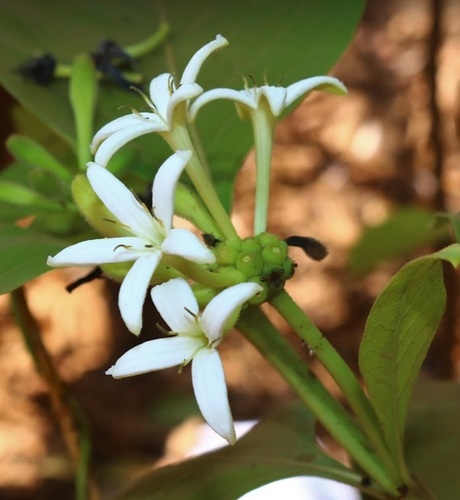
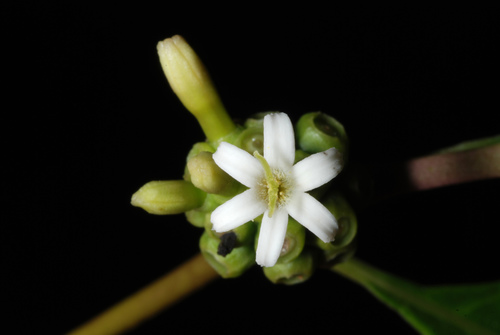
iNaturalist· cc-by-nc
(c) Indra Bone, some rights reserved (CC BY-NC)
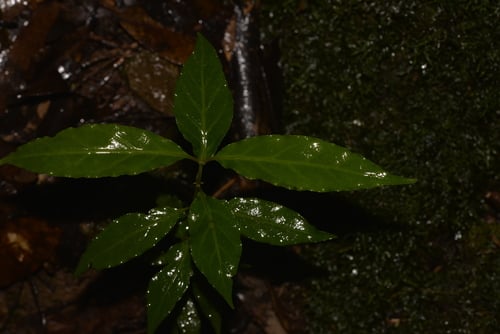
iNaturalist· cc-by-nc
(c) vr_vr, some rights reserved (CC BY-NC)
Description
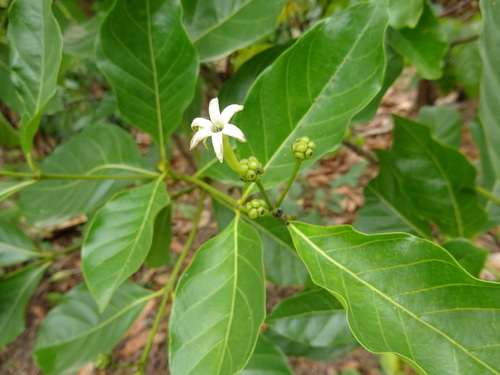
A tall shrub. It grows 2-6 m tall and 1-3.5 m wide. The leaves are 5-12 cm long by 2-5 cm wide. They are oval and dull. They are rigid and thick and pale yellowish-green. The flowers are 0.5 cm across. They are white and in loose clusters in the axils of leaves. The fruit is fleshy and have a hard stone inside. It is 1 cm across. It is black when ripe. The fruit is edible.
Edible Uses
The fruit and leaves are edible.
Distribution
It is a temperate to subtropical plant. It grows on red sandy soils and on clay loams and rocky outcrops. It is often along watercourses. It grows in inland locations in Australia. It grows on deep sandy soils. It suits places with warm to hot climates. They need good drainage and a sunny position.
Where It Grows
Australia*,
Cultivation
Plants are grown from seed.
Notes
There are about 75-100 Psydrax species.
Synonyms
Also Known As
Ahakey, Awalyura, Patharra
References (18)
- Bindon, P., 1996, Useful Bush Plants. Western Australian Museum. p 68 (As Canthium latifolium)
- Bodkin, F., 1991, Encyclopedia Botanica. Cornstalk publishing, p 211 (As Canthium latifolium)
- Cancilla, D., 2018, Ethnobotanical and Ethnozoological Values Desktop Assessment - Eliwana Project. p 14
- Cherikoff V. & Isaacs, J., The Bush Food Handbook. How to gather, grow, process and cook Australian Wild Foods. Ti Tree Press, Australia p 189 (As Canthium latifolium)
- Cribb, A.B. & J.W., 1976, Wild Food in Australia, Fontana. p 74 (As Canthium latifolium)
Show all 18 references Hide references
- Elliot, W.R., & Jones, D.L., 1982, Encyclopedia of Australian Plants suitable for cultivation. Vol 2. Lothian. p 457 (As Canthium latifolium)
- Hardwick, G., 2001, Economically Useful Plants for Northern Australia: Master Species List. Crusader eBooks. (As Canthium latifolium)
- Green, J., (Ed.), 2003, Anmatyerr Plant Stories. AID Press. p 2 (As Canthium latifolium)
- Hall, N. et al, 1972, The Use of Trees and Shrubs in the Dry Country of Australia, AGPS, Canberra. p 356 (As Canthium latifolium)
- Hiddins, L., 1999, Explore Wild Australia with the Bush Tucker Man. Penguin Books/ABC Books. p 132
- Hunter, J.T., 2017, Is there a relationship between contemporary high Aboriginal plant resource locations and mapped vegetation communities? Cunninghamia 17:27-34. The Royal Botanic Garden Sydney. ISSN 2200 - 405X
- Lang, P. J., et al, 1986, Anangu Pitjantjatjara Lands Biological Survey. p 43 (As Canthium latifolium)
- Lazarides, M. & Hince, B., 1993, Handbook of Economic Plants of Australia, CSIRO. p 46 (As Canthium latifolium)
- Paczkowska, G . & Chapman, A.R., 2000, The Western Australian Flora. A Descriptive Calatogue. Western Australian Herbarium. p 515
- Schatz, G.E., 2001, Generic Tree Flora of Madagascar. Royal Botanical Gardens, Kew and Missouri Botanical Garden. p 338 (Genus)
- Smith, N. M., 1991, Ethnobotanical Field Notes from the Northern Territory, Australia, J. Adelaide Bot. Gard. 14(1): 1-65 (As Canthium latifolium)
- Urban, A., 1990, Wildflowers of Inland Australia. Portside editions. p 157 (As Canthium latifolium)
- www.theplantlist.org