Psydrax livida
(Hiern.) Bridson
Bushveld psydrax, Green-twigs quar
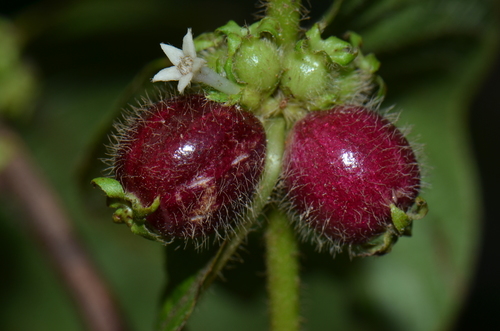
iNaturalist· cc-by-nc
(c) dirkvdl16, some rights reserved (CC BY-NC)
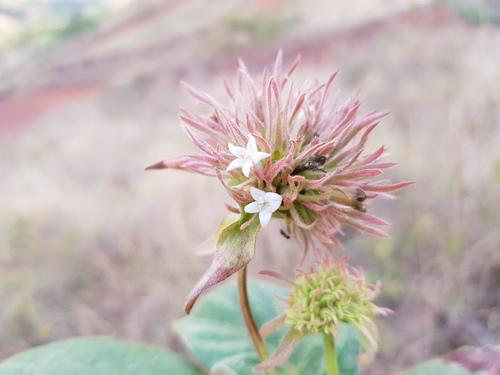
iNaturalist· cc-by-nc
(c) bosmuis, some rights reserved (CC BY-NC)
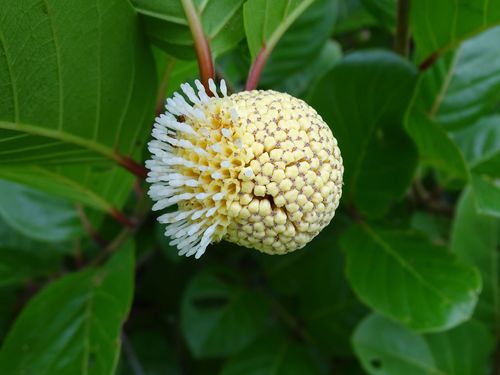
iNaturalist· cc-by-nc
(c) bosmuis, some rights reserved (CC BY-NC)
Summary
Source: WikipediaPsydrax livida (green-twigs quar) is an Afrotropical shrub or small tree in the family Rubiaceae. It occurs in eastern and southern Africa, including Burundi, Kenya, the DRC, Tanzania, Malawi, Mozambique, Zambia, Zimbabwe, Angola, Botswana, northern Namibia and northern South Africa. It is deciduous or evergreen, and its green branches have an opposite and horizontal arrangement.
Description
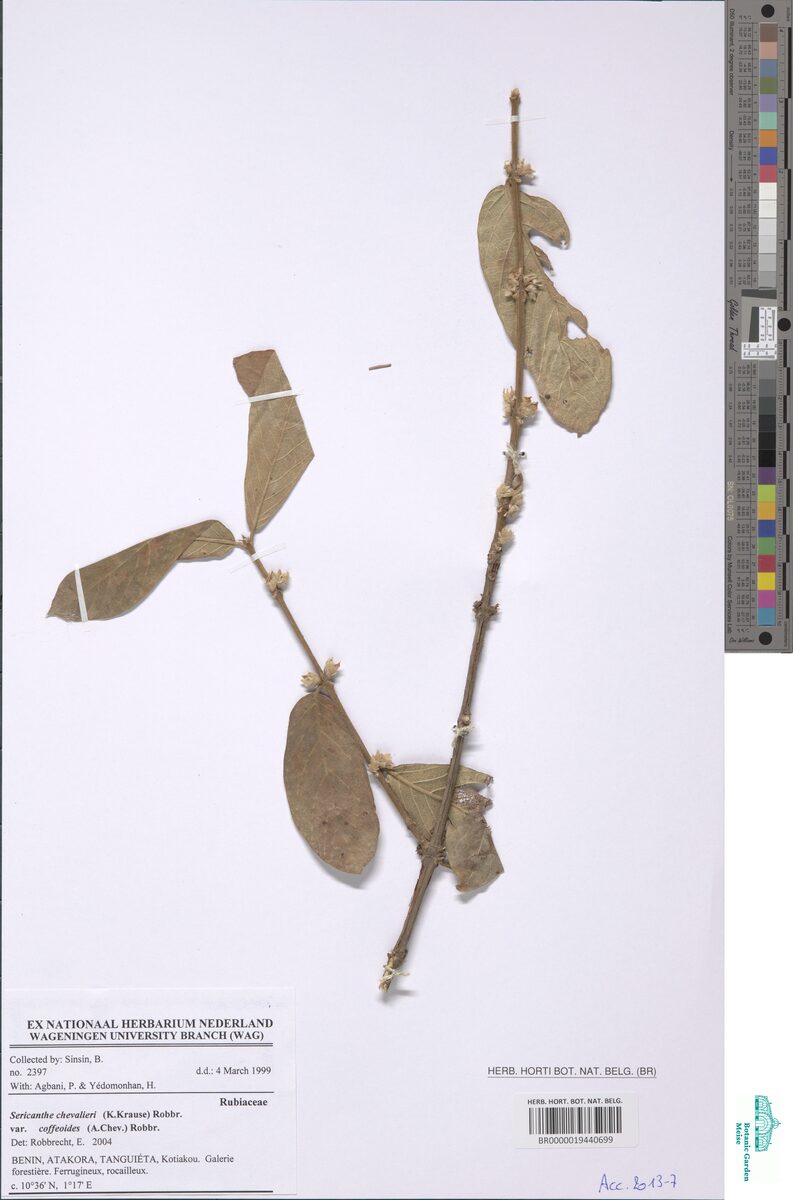
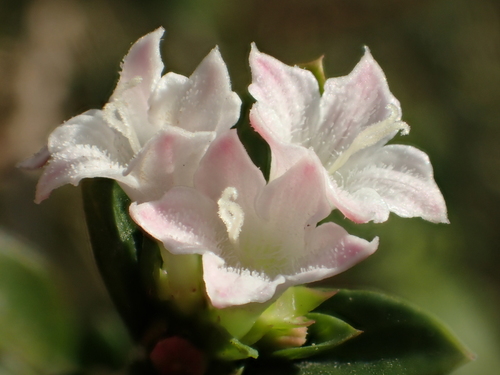
A shrub. It can grow to 8 m tall. The twigs can be hairy. The branches are opposite and horizontal. The leaves are on young stems. They are held in one plane. It loses its leaves during the year. The leaf blade is 2-13 cm long by 1-7 cm wide. They are narrowly oval. The flowers are in groups of 6-70 in compact groups. The fruit are 5-6 mm long by 8 mm wide. They are black when ripe.
Edible Uses
The young leaves are cooked as a vegetable, and the fruit are eaten as a snack.
Traditional Uses
The young leaves are cooked. The fruit are eaten as a snack.
This uses section is brief — help expand it
Medicinal Uses
A decoction of the roots is used in the treatment of chest pains.
Distribution
It is a tropical plant. It grows in woodlands often below escarpments. It is also on rocky outcrops. It grows on sandy soils and near rivers. It grows between 300-1,600 m altitude.
Where It Grows
Africa, Angola, Botswana, Central Africa, Congo, East Africa, Eswatini, Kenya, Malawi, Mozambique, Namibia, South Africa, Southern Africa, Swaziland, Tanzania, Zambia, Zimbabwe,
Cultivation
Found in the wild on sandy ridges and dunes.
Other Uses
The fruits are about 7mm in diameter. Rather hard, they are dried and used as the rattle inside the dried fruit shells of Strychnos species.
Nutrition
| Part | Moisture | kJ | kcal | Protein | Vit A | Vit C | Iron | Zinc |
|---|---|---|---|---|---|---|---|---|
| Leaves | 51.3 | 753 | 180 | 2.7 | — | 9.5 | 3.1 | 0.6 |
Synonyms
Also Known As
Green tree, Groenkwar, Mukavhamahunguvhu, Munyingahonye, Muvenhahonye, Umhlahlampethu
References (12)
- Fowler, D. G., 2007, Zambian Plants: Their Vernacular Names and Uses. Kew. p 57
- Grubben, G. J. H. and Denton, O. A. (eds), 2004, Plant Resources of Tropical Africa 2. Vegetables. PROTA, Wageningen, Netherlands. p 564
- INFOODS:FAO/INFOODS Databases (As Canthium huillense)
- Magwede, K., van Wyk, B.-E., & van Wyk, A. E., 2019, An inventory of Vhavenḓa useful plants. South African Journal of Botany 122 (2019) 57–89
- Peters, C. R., O'Brien, E. M., and Drummond, R.B., 1992, Edible Wild plants of Sub-saharan Africa. Kew. p 174
Show all 12 references Hide references
- Roodt, V., 1998, Trees & Shrubs of the Okavango Delta. Medicinal Uses and Nutritional value. The Shell Field Guide Series: Part 1. Shell Botswana. p 197
- Ruiters-Welcome, A. K., 2019, Food plants of southern Africa. Ph.D. thesis. Univ. of Johannesburg p 97
- Swaziland's Flora Database http://www.sntc.org.sz/flora
- Wehmeyer, A. S, 1986, Edible Wild Plants of Southern Africa. Data on the Nutrient Contents of over 300 species (As Canthium huillense)
- Welcome, A. K. & Van Wyk, B.-E., 2019, An inventory and analysis of the food plants of southern Africa. South African Journal of Botany 122 (2019) 136–179
- Williamson, 1972,
- www.zimbabweflora.co.zw 2011