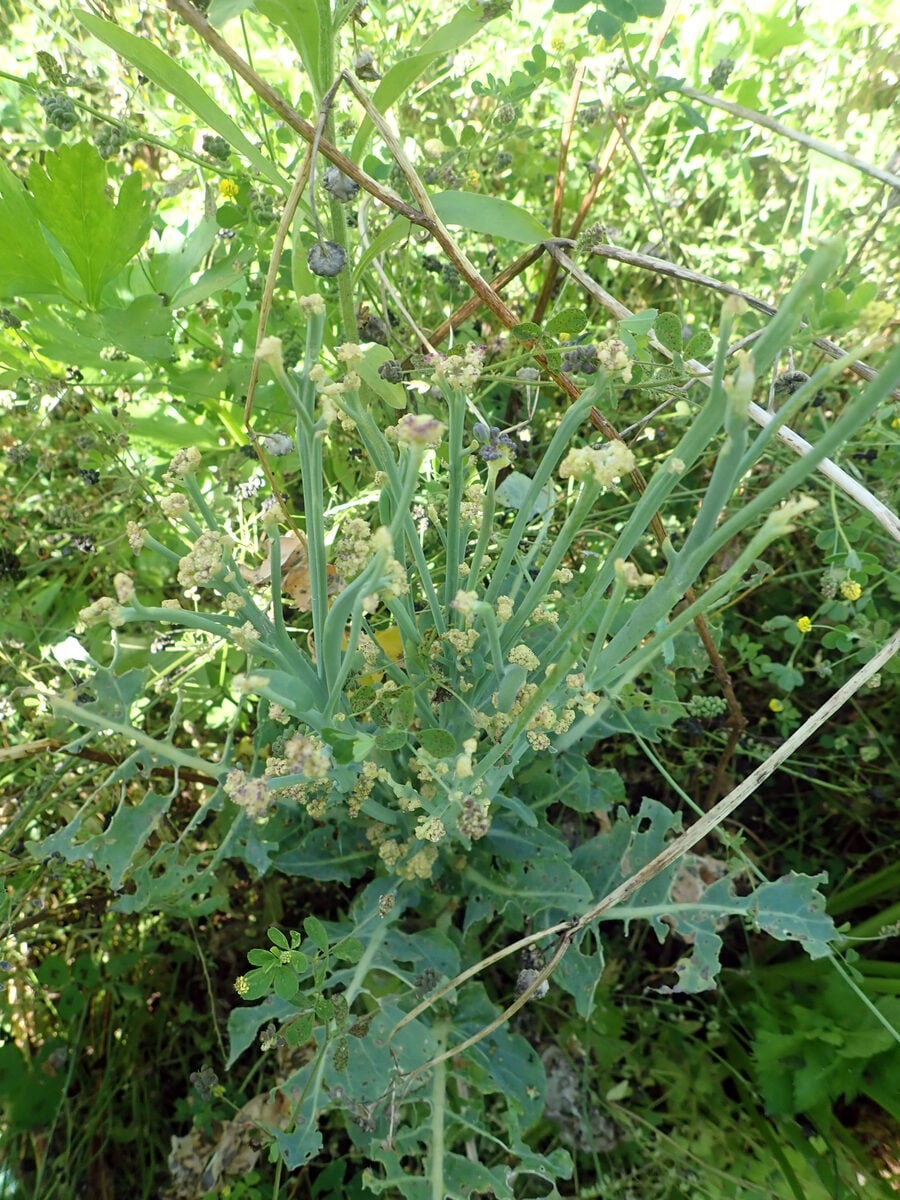
Peltaria alliacea
Jacq.
Garlic cress, Shieldwort
iNaturalist· cc-by-nc
(c) Věra Kafková, some rights reserved (CC BY-NC), uploaded by Věra Kafková
iNaturalist· cc-by-nc
(c) Věra Kafková, some rights reserved (CC BY-NC), uploaded by Věra Kafková
iNaturalist· cc-by-sa
(c) Stefan.lefnaer, some rights reserved (CC BY-SA)
Summary
Source: WikipediaPeltaria alliacea, or garlic cress, is a perennial flowering plant in the family Brassicaceae. It is endemic to Albania, Austria, Hungary, Romania and former Yugoslavia. The plant grows up to 60 cm (24 in) and has white flowers from May to July. The plant is glabrous (hairless) with simple, entire leaves. The leaves are ovate, sessile and amplexicaule (having lobes that completely surround the stem). When crushed they smell of garlic, hence the common name. The 3–4 mm (0.12–0.16 in) long white petals are shortly clawed. The orbicular, very flat silicula or seed, is pendent and has a size of about 6 by 6 mm (0.24 by 0.24 in). Its chromosome number is 2n=14 (also: 28, 56). It was first published and described by Nikolaus Joseph von Jacquin in 'Enum. Stirp. Vindob.' on page 260 in May 1762. The plant grows in stony areas from Southern Austria (Styria, Lower Austria) to South Romania and Albania. It has become naturalized at a single location on the Isle of Skye in the U.K. The plant is also grown as a herb or vegetable. The leaves can be used and add a spiciness to salads. Although, they can become bitter in the summer.
Description
A cabbage family herb. It forms clumps. It milder places it can keep growing from year to year. It grows 30 cm tall and wide. The flowering stems can be 60 cm tall. The flowers are white.
Edible Uses
Leaves can be eaten raw or cooked. They have a strong flavour somewhat like a cross between garlic and mustard, making them a reasonable flavouring for salads. Leaves are available for most of the year — even through severe winters they remain green and lush, adding a welcome spiciness to salads in colder months. They can become quite bitter in summer, particularly when plants are grown in a dry, sunny position. Plants shed their leaves for a month or two when flowering in early summer; cutting down the flowering stems at this point encourages a flush of fresh green growth. Flowers are eaten raw and share a similar flavour to the leaves but with very little bitterness, making them a tasty addition to summer salads.
Traditional Uses
The flowers and leaves are eaten in salads. They have a flavour of garlic and mustard. (They become bitter in hot weather.)
This uses section is brief — help expand it
Medicinal Uses
None known
Distribution
It is a temperate plant.
Where It Grows
Europe, Slovenia,
Cultivation
Prefers a light fertile moist soil in sun or light shade, though it is not too fussy. A very easily grown plant that tolerates considerable neglect, it produces its best crop of leaves from autumn to spring and is a potentially valuable winter salad plant. The bruised leaves give off a powerful garlic smell which is difficult to remove from the hands.
Propagation
Seed can be sown in spring or autumn in a cold frame. Germination is rapid; prick seedlings out into individual pots when large enough to handle and plant out into permanent positions during summer. Division can be carried out in spring or autumn and is very straightforward — it can be done at almost any time of year provided the soil is kept moist. Winter divisions should be potted up in a greenhouse to allow establishment before planting out in late spring.
Other Uses
The plants can be used as ground cover. They spread somewhat slowly but are effective at excluding weeds.
Also Known As
Ploščevica
References (5)
- Crawford, M., 2012, How to grow Perennial Vegetables. Green Books. p 108
- Facciola, S., 1998, Cornucopia 2: a Source Book of Edible Plants. Kampong Publications, p 58
- Hedrick, U.P., 1919, (Ed.), Sturtevant's edible plants of the world. p 469
- http://www.botanic-gardens-ljubljana.com/en/plants
- Plants for a Future database, The Field, Penpol, Lostwithiel, Cornwall, PL22 0NG, UK. http://www.scs.leeds.ac.uk/pfaf/
More from Brassicaceae
Brassica oleracea sabauda
Savoy Cabbage
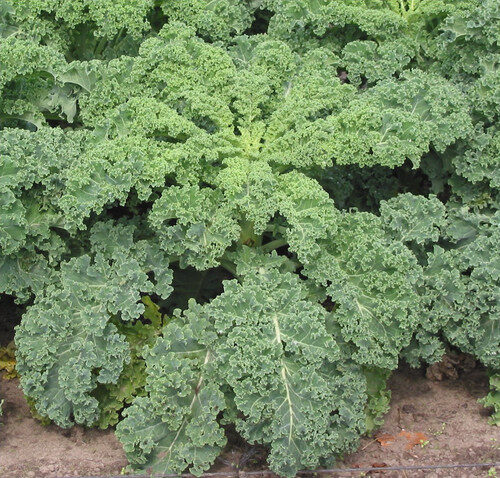
Brassica oleracea sabellica
Curly Kale
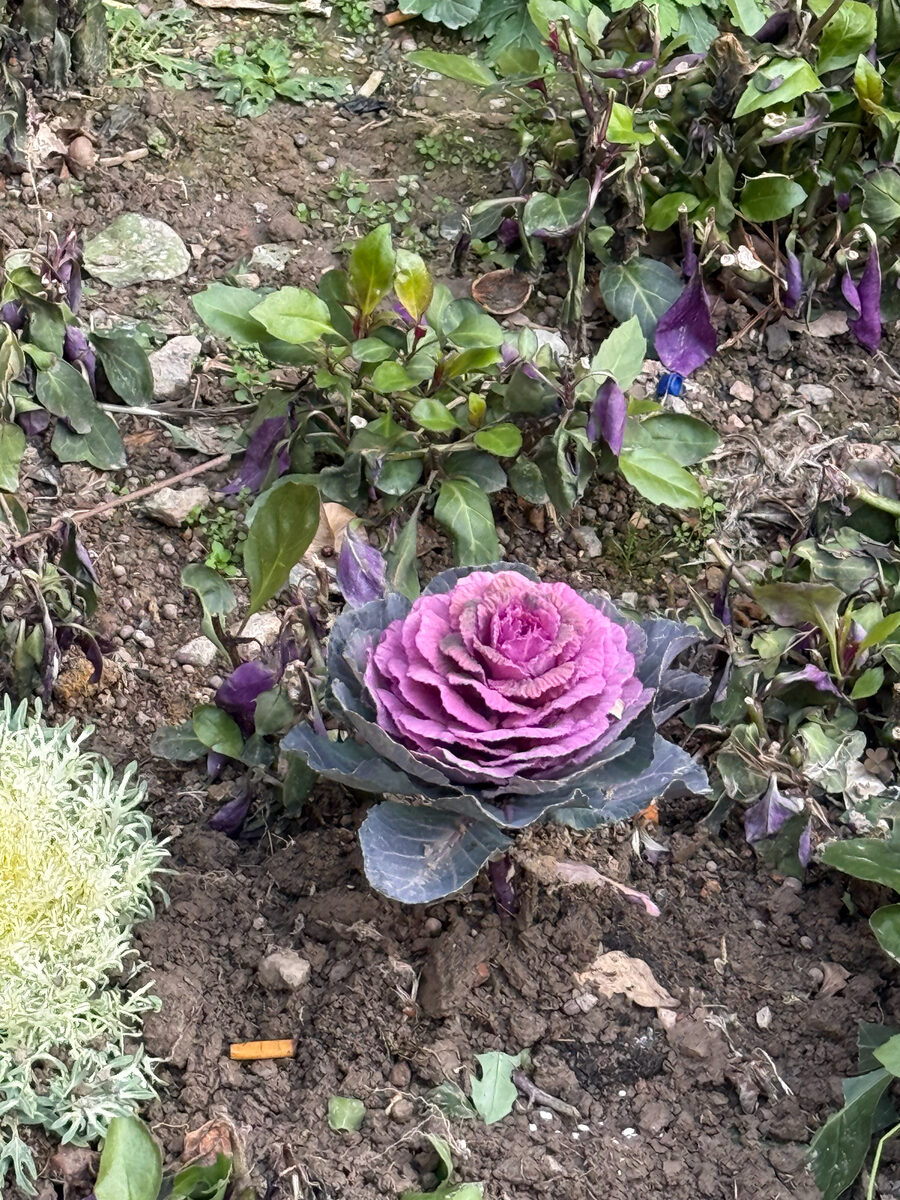
Brassica oleracea var. acephala
Kale, Collards
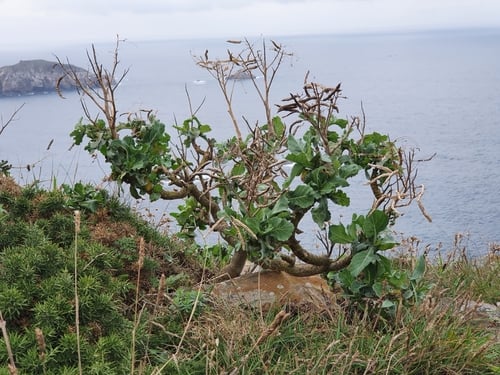
Brassica oleracea var. albiflora
Chinese kale
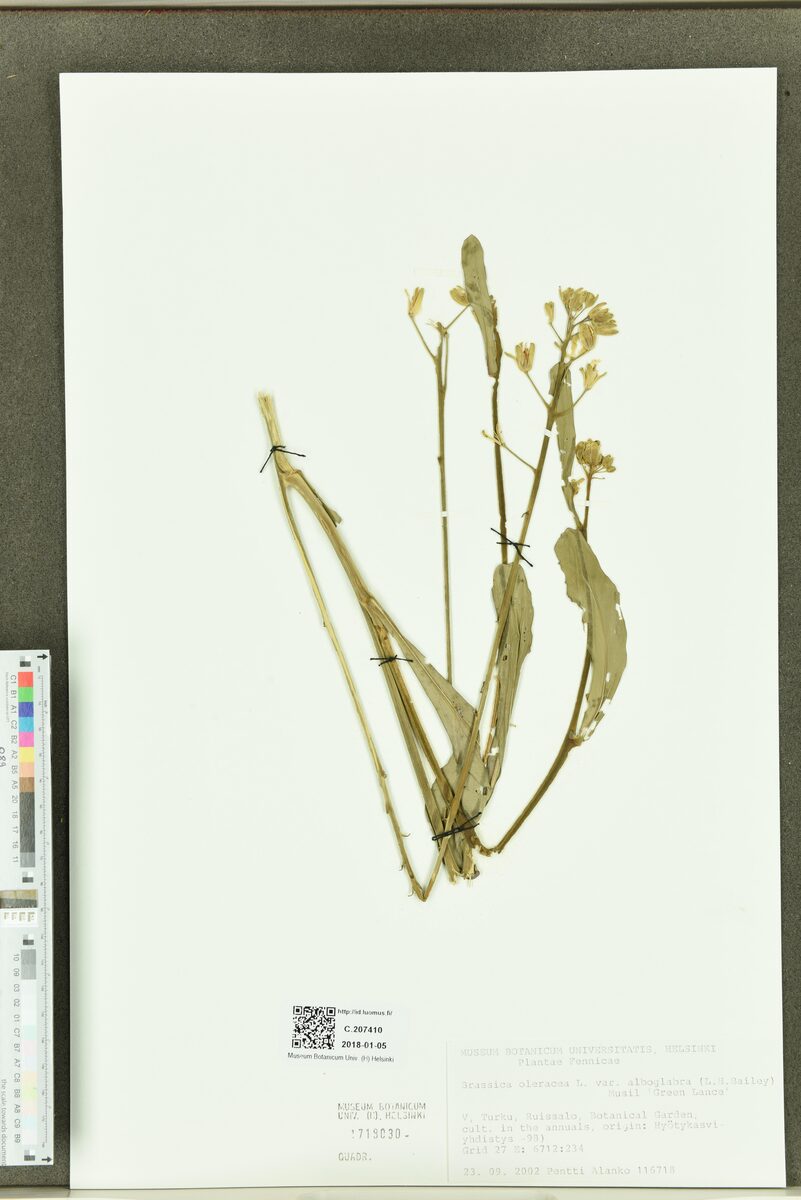
Brassica oleracea var. alboglabra
Chinese Kale, Chinese broccoli, White flowered broccoli
Brassica oleracea var. botrytis
Cauliflower