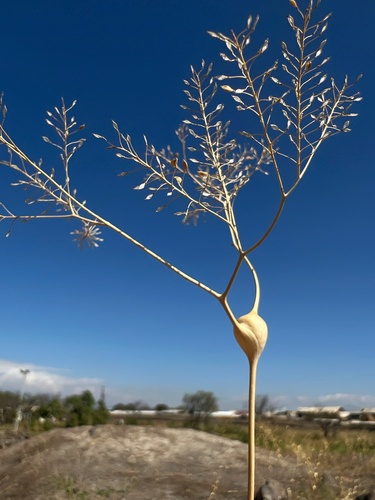
Carrichtera annua
(L.) DC.
Cress rocket
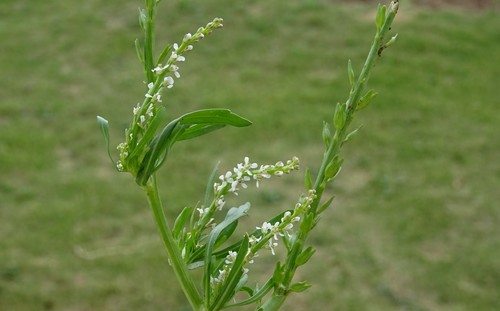
iNaturalist· cc-by-nc-sa
(c) José María Escolano, some rights reserved (CC BY-NC-SA)
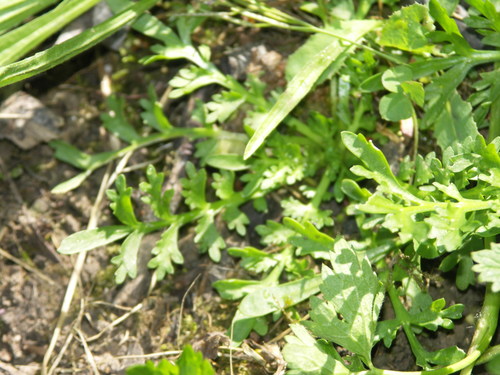
iNaturalist· cc-by-nc
(c) thephoxinus, some rights reserved (CC BY-NC), uploaded by thephoxinus
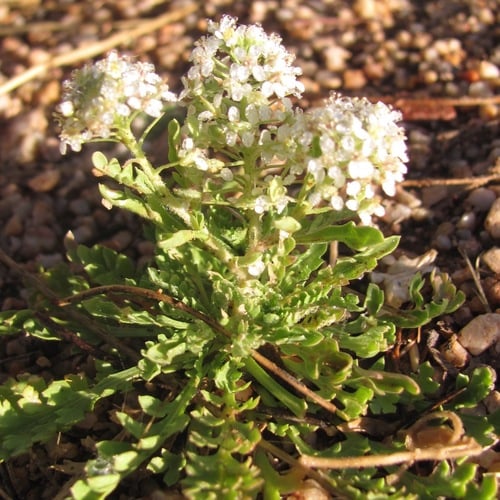
iNaturalist· cc-by-nc
(c) Dr Manfred Jusaitis, some rights reserved (CC BY-NC), uploaded by Dr Manfred Jusaitis
Description
An annual herb. The leaves are alternate and in a ring. They can be divided. The flowers are cream, purple or white.
This description is brief — help expand it
Edible Uses
The young shoots are cooked, and the leaves, stems, and shoots are edible.
Traditional Uses
The young shoots are cooked.
This uses section is brief — help expand it
Distribution
It is a Mediterranean plant. It grows in the desert. It suits semi-arid areas. It can grow in arid places.
Where It Grows
Africa, Algeria, Australia, Britain, Egypt, Europe, Greece, Iran, Iraq, Israel, Italy, Jordan, Kuwait, Libya, Mediterranean, Middle East, Morocco, North Africa, Portugal, Saudi Arabia, Sicily, Sinai, Spain, Syria, Tasmania,
Notes
It has become a serious weed in some semi-arid rangelands in Australia.
Synonyms
Also Known As
Iglayglih, Mastruzzu sarvaggiu
References (4)
- Bailey, C. and Danin, A., 1981, Bedouin Plant Utilization in Sinai and the Negev. Economic Botany 35(2): 145-162
- Geraci, A., et al, 2018, The wild taxa utilized as vegetables in Sicily (Italy): a traditional component of the Mediterranean diet. Journal of Ethnobiology and Ethnomedicine (2018) 14:14
- Pasta, S., et al, 2020, An Updated Checklist of the Sicilian Native Edible Plants: Preserving the Traditional Ecological Knowledge of Century-Old Agro-Pastoral Landscapes. Frontiers in Plant Science. Volume 11|Article 388
- Royal Botanic Gardens, Kew (1999). Survey of Economic Plants for Arid and Semi-Arid Lands (SEPASAL) database. Published on the Internet; http://www.rbgkew.org.uk/ceb/sepasal/internet [Accessed 15th April 2011]