Parinari anamensis
Hance
Thlok, Cam
iNaturalist· cc-by-nc
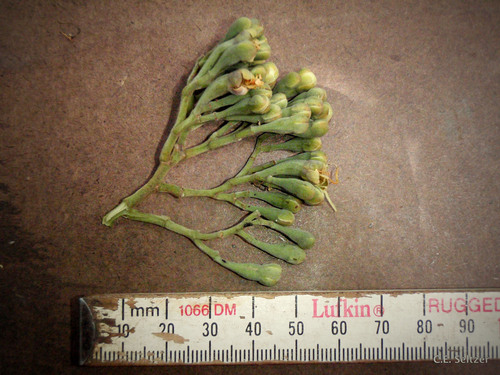
(c) David Renoult, some rights reserved (CC BY-NC), uploaded by David Renoult
iNaturalist· cc-by-nc
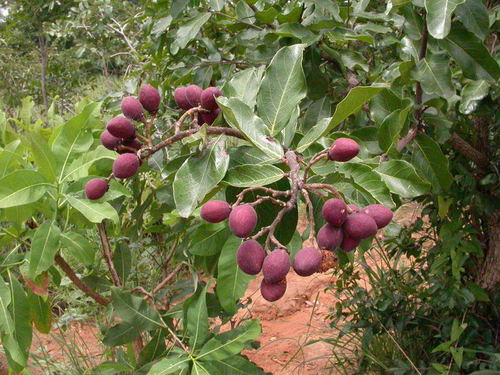
(c) fahmmp, some rights reserved (CC BY-NC)
iNaturalist· cc-by-nc
(c) fahmmp, some rights reserved (CC BY-NC)
Summary
Source: WikipediaParinari anamensis is a dicotyledonous plant species that was described by Henry Fletcher Hance from southern Vietnam. It has been called Annamese burada and is now placed in the family Chrysobalanaceae, (but formerly the Rosaceae). No subspecies are listed in the Catalogue of Life. The Vietnamese name is cám. The trunk has a pinkish-brown hue with soft flaking bark (see illustration). The Khmer name is thlok ធ្លក. A classical name for Cambodia is Nakorkuk Thlok ("the land of the thlok tree").
Description
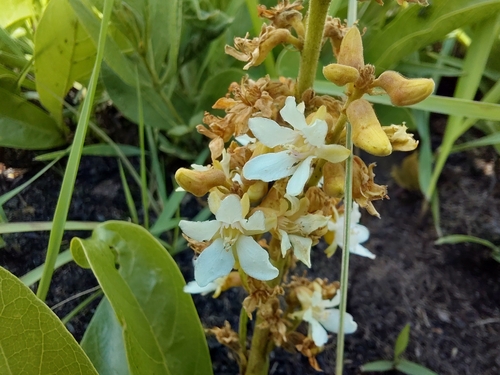
A tree. It grows 6-15 m tall. It can grow to 30 m tall. The trunk can be 30-60 cm across. The bark is grey-brown and deeply cracked. It has buttresses. The leaves are 6-15 cm long and 4-9 cm wide. They are oval with slightly pointed tips. There are 12-15 pairs of veins. The flowers are small and white. They are in slender branched clusters near the ends of twigs. These are 20 cm long. The fruit are 3-4 cm long and brown with grey scabs. They have a thin flesh. There are 1-2 seeds.
Edible Uses
The fruit are eaten ripe, and in times of food shortage the green fruit are boiled and eaten. The seeds are also edible.
Traditional Uses
The fruit are eaten. In times of food shortage the green fruit are boiled and eaten.
This uses section is brief — help expand it
Distribution
A tropical plant. It grows in forest clearings. In Vietnam it occurs above 800 m altitude.
Where It Grows
Asia, Cambodia, Indochina, Laos, SE Asia, Thailand, Vietnam,
Other Uses
An infusion of the flowers is used as a cosmetic, applied after bathing. The wood is difficult to work and splits easily but has been used for interior construction.
Other Information
It is commonly cultivated.
Notes
There are about 42-45 Parinari species. They grow in the tropics. There are 19 species in tropical America. The fruit of most is edible.
Synonyms
Also Known As
Cam, Mai phok, Thlork
References (12)
- Anderson, E. F., 1993, Plants and people of the Golden Triangle. Dioscorides Press. p 217
- Cengel, D. J. & Dany, C., (Eds), 2016, Integrating Forest Biodiversity Resource Management and Sustainable Community Livelihood Development in the Preah Vihear Protected Forest. International Tropical Timber Organization p 134 (As Parinarium annamensis)
- Ferns, Useful Tropical Plants
- Forest Inventory and Planning Institute, 1996, Vietnam Forest Trees. Agriculture Publishing House p 94
- Gardner, S., et al, 2000, A Field Guide to Forest Trees of Northern Thailand, Kobfai Publishing Project. p 183
Show all 12 references Hide references
- Kachenchart, B., et al, 2008, Phenology of Edible Plants at Sakaerat Forest. In Proceedings of the FORTROP II: Tropical Forestry Change in a Changing World. Bangkok, Thailand.
- Martin, M.A., 1971, Introduction L'Ethnobotanique du Cambodge. Centre National de la Recherche Scientifique. Paris.
- Pham-Hoang Ho, 1999, An Illustrated Flora of Vietnam. Nha Xuat Ban Tre. p 809
- Phon, P., 2000, Plants used in Cambodia. © Pauline Dy Phon, Phnom Penh, Cambodia. p 490
- Prance, G. T. & Sothers, C., 2003, Species Plantarum - Flora of the World. Chrysobalanaceae. p 205
- Turreira Garcia, N., et al, 2017, Ethnobotanical knowledgeof the Kuy and Khmer people in Prey Lang, Cambodia. Cambodian Journal of Natural History 2017 (1): 76-101
- World Checklist of Useful Plant Species 2020. Royal Botanic Gardens, Kew