Parinari campestris
Aubl.
Broad-leaved burada, Plains parinari
iNaturalist· cc-by-nc
(c) Sébastien SANT,保留部分权利(CC BY-NC), 由 Sébastien SANT 上传
iNaturalist· cc-by-nc
(c) Julien Piolain, some rights reserved (CC BY-NC)
Summary
Source: WikipediaParinari campestris is a species of tree in the plant family Chrysobalanaceae which is native to Trinidad, the Guianas, Venezuela and Brazil. It is reputed to have aphrodisiac properties.
Description
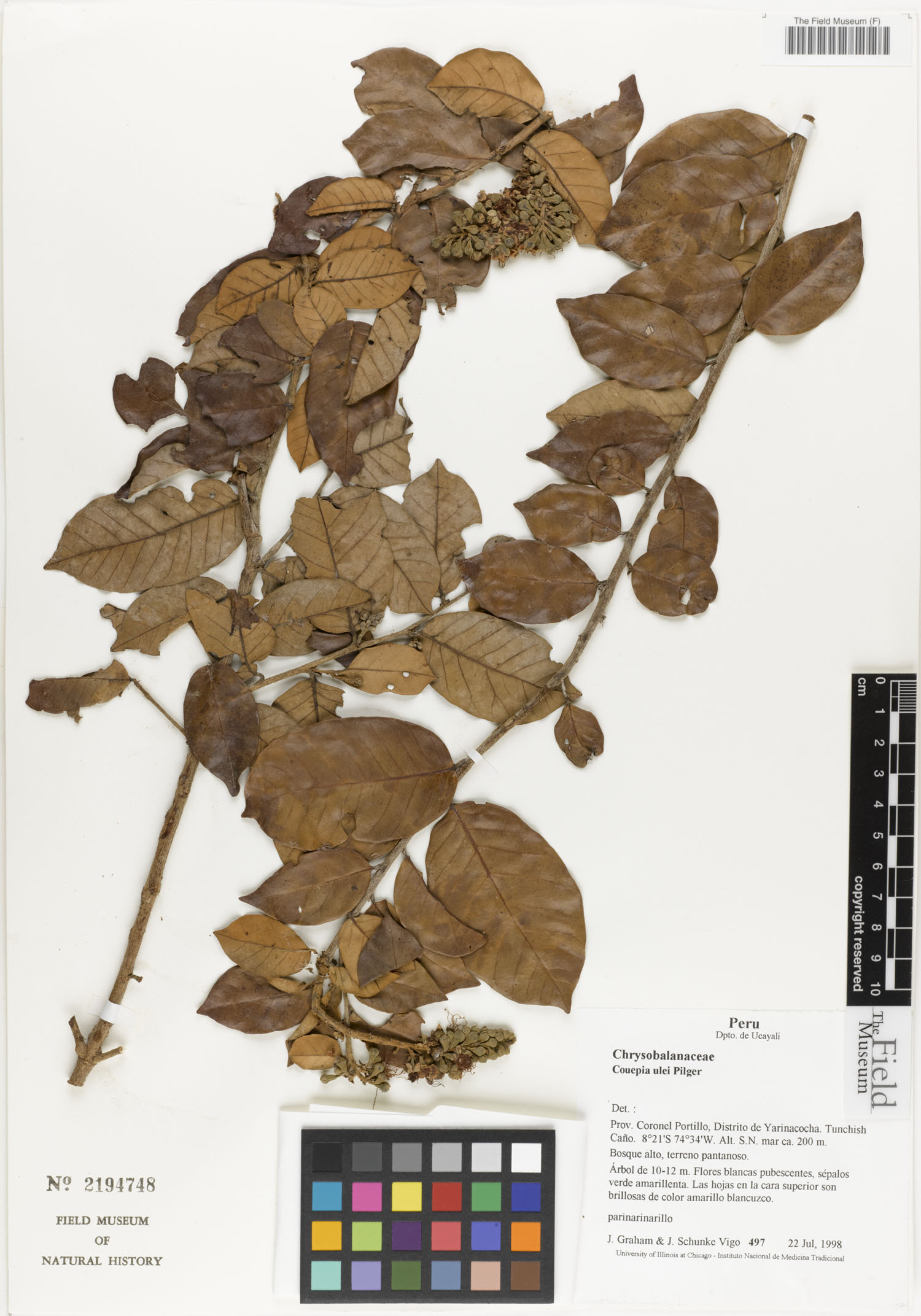
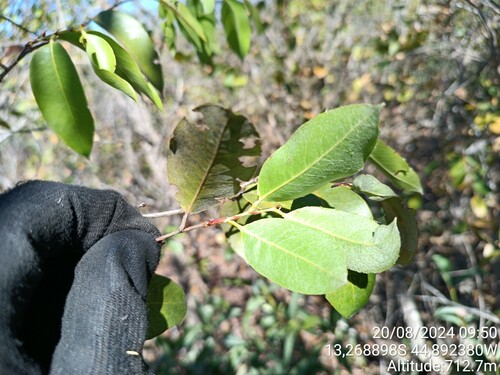
A tree. It grows 25 m tall. It can have thick buttresses. The trunk is 12-15 m long. The twigs are covered with brown hairs when young. The leaves are alternate. The leaf blades are leathery and oval. They are 6-13 cm long by 3-7 cm wide. They are dull above and hairy underneath. The flowering shoots are at the ends of branches or in the axils of leaves. They are covered with brown hairs. The flowers have 5 white petals. The fruit is small, oval and yellow. It is 4-6 cm long by 2-3 cm wide. It contains a single seed or occasionally two.
Edible Uses
Parinari campestris is one of several species including Richeria grandis and Roupala montana which known by the common name bois bandé. These species are reputed to have aphrodisiac properties. The species is also used ritually in winti, an Afro-Surinamese religion. Extracts from P. campestris leaves have been shown to inhibit the interaction between Vascular endothelial growth factor A and Vascular endothelial growth factor receptor 1.
Traditional Uses
The fruit are eaten.
This uses section is brief — help expand it
Medicinal Uses
Thee thick, brown indumentum (coat of hairs) on the stem is mixed with sweet oil and then applied as a poultice to hasten expulsion of filaria worms from an infected leg.
Distribution
A tropical plant. It grows in rainforest and savannah. It can be on ridges in marsh forest.
Where It Grows
Amazon, Bolivia, Brazil, Caribbean, Central America, Colombia, Ecuador, Guianas, Guyana, South America, Suriname, Trinidad and Tobago, Venezuela,
Cultivation
Plants are grown from seed.
Other Uses
The heartwood is light brown, not clearly defined and somewhat darker than the sapwood, which is about 40mm wide. The lustre is medium; the grain usually straight, sometimes slightly interlocked; the texture fine. The wood contains a high amount of silica. The wood is difficult to machine because of its high density and high silica content, dulling cutting edges rapidly. Smooth surfaces can be obtained in planing, boring and sawing operations if tools are properly maintained. Takes only a fair polish. Nails poorly -pre-boring necessary to prevent splitting. Turns badly. Resistant to marine borers and insect attack. The wood is useful for marine constructions.
Notes
There are about 50 Parinari species. They grow in the tropics.
Synonyms
Also Known As
Barada, Boehoerada, Boehoeroedoe, Bohowada, Bohowoda, Bois-bande, Bois-baude, Bohorada, Burada, Buhurada, Dauro-cocimo, Foengoe, Hoengoeti, Fongoupaou, Fongouti, Foungouti, Gaulette blanc, Gris gris blanc, Guaray, Koepensienoe, Kopesienoe, Kupisini, Mahaicaballi, Makarai, Merecurillo, Oiti, Pajura, Pasa, Pasita, Redi-foengoe, Tajamama, Vonkhout, Wamuk, Wamuku
References (10)
- FAO, 1995, Edible Nuts. Non Wood Forest Products 5.
- Grandtner, M. M. & Chevrette, J., 2013, Dictionary of Trees, Volume 2: South America: Nomenclature, Taxonomy and Ecology. Academic Press p 481
- Hedrick, U.P., 1919, (Ed.), Sturtevant's edible plants of the world. p 464
- Johnson, M. and Colquhoun, A., 1996, Preliminary Ethnobotanical Survey of Kurupukari: An Amerindian Settlement of Central Guyana. Economic Botany, Vol. 50, No. 2, pp. 182-194
- Kermath, B. M., et al, 2014, Food Plants in the Americas: A survey of the domesticated, cultivated and wild plants used for Human food in North, Central and South America and the Caribbean. On line draft. p 606
Show all 10 references Hide references
- Martin, F. W., et al, 1987, Perennial Edible Fruits of the Tropics. USDA Handbook 642 p 92
- Menninger, E.A., 1977, Edible Nuts of the World. Horticultural Books. Florida p 59
- Polak, A. M., 1992, Major Timber Trees of Guyana. A Field Guide. Tropenbos Series 2. Wageningen. p 147
- Roa, J. A. G. & Boada, D. S. G., 2018, Fundación para el Fortalecimiento de la Fruticultura y Plantas Alimenticias no Convencionales en Colombia.
- Wickens, G.E., 1995, Edible Nuts. FAO Non-wood forest products. FAO, Rome. p 115