Neocarya macrophylla
(Sabine) Prance ex F. White
Gingerbread plum
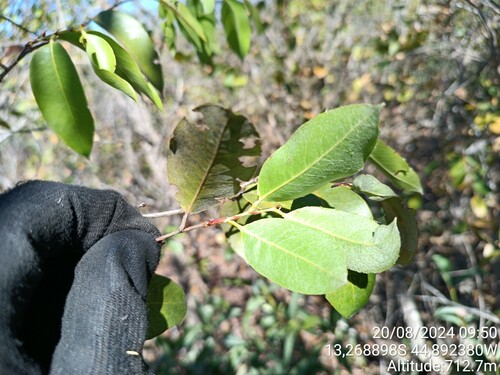
iNaturalist· cc-by-nc
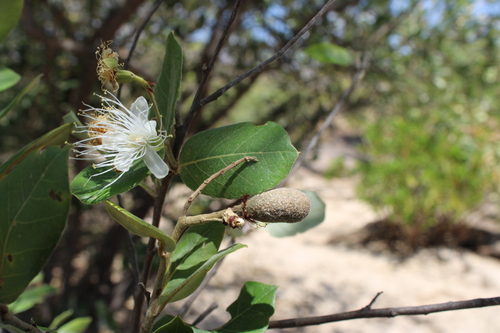
(c) Leoš Smutný a Antonín Horáček, some rights reserved (CC BY-NC), uploaded by Leoš Smutný a Antonín Horáček
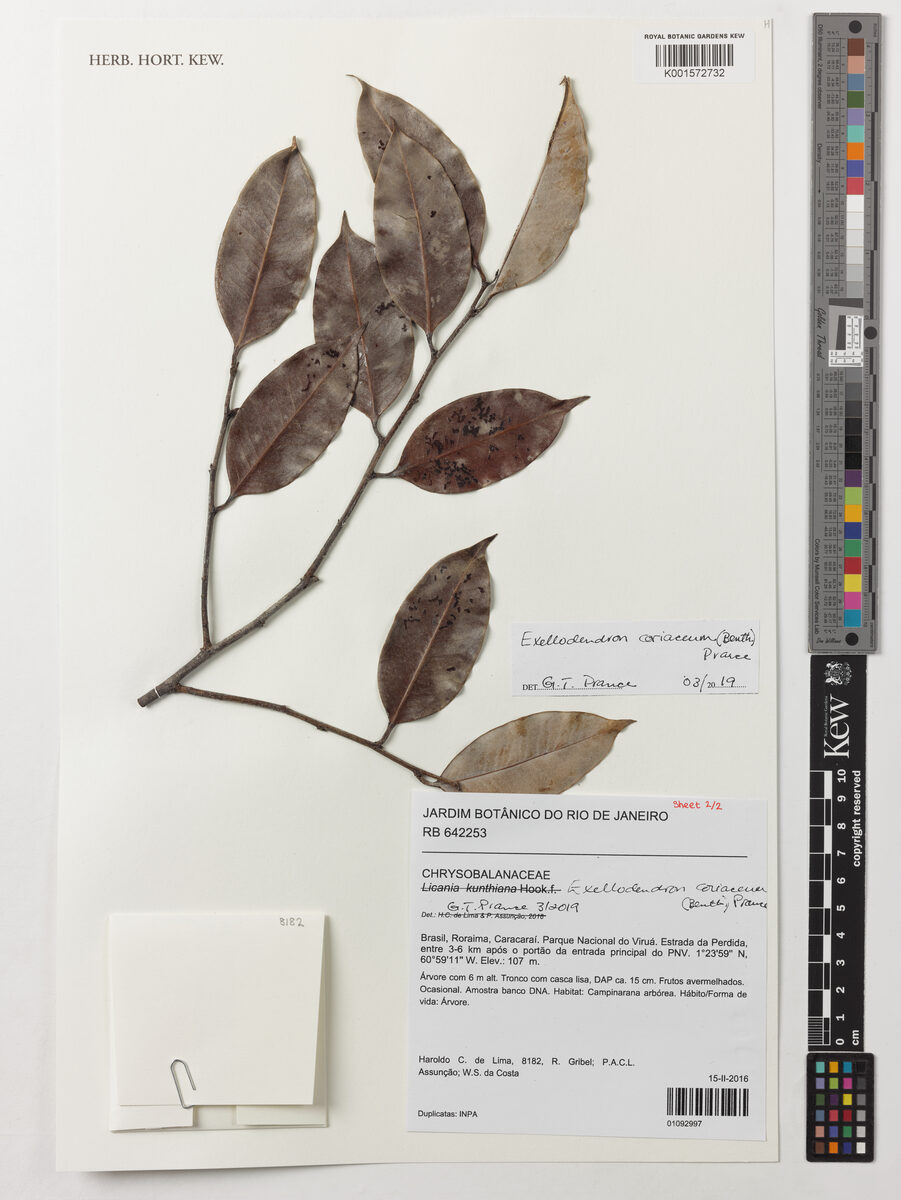
iNaturalist· cc-by-nc
(c) Luke Smith, some rights reserved (CC BY-NC)
Description
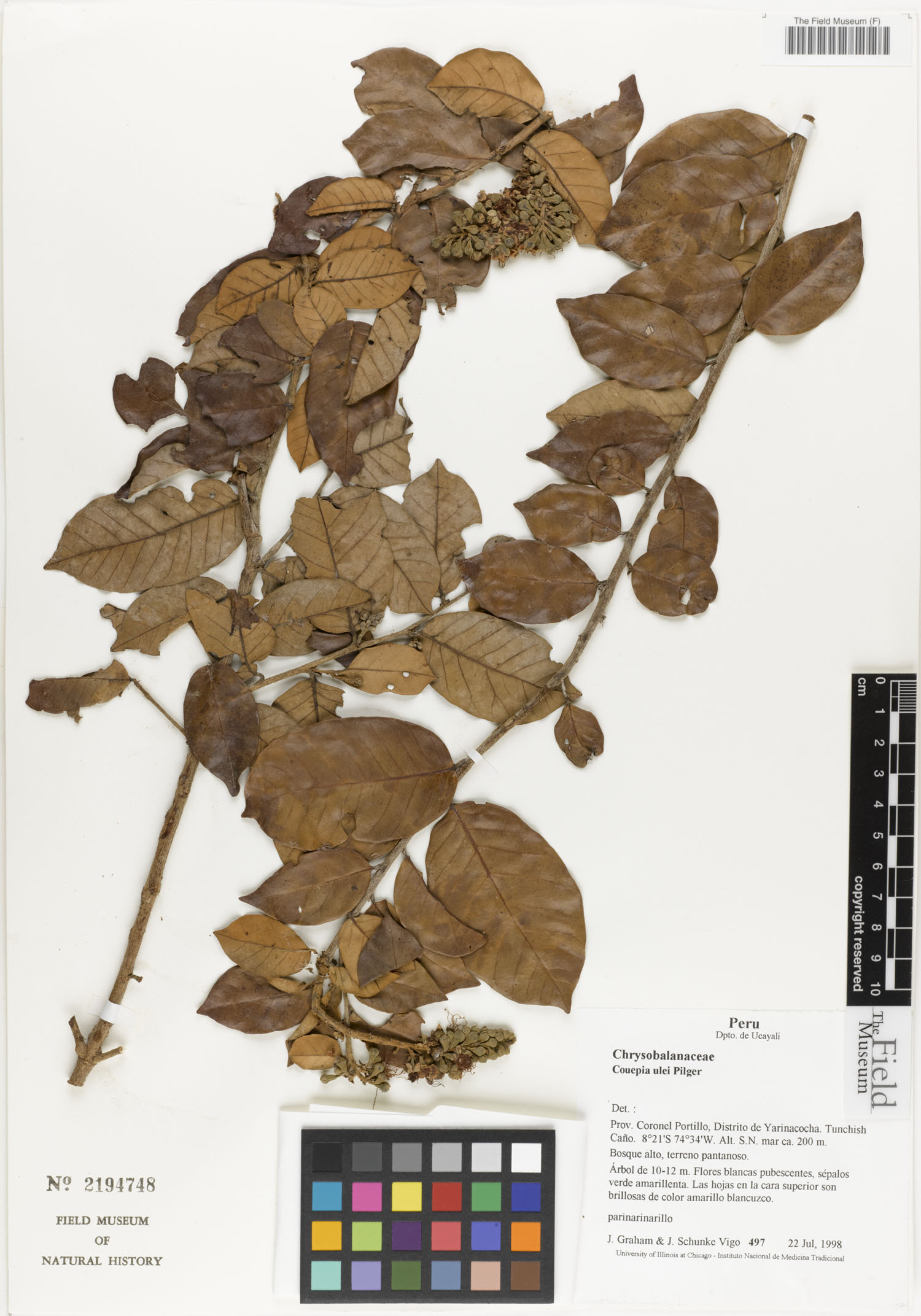
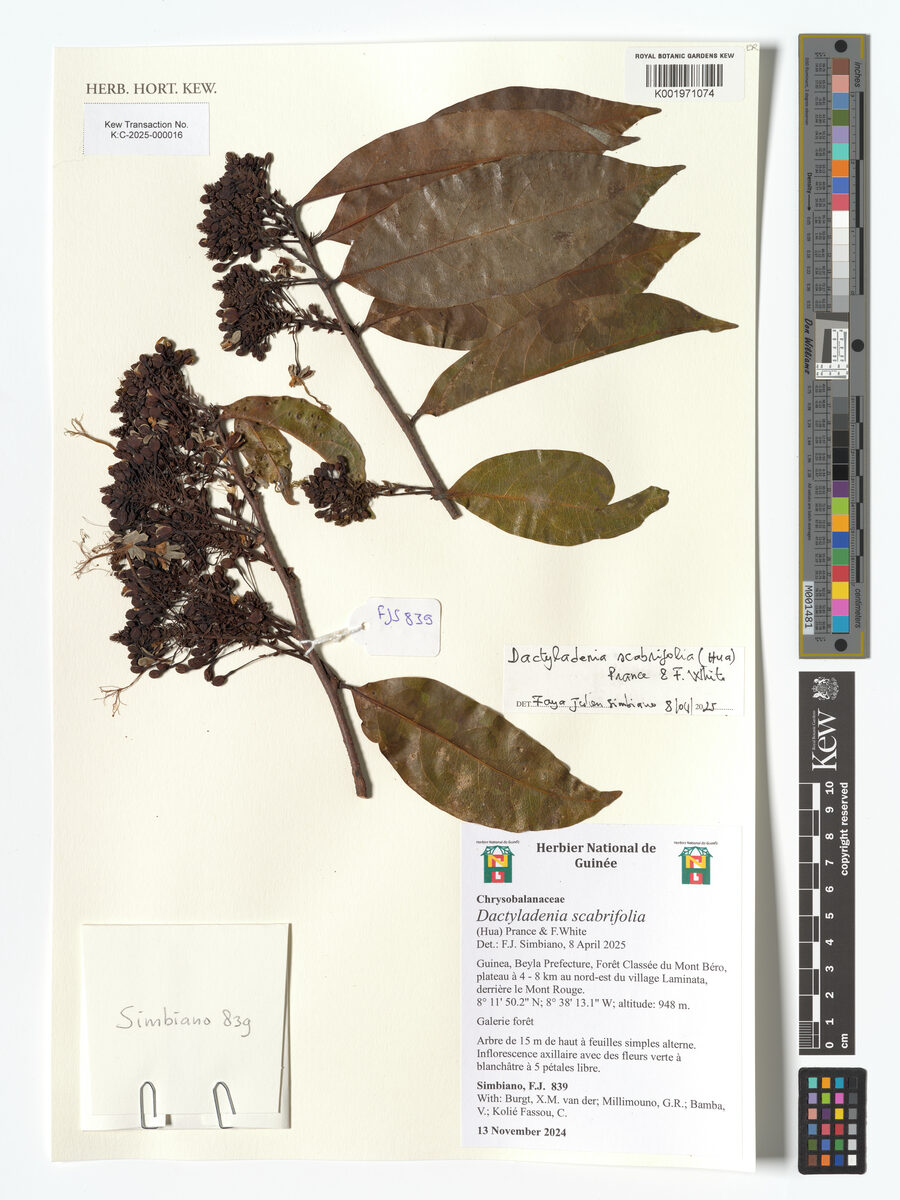
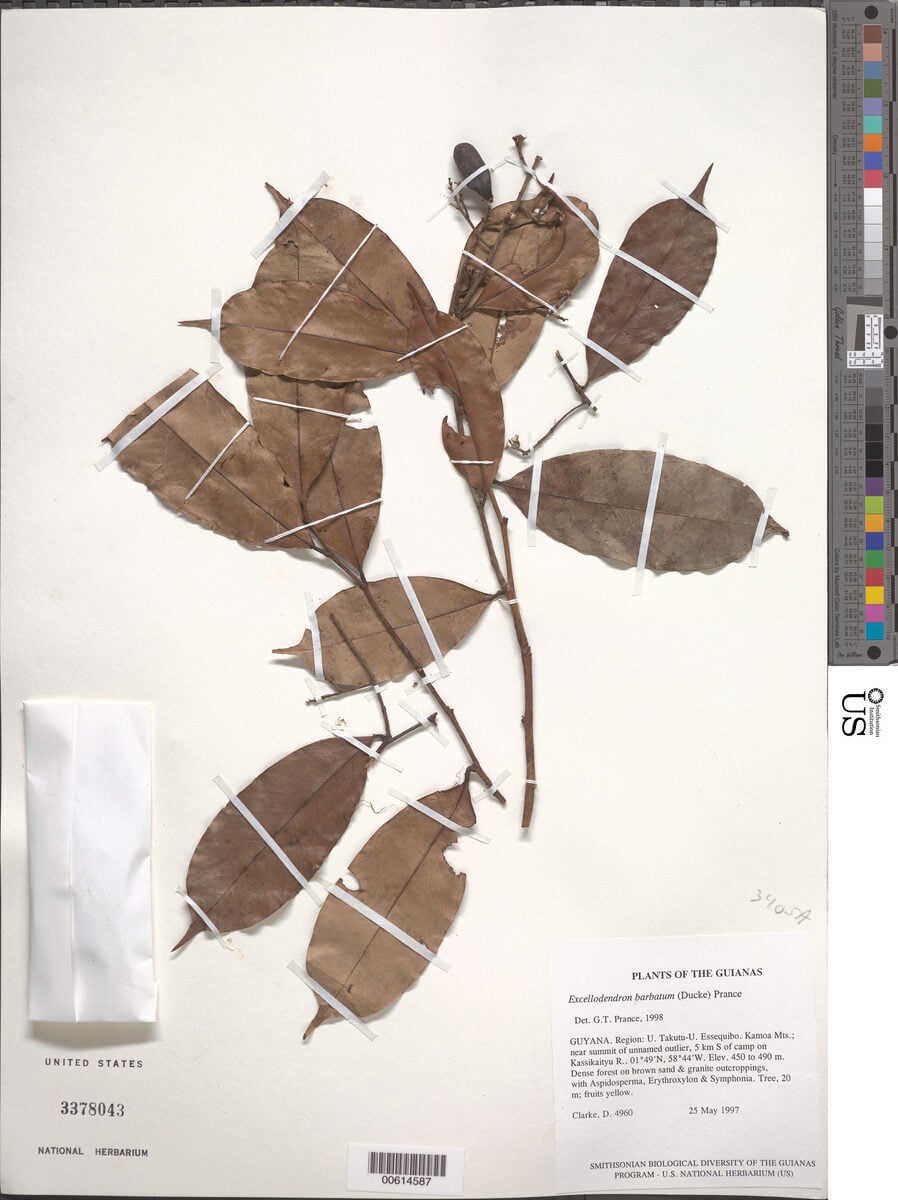
A bush or small tree. It grows 10 m high. The trunk is gnarled. The crown is round and bushy. The branches have a dense grey covering when young. The leaves are broad. They have a grey covering underneath. The fruit are oval and 5 cm long. The pulp is edible.
Edible Uses
The oval 5 cm fruits are eaten fresh, boiled with cereals, or crushed into juice drinks. The kernels are roasted and eaten.
Traditional Uses
The fruit is eaten fresh. They are also boiled with cereals. They can be crushed to make a juice drink. The kernels are roasted and eaten.
This uses section is brief — help expand it
Medicinal Uses
A decoction of the bark, leaves or dried fruit pulp is commonly used as a mouthwash, and to treat toothache. The leaves are also chewed or applied topically for the same reason. A lotion made from the macerated bark is used as an eyewash to soothe inflamed eyes. A decoction of the bark or leaves is taken internally for treating respiratory troubles. The powdered bark is applied externally to bring relief over areas of deep-seated pain. The root is haemostatic. The powdered root is combined with Securidaca longepedunculata and used as an antidote to poison. The root is powdered then decocted in water to be used as a gargle against toothache. It is applied externally as a cicitrisant on wounds, being used especially when the penis is circumcised. A fruit-decoction is taken against diarrhoea. The endocarp bears within it a layer of hairs which are held to be anthelmintic in children. Because they tend to stick in the gullet, the hairs are administered with a ripe banana taken first thing in the morning on an empty stomach. The endocarp is sometimes sold in local markets as a vermifuge for taking with milk or better still with a banana. Hospital tests have shown evidence of effectiveness against helminths. In this treatment the endocarpic hairs were placed in capsules for ease of swallowing. The hairs have been shown to contain ceryl palmitate.
Distribution
A tropical plant. It grows in sandy locations scattered along West Africa. It can be near banks of sandy seasonal watercourses and on sandstone cliffs. It can survive burning in savannah zones.
Where It Grows
Africa, Benin, Cameroon, Côte d'Ivoire, Cuba, Gambia, Ghana, Guinea, Guinée, Guinea-Bissau, Ivory Coast, Liberia, Mali, Niger, Nigeria, Sahel, Senegal, Sierra Leone, West Africa, West Indies,
Cultivation
The tree fruits all year round in some areas. The tree appears to survive annual fires when growing in the savannah.
Other Uses
The rind from the fruit is aromatic. It is used to impart a pleasant smell to ointments. Before it reaches maturity, fishermen obtain a sticky substance from the fruit which they use for smearing on their tackle and to stop cracks in leaking pots. The endocarp bears within it a layer of hairs which can be used for tinder. The kernel contains up to 62% of a drying oil known as 'neou oil'. An excellent drying oil, it is composed of oleic acid 40%, eleostearic acid 31 %, linoleic acid 15%, palmitic acid 12% and stearic acid 2%. Neou oil finds local use, mixed with palm-oil, as a pleasant-smelling body-unguent. The kernel has been recorded as containing 62% oil, while 9% has been found in the endocarp. The nut is burnt to ash and is used in making soap. The light brown wood is fairly hard, it works and polishes well. It is used for boards, construction, canoes etc. The wood is used for fuel and to make charcoal.
Production
Fruit can be available all year round.
Other Information
Its popularity varies. It is cultivated in some places.
Nutrition
| Part | Moisture | kJ | kcal | Protein | Vit A | Vit C | Iron | Zinc |
|---|---|---|---|---|---|---|---|---|
| Seeds flour | 10.6 | — | — | 20.4 | — | — | — | — |
Synonyms
Also Known As
Bansuma, Bate, Beel, Benobeno, Bio, Bitiague, Bu bita, Bufangha, Bu nafay, Cura-bussuma, Curanaco, Gamsa, Gawasa, M'bute, Mampatace-grande, Maveu, Menai, N'djapo, Nando, Naudi, Naudo, Ndawei, New, Noronorodo, Nororodo, Nya, Nyau, Orodjo, Quio, Tamankumba, Tamba, Tamba-cumba, Tambacumba, Tehe, Umbatu, Wo
References (30)
- Abbiw, D.K., 1990, Useful Plants of Ghana. West African uses of wild and cultivated plants. Intermediate Technology Publications and the Royal Botanic Gardens, Kew. p 48
- Abbiw, D.K., 1990, Useful Plants of Ghana. West African uses of wild and cultivated plants. Intermediate Technology Publications and the Royal Botanic Gardens, Kew. p 48
- Akinola, R., et al, 2020, A Review of Indigenous Food Crops in Africa and the Implications for more Sustainable and Healthy Food Systems. Sustainability 2020, 12, 3493;
- Amza, T. et al, 2010, Chemical and Nutrient Analysis of Gingerbread Plum (Neocarya macrophylla) Seeds. Advance Journal or Food Science and Technology 2(4): 191-195
- Ayantunde, A. A., et al, 2009, Uses of Local Plant Species by Agropastoralists in South-western Niger. Ethnobotany Research and Applications. Vol. 7: 53-66
Show all 30 references Hide references
- Bojang, L., 1999, Non-wood Forest Products in The Gambia. EC-FAO Partnership Programme. (As Parinari macrophylla)
- Burkill, I.H., 1966, A Dictionary of the Economic Products of the Malay Peninsula. Ministry of Agriculture and Cooperatives, Kuala Lumpur, Malaysia. Vol 2 (I-Z) p 1694 (As Parinarium macrophyllum)
- Burkill, H. M., 1985, The useful plants of west tropical Africa, Vol. 1. Kew.
- Busson, 1965,
- Catarino, L., et al, 2016, Ecological data in support of an analysis of Guinea-Bissau's medicinal flora. Data in Brief 7 (2016):1078-1097
- Diarra, N. et al, 2016, Etude ethnobotanique des plantes alimentaires utilisées en période de soudure dans les régions Sud du Mali. Int. J. Biol. Chem. Sci. 10(1): 184-197
- Djihounouck, Y., et al, 2018, Diversité Et Importance Socio-Economique Des Espèces Fruitières Sauvages Comestibles En Zone Kasa (Sud-Ouest Du Sénégal). European Scientific Journal December 2018 edition Vol.14, No.36 ISSN: 1857 – 7881
- Djihounouck, Y., et al, 2021, Ethnobotanical Uses of Non-cultivated Edible Fruit Species in the Department of Oussouye (South Senegal). Journal of Food Research; Vol. 10, No. 4 p 16
- Gueye, M., et al, 2014, Wild Fruits Traditionally Gathered by the Malinke Ethnic Group in the Edge of Niokolo Koba Park (Senegal). American Journal of Plant Sciences 5, 1306-1317
- Hedrick, U.P., 1919, (Ed.), Sturtevant's edible plants of the world. p 464 (As Parinarium macrophyllum)
- Heywood, V.H., Brummitt, R.K., Culham, A., and Seberg, O. 2007, Flowering Plant Families of the World. Royal Botanical Gardens, Kew. p 99
- Jardin, C., 1970, List of Foods Used In Africa, FAO Nutrition Information Document Series No 2.p 35, 153
- Le Houerou, H. N., (Ed.), 1980, Browse in Africa. The current state of knowledge. International Livestock Centre for Africa, Ethiopia. p 162
- Miguel, E., et al, 1989, A checklist of the cultivated plants of Cuba. Kulturpflanze 37. 1989, 211-357 (As Parinari macrophylla)
- Moksia, F., et al, 2019, Diversity and Socio-Economic Value of Wild Edible Plants in the Mounts Mandara Region, Cameroon. International Journal of Sciences. Vol. 8:10
- Muller, J. & Almedom, A. M., 2008, What is “Famine Food”? Distinguishing Between Traditional Vegetables and Special Foods for Times of Hunger/Scarcity (Boumba, Niger). Hum Ecol (2008) 36:599–607
- Peters, C. R., O'Brien, E. M., and Drummond, R.B., 1992, Edible Wild plants of Sub-saharan Africa. Kew. p 83
- Prance, G. T. & Sothers, C., 2003, Species Plantarum - Flora of the World. Chrysobalanaceae.
- Sambou, A., et al, 2016, The contribution of trees and palms to a blanced diet in three rural villages of the Fatick Province, Senegal. FORESTS, TREES AND LIVELIHOODS, 2016 VOL. 25, NO. 3, 212–225 (As Parinarium macrophyllum)
- Segnon, A. C. and Achigan-Dako, E. G., 2014, Comparative analysis of diversity and utilization of edible plants in arid and semi-arid areas in Benin. Journal of Ethnobiology and Ethnomedicine. 10:80
- Trans. Roy. Hort. Soc. London 5:452. 1824
- Unwin, A. H., 1920, West African Forests and Forestry. Fisher Unwin Ltd. pdf on Internet p 54 (As Parinarium macrophyllum)
- Vanderjagt, F. J., et al, 2000, The trypsin inhibitor content of 61 wild edible plant foods of Niger. Plant Foods for Human Nutrition 55: 335–346, 2000. (As Parinari macrophylla)
- World Checklist of Useful Plant Species 2020. Royal Botanic Gardens, Kew
- Yaradua, S. S. & El-Ghani, M. A., 2015, Ethnobotanical Survey of Edible Plants Sold in Katsina Metropolis Markets.International Journal of Science and Research (IJSR). 4(12) (As Parinari macrophylla)