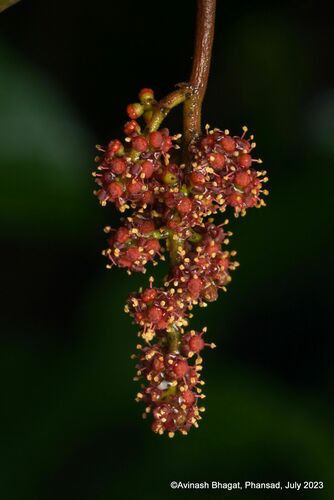
Cayratia clematidea
(F. Muell.) Domin
Native grape, Slender grape
iNaturalist· cc-by-nc
(c) lfwscc, some rights reserved (CC BY-NC)
iNaturalist· cc-by-nc
(c) lfwscc, some rights reserved (CC BY-NC)
iNaturalist· cc-by-nc
(c) lfwscc, some rights reserved (CC BY-NC)
Description
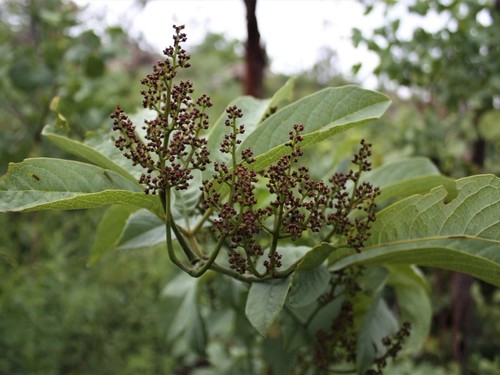
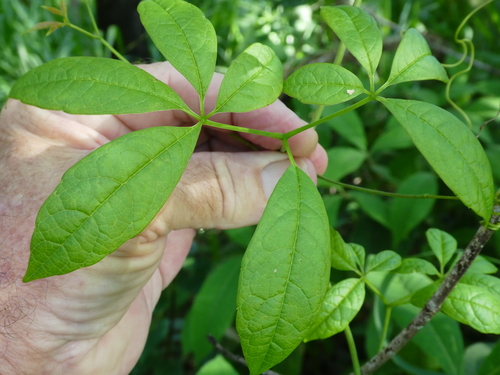
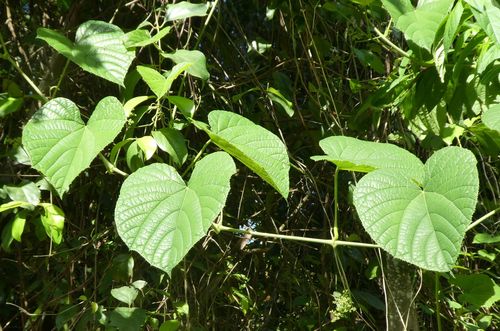
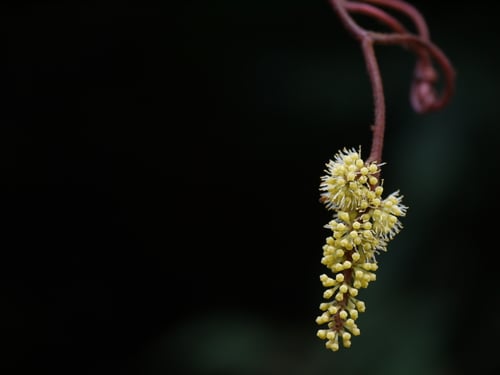
A slender climber. It grows 3-5 m tall. The roots have tubers 2-3 cm across. The leaves are compound with 5 leaflets. They are oval and light green. They are about 5 cm long. There are teeth along the edge. The flowers are greenish and small. They occur in dense clusters. The fruit are black berries. They are round and 0.5 cm across.
Edible Uses
The small black berries are eaten fresh, though consuming too many can irritate the throat. The root tubers are eaten after roasting.
Traditional Uses
The berries are eaten. They can irritate the throat if too many are eaten. The root tubers are eaten after roasting.
This uses section is brief — help expand it
Distribution
A tropical plant. It grows in Queensland and New South Wales in Australia, in moist sheltered places. It grows best with shade and moisture.
Where It Grows
Australia*,
Cultivation
Plants can be grown from fresh seed or cuttings.
Production
It is a fast growing plant.
Notes
There are about 45 Cayratia species. They are mainly in tropical areas.
Synonyms
Also Known As
Bibu, Mor-bir, Mugiyala, Tangle vine
References (14)
- Bodkin, F., 1991, Encyclopedia Botanica. Cornstalk publishing, p 229
- Cherikoff V. & Isaacs, J., The Bush Food Handbook. How to gather, grow, process and cook Australian Wild Foods. Ti Tree Press, Australia p 154, 194, 198
- Cribb, A.B. & J.W., 1976, Wild Food in Australia, Fontana. p 63
- Edible and Useful Native Plants (off internet)
- Elliot, W.R., & Jones, D.L., 1982, Encyclopedia of Australian Plants suitable for cultivation. Vol 2. Lothian. p 489
Show all 14 references Hide references
- Haslam, S., 2004, Noosa's Native Plants. Noosa Integrated Catchment Assn. Inc. p 330
- Jones, D.L. & Gray, B., 1977, Australian Climbing Plants. Reed. p 21, 87
- Lazarides, M. & Hince, B., 1993, Handbook of Economic Plants of Australia, CSIRO. p 52
- Lim, T. K., 2015, Edible Medicinal and Non Medicinal Plants. Volume 9, Modified Stems, Roots, Bulbs. Springer p 23
- Low, T., 1991, Wild Food Plants of Australia. Australian Nature FieldGuide, Angus & Robertson. p 62
- Melzer, R. & Plumb, J., 2011, Plants of Capricornia. Belgamba, Rockhampton. p 391
- Morley, B.D., & Toelken, H.R., (Eds), 1983, Flowering Plants in Australia. Rigby. p 228
- Pearson, S. & A., 1992, Rainforest Plants of Eastern Australia. Kangaroo Press p 57
- Townsend, K., 1994, Across the Top. Gardening with Australian Plants in the tropics. Society for Growing Australian Plants, Townsville Branch Inc. p 128