Paederia foetida
L.
Chinese fevervine
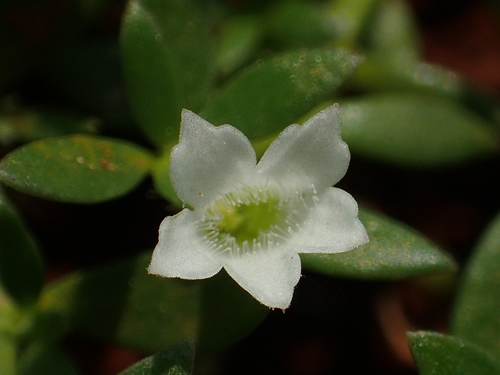
iNaturalist· cc0
no rights reserved, uploaded by 葉子
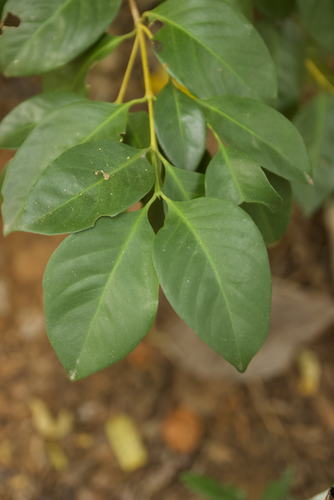
iNaturalist· cc-by-nc
(c) Adam Arendell, some rights reserved (CC BY-NC), uploaded by Adam Arendell
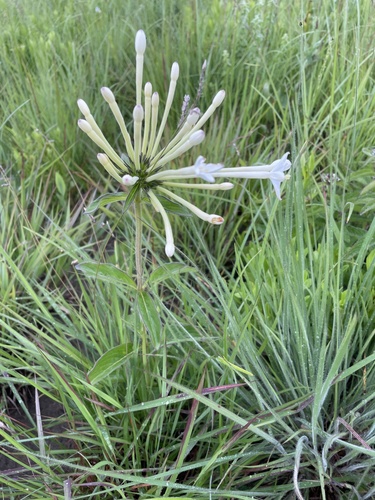
iNaturalist· cc-by-nc
(c) John, some rights reserved (CC BY-NC), uploaded by John
Summary
Source: WikipediaPaederia foetida is a species of plant, with common names that are variations of skunkvine, stinkvine, pilau maile (Hawaiian) or Chinese fever vine. It is native to temperate, and tropical Asia; and has become naturalized in the Mascarenes, Melanesia, Polynesia, and the Hawaiian Islands, also found in North America by recent studies. Paederia foetida is known for the strong, sulphurous odour exuded when its leaves or stems are crushed or bruised. This is because the oil responsible for the smell, and found primarily within the leaves, contains sulphur compounds, including largely dimethyl disulphide.
Description
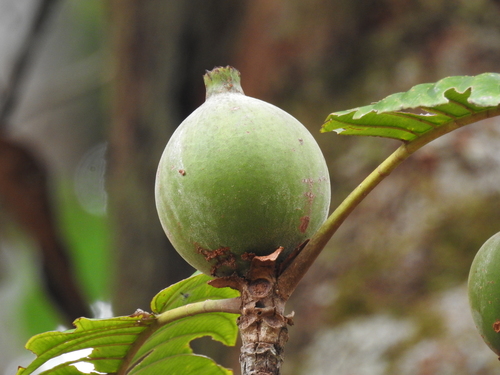
A small woody climber. The stems are tough. It is evergreen. It grows 2-4 m high. The plant has fine grey hairs over it. The leaves are opposite and narrowly oval. The leaves are 8-11 cm long by 3-4 cm wide. The leaves have an unpleasant smell when crushed. The flowers are greyish-purple. The fruit are oval or oval and red or yellow.
Edible Uses
The leaves can be eaten raw or cooked. Although they have a strong flavour, they are sometimes mixed with grated coconut and spices and eaten raw as a side dish with rice. They can also be minced and steamed, added to soups, or mixed with vegetables and spices, wrapped in a banana leaf, and cooked over a fire. Any offensive smell disappears during cooking. The leaves are valued more for their medicinal properties than for their flavour. In Taiwan, the sweet juice of the stem is sucked directly.
Traditional Uses
The young leaves have an unpleasant smell but can be eaten as a vegetable. They are used for pastry, tea or soup. The leaves can be eaten cooked as a vegetable. (The smell disappears with cooking) The leaves can be stored for 3-4 days.
Medicinal Uses
The leaves are widely used across Asia and South-East Asia, particularly for digestive problems, and have been the subject of considerable research. Several iridoid glucosides — including asperuloside, scandoside, and paederoside — have been isolated from the aerial parts. These glucosides have shown antitumor activity, with paederoside displaying the highest antitumor-promoting activity. Scandoside has been shown to promote the growth of lettuce seedlings. Paederoside showed inhibitory activity similar to asperuloside and deacetyl-asperulosidic acid in plant growth inhibition and antimicroorganism tests. Damage to the plant tissue releases an enzyme that splits a sulphur-containing group from paederoside, producing the fetid odour of indole (methyl-mercaptan); the most abundant sulphur compound identified was dimethyl disulphide. Alkaloids and an essential oil have also been recorded, with monoterpenes such as linalol making up the major components of the oil. Decoctions of the plant have shown significant anti-inflammatory action against arthritis and marked activity against degenerative osteoarthritis. The water-soluble fraction of the aerial parts displayed anti-inflammatory activity in oedema, though without analgesic or antipyretic action and with no ulcerogenic potential. An ethanolic extract of the leaves has shown anticancer activity against human epidermoid carcinoma of the nasopharynx. A methanol extract of the leaves has shown hepatoprotective potential, reversing 6 out of 12 common biochemical parameters assessed. The plant has also been shown to have antidiarrhoeal activity by inhibiting intestinal motility, supporting its traditional use. The leaves are anodyne, antirheumatic, antivinous, astringent, carminative, depurative, diuretic, restorative, and vermifuge. They are used for intestinal complaints including abdominal pain, colic, cramps, flatulence, and dysentery, as well as for rheumatism and gout, infertility, and paralysis. The leaves and stems are used as a diuretic for inflammation of the urethra. For intestinal problems, fresh leaves are pounded, water is added, and the filtered infusion is drunk regularly until convalescence. The leaves may be mixed with food, boiled, and eaten — in India they are often boiled in soup to reduce their smell. Applied externally, the leaves treat swellings and bruises, earache (mashed and applied), ulcerations of the nose, and swollen eyes. As a poultice they are used for a swollen belly, distension, herpes, and ringworm, and they feature in antirheumatic baths. Applied to the abdomen, they act as a diuretic and as a solvent for vesical stones. The juice of the leaves is astringent and is used to treat diarrhoea in children. The bark and root are considered emetic. The juice of the root is prescribed for indigestion, piles, inflammation of the spleen, and pain in the chest and liver, and is thought to help eliminate accumulated poisons. In some parts of India, the fruit is used to blacken teeth and is considered a preventive and treatment for toothache.
Distribution
A tropical plant. It is often near river banks. It climbs over thickets and fences. It also climbs over mangroves. In Indonesia it grows up to about 2,000 m above sea level. In Sichuan and Yunnan.
Where It Grows
Asia, Bangladesh, Bhutan, Cambodia, China, China, Himalayas, India, Indochina, Indonesia, Japan, Korea, Laos, Malaysia, Myanmar, Nepal, North America, Northeastern India, North Korea, Pacific, Philippines, SE Asia, Sikkim, Taiwan, Thailand, USA, Vietnam,
Cultivation
Found in a range of environments from the warm temperate zone to the tropics. It is tolerant of at least some frost. Succeeds in any fertile soil so long as it is well drained. Plants have a wide ranging adaptability to different levels of light, types of soil, and salt conditions. Requires a sunny sheltered position. A very variable plant. The plant has escaped from cultivation and become naturalised in many areas. It has become a serious weed of young sugarcane. The vines climb over shrubs and trees, weighing them down and impeding regeneration. They also invade pastureland and are troublesome along roads and on power lines. The seeds may be dispersed by birds and the plant is also spread by the transport of rooted fragments. The plant can be found flowering and fruiting throughout the year in tropical and subtropical conditions; in other localities, it flowers during the rainy season, and fruits early in the dry season. Individual flowers are short-lived, open early in the morning and fall off after 2 days; entire inflorescences, however, bear flowers for a long period of time. Flowering Time: Mid Summer Late Summer/Early Fall. Bloom Color: Red White/Near White.
Propagation
Despite its weedy nature, the plant germinates rather slowly — tetraploids germinate in 5–22 days, while hexaploids take 17–24 days. Layering is also possible. Shoots sometimes produce adventitious roots when they come into contact with the soil and can be propagated in this way.
Other Uses
The stem yields a strong, silky fibre, though it is not commercially exploited. An ethanolic extract of the leaves and stem has been shown to be significantly toxic against the aphid Myzus persicae infesting cabbage in India.
Other Information
It is a popular wild plant in Hong Kong. Leaves are sold in local markets.
Notes
It is used in medicine.
Synonyms
Also Known As
Akar sekentut, Bedoli sutta, Beri lahara, Bhedailata, Bhedai lota, Bonki repuk, Bonkiripuk, Borei, Bungkripuk, Daukhi bendung, Daun kentut, Gabbutiga, Gandal, Gandali, Gandha bhadulia, Gandhali, Gandhana, Gandahsak, Gandho vadal, Giphing, Gondhovadoli, Gu fa mei, Hebeheu-ria, Hesarane, Hiranvel, Hmab tsw quav, Kahitutan, Ke dun ma, Kesimbukan, Khephi bendwng, Kipibendwng, Nplooj ntev, Oasibu, Oinam, Padani pata, Padebiri, Paduri lota, Paduri-lata, Pakhi bendang, Pasim, Pe-bok-nwe, Penarisangai, Phaom, Pighiirai, Prasarani, Raonam, Rekang nemthu, Rikang menthu, Saonkiphu, Savirela, Shejla ojneya, Shiveirei, Sigung rambat, Silindi, Skunk vine, Somaraji, Takpaedrik, Talanili, Tapinrimin, Upter nemi, Voi hnam zai, Vor phorm, Ye kuo bu duo
References (66)
- Ambasta, S.P. (Ed.), 2000, The Useful Plants of India. CSIR India. p 421 (Also as Paederia scandens)
- Angami, A., et al, 2006, Status and potential of wild edible plants of Arunachal Pradesh. Indian Journal of Traditional Knowledge 5(4) October 2006, pp 541-550 (As Paederia scandens)
- Ara, R. I. T., 2015, Leafy Vegetables in Bangladesh. Photon eBooks. p 157
- Bandyopadhyay, S. et al, 2009, Wild edible plants of Koch Bihar district, West Bengal. Natural Products Radiance 8(1) 64-72 (As Paederia scandens)
- Bandyopadhyay, S., et al, 2012, A Census of Wild Edible Plants from Howrah District, West Bengal, India. Proceedings of UGC sponsored National Seminar 2012 (As Paederia scandens)
Show all 66 references Hide references
- Banerjee, A., et al, 2013, Ethnobotanical Documentation of Some Wild Edible Plants in Bankura District, West Bengal, India. The Journal of Ethnobiology and Traditional Medicine. Photon 120 (2013) 585-590
- BARC, 2016, State of Biodiversity for Food and Agriculture in Bangladesh. Bangladesh Agricultural Research Council.
- Baro, D., Baruah, S. and Borthukar, S. K. 2015, Documentation on wild vegetables of Baksa district, BTAD (Assam). Scholars Research Library. Archives of Applied Science Research, 2015, 7 (9):19-2
- Barua, U., et al, 2007, Wild edible plants of Majuli island and Darrang districts of Assam. Indian Journal of Traditional Knowledge 6(1) pp 191-194
- Biswas, K. & Das, A. P., 2011, Documentation of wild leafy vegetables from the tribal dominated parts of Malda District of Paschimbanga, India. Recent Studies in Biodiversity and Traditional Knowledge in India 301 - 306. 2011.
- Cao, Y., et al, 2020, Ethnobotanical study on wild edible plants used by three trans-boundary ethnic groups in Jiangcheng County, Pu’er, Southwest China. Journal of Ethnobiology and Ethnomedicine (2020) 16:66
- Cengel, D. J. & Dany, C., (Eds), 2016, Integrating Forest Biodiversity Resource Management and Sustainable Community Livelihood Development in the Preah Vihear Protected Forest. International Tropical Timber Organization p 124 (As Paederia scandens)
- Chowdery, T., et al, 2014, Wild edible plants of Uttar Dinajpur District, West Bengal. Life Science Leaflets. 47:pp 20-36 http://lifesciencesleaflets.ning.com
- Chowdhury, M. & Mukherjee, R., 2012, Wild Edible Plants Consumed by Local Communities of Maldah of West Bengal, India. Indian J.Sci.Res.3(2) : 163-170
- Contr. Arnold Arbor. 8:163. 1934 (As Paederia scandens)
- Dobriyal, M. J. R. & Dobriyal, R., 2014, Non Wood Forest Produce an Option for Ethnic Food and Nutritional Security in India. Int. J. of Usuf. Mngt. 15(1):17-37 (As Paederia scandens)
- Dutta, U., 2012, Wild Vegetables collected by the local communities from the Churang reserve of BTD, Assam. International Journal of Science and Advanced Technology. Vol. 2(4) p 122
- Ethnobotany of Karbis. Chapter 4 in p 84
- Facciola, S., 1998, Cornucopia 2: a Source Book of Edible Plants. Kampong Publications, p 213
- Ghosh, C. & Das A. P., 2011, Some useful and poisonous tea garden weeds from the Darjiling District of West Bengal, India. Pleione 5(1): 91 - 114
- Hani Medicine of Xishuangbanna, 1999, p 135 (As Paederia scandens)
- Hedrick, U.P., 1919, (Ed.), Sturtevant's edible plants of the world. p 460
- Hill, M. & Hallam, D., (eds), 1997, Na Hang Nature Reserve, Tat Ke Sector. Site description and conservation evaluation. Hanoi. p 76
- Hossain, U. & Rahman, A., 2018, Study and quantitative analysis of wild vegetable floral diversity available in Barisal district, Bangladesh. Asian J. Med. Biol. Res. 2018, 4 (4), 362-371
- Hu, Shiu-ying, 2005, Food Plants of China. The Chinese University Press. p 684 (As Paederia scandens)
- Kar, A., & Borthakur, S. K., 2008, Wild vegetables of Karbi - Anglong district, Assam, Natural Product Radiance, Vol. 7(5), pp 448-460
- Kar, A., 2004, Common wild vegetables of Aka tribe of Arunachal Pradesh. Indian Journal of Traditional Knowledge 3(3) pp 305-313
- Khumgratok, S., Edible Plants in Cultural Forests of Northeastern Thailand. Mahasarakham University Thailand.
- Lim, T. K., 2015, Edible Medicinal and Non Medicinal Plants. Volume 9, Modified Stems, Roots, Bulbs. Springer p 62
- Lim, T. K., Edible Medicinal and Non-Medicinal Plants: Volume 11 Modified Stems, Roots. p 23
- Lungphi, P., Wangpan, T. & Tangjang, S., 2018, Wild edible plants and their additional uses by the Tangsa community living in the Changlang district of Arunachal Pradesh, India. Pleione 12(2): 151 - 164. 2018.
- Mant. pl. 1:52. 1767
- MARDI Malaysia
- Martin, F.W. & Ruberte, R.M., 1979, Edible Leaves of the Tropics. Antillian College Press, Mayaguez, Puerto Rico. p 217
- Medhi, P. & Borthakur, S. K., 2012, Phytoresources from North Cachur Hills of Assam -3: Edible plants sold at Hflong market. Indian Journal or Natural Products and Resources. 3(1) pp 84-109
- Medhi, P. & Borthakur, S. K., 2013, Wild edible plants sold by the Zeme Nagas at the makeshift market of Mahur, Dima Hasao district of Assam. Pleione 7(1): 84 - 93. 2013
- Medhi, P., Sarma, A and Borthakur, S. K., 2014, Wild edible plants from the Dima Hasao district of Assam, India. Pleione 8(1): 133-148
- Meitei, L. R., et al, 2022, An ethnobotanical study on the wild edible plants used by forest dwellers in Yangoupokpi Lokchao Wildlife Sanctuary, Manipur, India. Ethnobotany Research and Application 23:15
- Mishra, S. & Chaudhury, S. S., 2012, Ethnobotanical flora used by four major tribes of Koraput, Odisha, India. Genetic Resources Crop Evolution 59:793-804
- Mot So Rau Dai an Duoc O Vietnam. Wild edible Vegetables. Ha Noi 1994, p 236 (As Paederia scandens)
- Murtem, G. & Chaudhrey, P., 2016, An ethnobotanical note on wild edible plants of Upper Eastern Himalaya, India. Brazilian Journal of Biological Sciences, 2016, v. 3, no. 5, p. 63-81
- Narzary, H., et al, 2013, Wild Edible Vegetables Consumed by Bodo tribe of Kokrajhar District (Assam), North-East India. Archives of Applied Science Research, 5(5): 182-190
- Ochse, J. J. et al, 1931, Vegetables of the Dutch East Indies. Asher reprint. p 634
- Patiri, B. & Borah, A., 2007, Wild Edible Plants of Assam. Geethaki Publishers. p 69 (Also as Paederia scandens)
- Pegu, R., et al, 2013, Ethnobotanical study of Wild Edible Plants in Poba Reserved Forest, Assam, India. Research Journal of Agriculture and Forestry Sciences 1(3):1-10 (As Paederia scandens)
- Pfoze, N. L., et al, 2012, Survey and assessment of floral diversity on wild edible plants from Senapati district of Manipur, Northeast India. Journal or Biodiversity and Environmental Sciences. 1(6):50-52
- Phangchopi, U., et al, 2015, Diversity of wild edible plants in Marat Longri Wildlife Sanctuary, Assam. Indian Journal of Natural Products and Resources Vol. 6(4), December 2015 pp. 305-313
- Phon, P., 2000, Plants used in Cambodia. © Pauline Dy Phon, Phnom Penh, Cambodia. p 485 (As Paederia scandens)
- Pullaiah, Y., Krishnamurthy, K. V. & Bahadur, B., (Eds.), 2016, Ethnobotany of India, Volume 1: Eastern Ghats and Deccan.
- Reddy, K. N. et al, 2007, Traditional knowledge on wild food plants in Andhra Pradesh. Indian Journal of Traditional Knowledge. Vol. 6(1): 223-229
- Saikia, M., 2015, Wild edible vegetables consumed by Assamese people of Dhemaji District of Assam, NE India and their medicinal values. Archives of Applied Science Research, 2015, 7 (5):102-109
- Sakar, A. & Das, A. P., 2018, The traditional knowledge on edible wild leafy vegetables of Rabha Tribe in Duars of North Bengal: a potential reinforcement to food security. Pleione 12(2): 275 - 281. 2018.
- Sangma, A. j. T., 2018, Non-timber forest products (NTFPs) used by Garo tribe of Rongram block in West Garo Hills, Meghalaya. Indian Journal of Traditional Knowledge Vol 18 (1), pp 151-161
- Savita, et al, 2006, Studies on wild edible plants of ethnic people in east Sikkim. Asian J. of Bio Sci. (2006) Vol. 1 No. 2 : 117-125
- Samy, J., Sugumaran, M., Lee, K. L. W., 2009, Herbs of Malaysia, Marshall Cavendish. p 178
- Sawian, J. T., et al, 2007, Wild edible plants of Meghalaya, North-east India. Natural Product Radiance Vol. 6(5): p 419
- Singh, H.B., Arora R.K.,1978, Wild edible Plants of India. Indian Council of Agricultural Research, New Delhi. p 32
- Srivastava, R. C., 2010, Traditional knowledge of Nyishi (Daffla) tribe of Arunachal Pradesh. Indian Journal of Traditional Knowledge. 9(1):26-37
- Sukarya, D. G., (Ed.) 2013, 3,500 Plant Species of the Botanic Gardens of Indonesia. LIPI p 946
- Taram, M., et al, 2018, Wild Food Plant Resources of Komkar Adi Tribe of Upper Siang District in Arunachal Pradesh, India. Bulletin of Arunachal Forest Research, Vol. 33(2), 27-35
- Teron, R. & Borthakur, S. K., 2016, Edible Medicines: An Exploration of Medicinal Plants in Dietary Practices of Karbi Tribal Population of Assam, Northeast India. In Mondal, N. & Sen, J.(Ed.) Nutrition and Health among tribal populations of India. p 155
- Thoa P. T. K., et al, 2013, Biodiversity indices and utilization of edible wild plants: a case study of the Cham Island in Quang Nam Province, Vietnam. Journal of Research in Environmental Science and Toxicology 2(9) :167-174
- Tsering, J., et al, 2017, Ethnobotanical appraisal on wild edible plants used by the Monpa community of Arunchal Pradesh. Indian Journal of Traditional Knowledge. Vol 16(4), October 2017, pp 626-637
- Turreira Garcia, N., et al, 2017, Ethnobotanical knowledgeof the Kuy and Khmer people in Prey Lang, Cambodia. Cambodian Journal of Natural History 2017 (1): 76-101
- Whitney, C. W., et al, 2014, Conservation and Ethnobotanical Knowledge of a Hmong Community in Long Lan, Luang Prabang, Lao People’s Democratic Republic. Ethnobotany Research and Applications 12:643-658
- World Checklist of Useful Plant Species 2020. Royal Botanic Gardens, Kew