Gardenia erubescens
Stapf et Hutch.
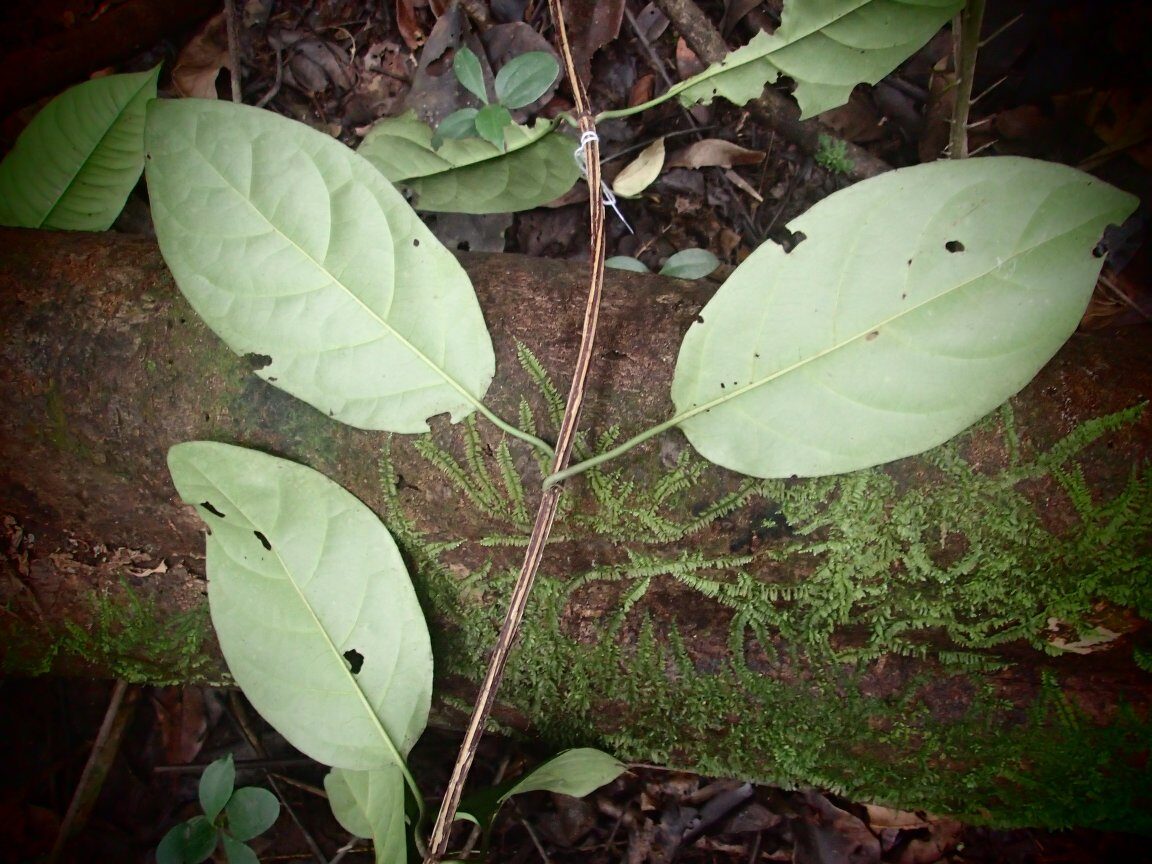
Female gardenia
iNaturalist· cc-by-nc
(c) ong_pepiniere_d_afrique, some rights reserved (CC BY-NC)
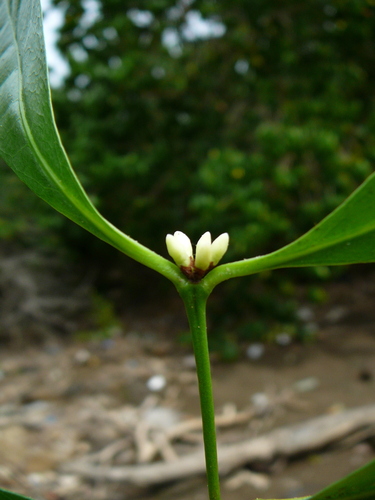
iNaturalist· cc-by-nc
(c) moise, some rights reserved (CC BY-NC)
Summary
Source: WikipediaGardenia erubescens is a species of shrub or small tree in the family Rubiaceae. It has edible fruits and occurs in the Guinea and Sudan savannah vegetation of West and Central Africa.
Description
A shrub. It grows 1-2 m high. It branches from near the base. It loses its leaves during the year. The bark is pale yellow. Young shoots have a grey covering. The leaves are in rings of 3 at the ends of shoots. They are 12 cm long by 10 cm wide. They vary in shape. The flowers occur singly and are white to yellow. They have a scent. The tube of the flower is 5 cm long. The fruit are 3-5 cm long and oval but slightly bent. They are pale yellow when ripe.
Edible Uses
The ripe fruit are eaten raw and used in sauces and soups; the leaves and flowers are also edible portions.
Traditional Uses
The ripe fruit are eaten raw. They are also used for sauces and soups.
This uses section is brief — help expand it
Medicinal Uses
In parts of Northern Nigeria, a decoction of the species is used to treat a variety of health issues including gonorrhea, ascites and loss of appetite, extracts are also used as an aphrodisiac and stimulant. Its edible fruit are consumed by locals.
Distribution
A tropical plant. It grows in savannah and savannah woodland. It grows in the Sahel. It can grow in arid places.
Where It Grows
Africa, Benin, Burkina Faso, Cameroon, Central Africa, East Africa, Mali, Nigeria, Sahel, Senegal, Sierra Leone, Sudan, Togo, Uganda, West Africa,
Other Uses
The seeds are used in a black cosmetic. A black dye obtained from the seed is used as a cosmetic. The yellow wood is hard and compact, and tough. It is used for carpentry and small carvings, such as spoons.
Other Information
The fruit is not popular. Fruit tend to be available in the drier more hungry season.
Notes
There are about 200 Gardenia species.
Nutrition
| Part | Moisture | kJ | kcal | Protein | Vit A | Vit C | Iron | Zinc |
|---|---|---|---|---|---|---|---|---|
| Fruit | 19.2 | — | — | 5.7 | — | — | — | — |
Synonyms
Also Known As
Baa, Boeli, Bu kookay ba nale, Dingale debbi, Gaude, Ishondou, Kingerr, M'boure mousso, Munameni, Shoondugh, Yirudia
References (29)
- Alyegba, S. S. et al, 2013, Ethnobotanical Survey of Edible Wild Plants in Tiv Communities of Benue State, Nigeria. Journal of Natural Sciences Research. Vol.3, No.7
- Assogbadjo, A. E. et al, 2013, Specific Richness and Cultural Importance of Wild Edible Trees in Benin. Acta Hort. 979, ISHS 2013
- Atato, A., et al, 2010, Diversity of Edible Wild Fruit Tree Species of Togo. Global Science Books.
- Atato, A.,et al, 2011, Edible Wild Fruit Highly Consumed during Food Shortage Period in Togo: State of Knowledge and Conservation Status. Journal of Life Sciences 5 (2011) 1046-1057
- Batawila, K., et al, 2007, Diversite et gestion des legumes de cueillete au Togo. African Journal of Food, Agriculture, Nutrition and Development 7( 3& 4): 67
Show all 29 references Hide references
- Belem, B., et al, 2007, Use of Non Wood Forest Products by local people bordering the “Parc National Kaboré Tambi”, Burkina Faso. The Journal of Transdisciplinary Environmental Studies vol. 6, no. 1 p 9
- Belem, M., et al, 2017, Strategy of Conservation and Protection of Wild Edible Plants Diversity in Burkina Faso. ANADOLU 27 (2) 2017, 82- 90
- Bonou, A., et al, 2013, Valeur economique des Produits Forestiers Non Ligneux (PFNL) au Benin. Editions Universitaires Europeennes p 87
- Burkill, H. M., 1985, The useful plants of west tropical Africa, Vol. 4. Kew.
- Busson, 1965,
- Chapman, J. D. & Chapman, H. M., 2001, The Forest Flora of Taraba and Andamawa States, Nigeria. WWF & University of Canterbury. p 197
- Codjia, J. T. C., et al, 2003, Diversity and local valorisation of vegetal edible products in Benin. Cahiers Agricultures 12:1-12
- Dalziel, J. M., 1937, The Useful plants of west tropical Africa. Crown Agents for the Colonies London.
- Diarra, N. et al, 2016, Etude ethnobotanique des plantes alimentaires utilisées en période de soudure dans les régions Sud du Mali. Int. J. Biol. Chem. Sci. 10(1): 184-197
- Djihounouck, Y., et al, 2018, Diversité Et Importance Socio-Economique Des Espèces Fruitières Sauvages Comestibles En Zone Kasa (Sud-Ouest Du Sénégal). European Scientific Journal December 2018 edition Vol.14, No.36 ISSN: 1857 – 7881
- Djihounouck, Y., et al, 2021, Ethnobotanical Uses of Non-cultivated Edible Fruit Species in the Department of Oussouye (South Senegal). Journal of Food Research; Vol. 10, No. 4 p 20
- Food Composition Tables for use in Africa FAO http://www.fao.org/infoods/directory No. 922
- Gallagher, D. E., 2010, Farming beyond the escarpment: Society, Environment, and Mobility in Precolonial Southeastern Burkina Faso. PhD University of Michigan. Gueye, M., et al, 2014, Wild Fruits Traditionally Gathered by the Malinke Ethnic Group in the Edge of Niokolo Koba Park (Senegal). American Journal of Plant Sciences 5, 1306-1317
- Jardin, C., 1970, List of Foods Used In Africa, FAO Nutrition Information Document Series No 2.p 139
- Kristensen, M and Lykke, A. M., 2003, Informant-Based Valuation of Use and Conservation Preferences of Savanna Trees in Burkina Faso. Economic Botany, Vol 57, No. 2, pp. 203-271
- Lamien-Meda, A., et al, 2008, Polyphenol Content and Antioxidant Activity of Fourteen Wild Edible Fruits from Burkina Faso. Molecules 2008,13, 581-594
- Le Houerou, H. N., (Ed.), 1980, Browse in Africa. The current state of knowledge. International Livestock Centre for Africa, Ethiopia. p 163
- Maydell, H. von, 1990, Trees and shrubs of the Sahel: their characteristics and uses. Margraf. p 285
- Moksia, F., et al, 2019, Diversity and Socio-Economic Value of Wild Edible Plants in the Mounts Mandara Region, Cameroon. International Journal of Sciences. Vol. 8:10
- MORTIMORE,
- Peters, C. R., O'Brien, E. M., and Drummond, R.B., 1992, Edible Wild plants of Sub-saharan Africa. Kew. p 170
- Segnon, A. C. & Achigan-Dako, E. G., 2014, Comparative analysis of diversity and utilization of edible plants in arid and semi-arid areas in Benin. Journal of Ethnobiology and Ethnomedicine 2014, 10:80
- Vivien, J., & Faure, J.J., 1996, Fruitiers Sauvages d'Afrique. Especes du Cameroun. CTA p 282
- World Checklist of Useful Plant Species 2020. Royal Botanic Gardens, Kew