Gardenia fucata
R. Br. ex Benth.
Bush Gardenia
iNaturalist· cc-by-nc
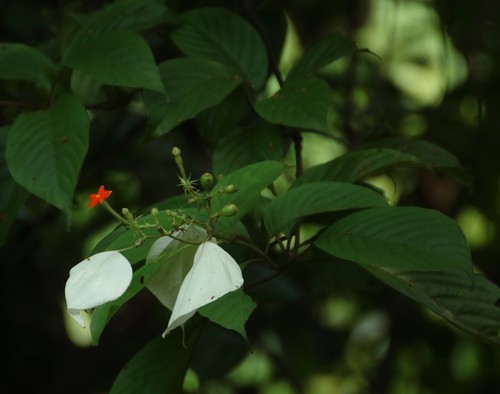
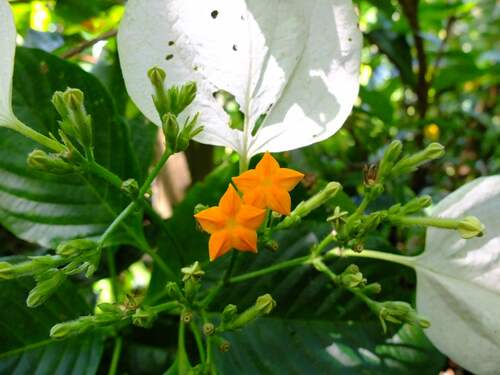
(c) carolwest, some rights reserved (CC BY-NC), uploaded by carolwest
iNaturalist· cc-by
(c) Thomas Mesaglio, some rights reserved (CC BY)
Summary
Source: WikipediaGardenia fucata is a species of plant in the family Rubiaceae native to northern Australia.
Description
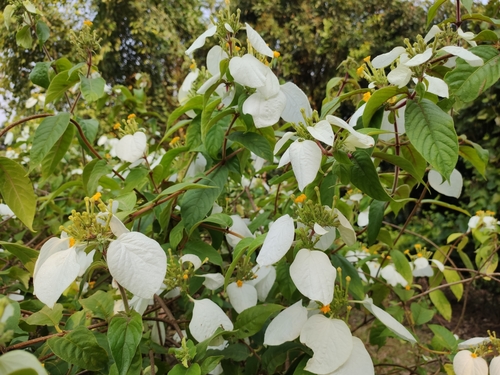
A small compact tree. It grows 3-4 m high and spreads 2-3 m wide. The branches are crooked. The leaves are near the ends of the branches. They are narrow and oval. The leaf blade is 3-6 cm long by 0.8-1.8 cm wide. The flowers are large and white. They have a scent. They are 2-4 cm across and occur singly at the end of branches. The fruit is oval and 2 cm long by 1.5-1.8 cm wide. Fruit are brown when ripe. There are many seeds.
Edible Uses
The leaves are used as a flavouring herb for cooking kangaroo meat.
Traditional Uses
The leaves are used as a flavouring herb for cooking kangaroo meat.
This uses section is brief — help expand it
Distribution
It is a tropical plant. It grows in open forests and on rocky escarpments in northern Australia. It suits seasonally dry tropical regions in an open sunny and well drained position.
Where It Grows
Australia*,
Cultivation
Plants are grown from seed.
Notes
There are about 200 Gardenia species.
Also Known As
Andjungkurrk
References (7)
- Brock, J., 1993, Native Plants of Northern Australia, Reed. p 193
- Cherikoff V. & Isaacs, J., The Bush Food Handbook. How to gather, grow, process and cook Australian Wild Foods. Ti Tree Press, Australia p 200
- Elliot, W.R., & Jones, D.L., 1992, Encyclopedia of Australian Plants suitable for cultivation. Vol 4. Lothian. p 333 (Photo)
- Garde, M., et al, 2003, A Preliminary List of Kundedjnjenghmi Plant Names. Northern Land Council. (Arnhem Land, Australia)
- Low, T., 1992, Bush Tucker. Australia’s Wild Food Harvest. Angus & Robertson. p 185
Show all 7 references Hide references
- Norrington, L., & Campbell, C., 2001, Tropical Food Gardens. Bloomings Books. p 59
- Townsend, K., 1994, Across the Top. Gardening with Australian Plants in the tropics. Society for Growing Australian Plants, Townsville Branch Inc. p 221