Gardenia gummifera
Linn.f.
iNaturalist· cc-by-nc
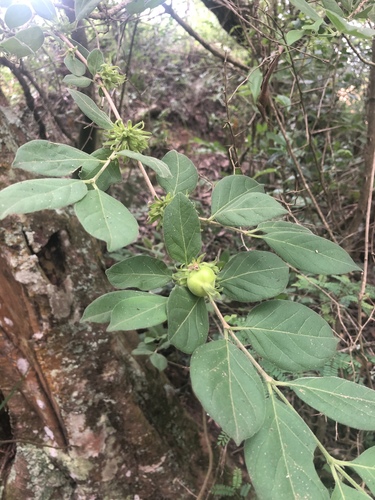
(c) Mayuresh Kulkarni, some rights reserved (CC BY-NC), uploaded by Mayuresh Kulkarni
iNaturalist· cc-by-nc
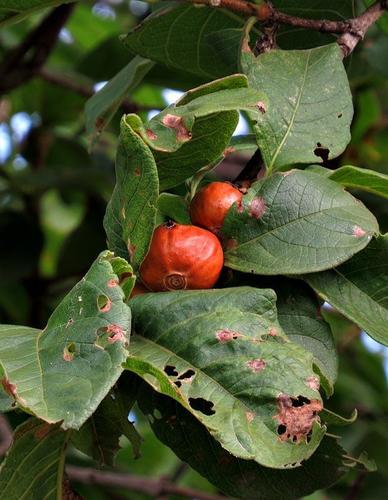
(c) Arun N, some rights reserved (CC BY-NC)
Summary
Source: WikipediaGardenia gummifera is a species of plant in the family Rubiaceae. It is endemic to India.
Description
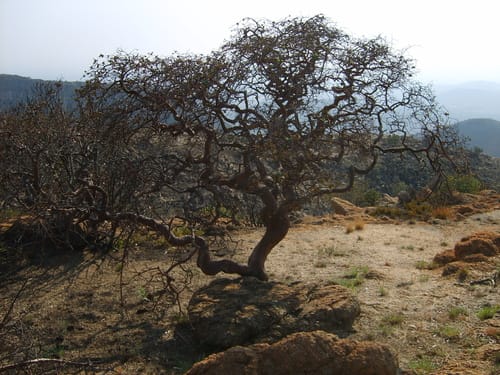
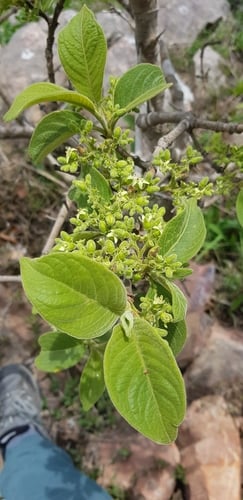
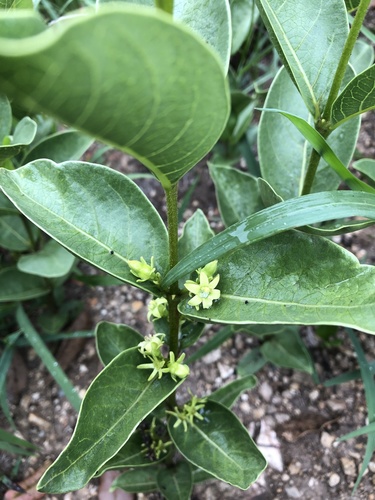
A shrub or small tree. It loses is leaves during the year. It has yellow buds that secrete resin. The leaves are 8 cm long by 2.5 cm wide. They do not have leaf stalks. They are oval. The flowers are at the top. They are large and occur as 1-3 together. The fruit is an oblong berry up to 4 cm long. It has a husk at the top.
Edible Uses
The fleshy pulp of ripe fruit is eaten fresh after removing the outer coat; it has a sweet taste. The seeds are roasted with salt and eaten.
Traditional Uses
The fleshy pulp of the ripe fruit is eaten. It is sweet. The outer coat is removed. The seeds are roasted with salt and eaten. Caution.
This uses section is brief — help expand it
Medicinal Uses
A gum obtained from the plant is carminative, antispasmodic, stimulant, diaphoretic, anthelmintic, antiseptic, expectorant. Given to children in the treatment of nervous disorders and diarrhoea due to dentition. The gum-resin obtained from the leaf buds is used in the treatment of cutaneous diseases.
Known Hazards
Caution advised (specific hazard not detailed in source data).
Distribution
It is a tropical plant.
Where It Grows
Asia, India,
Cultivation
A tree of the hot, dry plains of central India, experiencing a monsoon and a very hot and dry season.
Other Uses
The tree is the source of a resin called 'Dikkamaly resin'. The leaf buds yield a transparent, bright yellow gum-resin. It is used to keep off flies and worms. The yellowish-white wood is close-grained and hard.
Production
In southern India plants fruit in April to June.
Synonyms
Also Known As
Bhurana koli, Bhurudukuli, Bukke hannu, Bukki gida, Chimit pandlu, Karadivetchi
References (10)
- Arinathan, V., et al, 2007, Wild edibles used by Palliyars of the western Ghats, Tamil Nadu. Indian Journal of Traditional Knowledge. 6(1) pp 163-168
- Basha, S. K. M., Ethnobotanical Trees of Sri Lanka Malleswara Wildlife Sanctuary; Eastern Ghats, Andhra Pradesh.
- Behera K. K., et al, 2008, Wild Edible Plants of Mayurbhanj District, Orissa, India. J. Econ. Taxon. Bot. Vol. 32 (Suppl.) pp 305-314
- Flora and Livestock in Coastal Karnataka. 2007, Report. EMPRI p 173
- Hedrick, U.P., 1919, (Ed.), Sturtevant's edible plants of the world. p 325
Show all 10 references Hide references
- Kuhnlein, H. V., et al, 2009, Indigenous Peoples' food systems. FAO Rome p 195
- Misra S. & Misra M., 2016, Ethnobotanical and Nutritional Evaluation of Some Edible Fruit Plants of Southern Odisha, India. International Journal of Advances in Agricultural Science and Technology, Vol.3 Issue.1, March- 2016, pg. 1-30
- Misra, S., 2020, Survey of edible plants for human consumption in south Odisha, India. Journal of Emerging Technologies and Innovative Research (JETIR) Vol. 7, Issue 12 p 278
- Ramakrishna, N. & Singh, DSR, R., 2020, Ethno-Botanical Studies of Edible Plants Used by Tribal Women in Nirmal District. IJSRSET p 309
- Ravikrishna, S., 2011, Ethno-medico-botanical survey on Wild Edible fruits of Udupi Taluq, Udupi p 77