Oxalis tetraphylla
Cav.
Good luck plant
iNaturalist· cc-by-sa
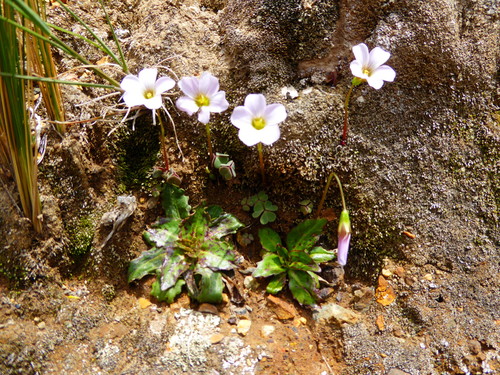
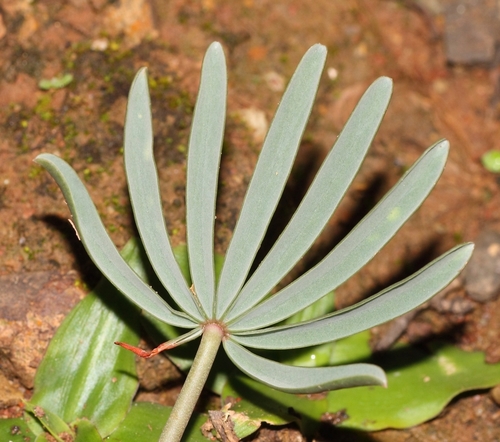
(c) Alejandro Bayer Tamayo, some rights reserved (CC BY-SA)
iNaturalist· cc-by-sa
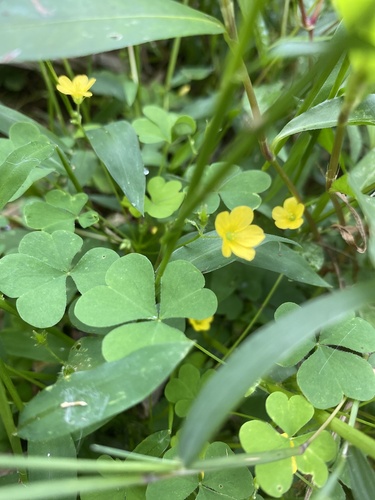
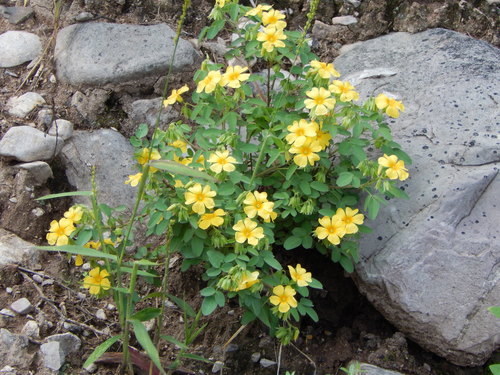
(c) peganum, some rights reserved (CC BY-SA)
iNaturalist· cc-by-nc
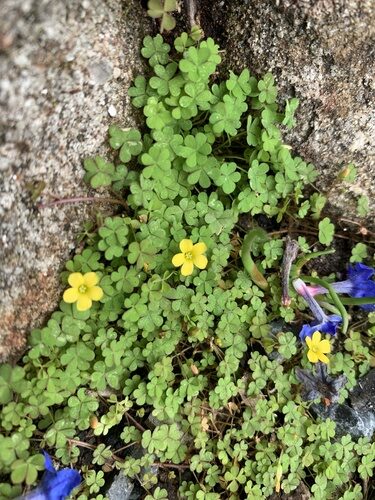
(c) naturaladventurer, some rights reserved (CC BY-NC), uploaded by naturaladventurer
Summary
Source: WikipediaOxalis tetraphylla (often traded under its synonym O. deppei) is a bulbous herbaceous perennial plant from Mexico. It is sometimes sold as lucky clover or shamrock (though it is neither a clover nor a shamrock). In the wild or feral state it is often called four-leaved wood-sorrel after its family, Oxalidaceae. Other English common names for this plant include Lucky Clover, Four-Leaf Sorrel, Four-Leaf Pink-Sorrel and others. It is sometimes called "the iron cross plant" or "oxalis iron cross" because the leaves loosely resemble the iron cross symbol, though this name is not a classic folk term and has fallen out of favour due to the bad political connotations associated with this symbol. It is in the same genus as the common wood-sorrel (Oxalis acetosella) and has three wild variants: var. tetraphylla (autonym) distributed in the states of Veracruz, México, Morelos and Michoacán, var. mexicana native to Hidalgo and Guerrero regions and var. guerreroensis native to Oaxaca, Guerrero, Michoacán and Colima regions.
Description
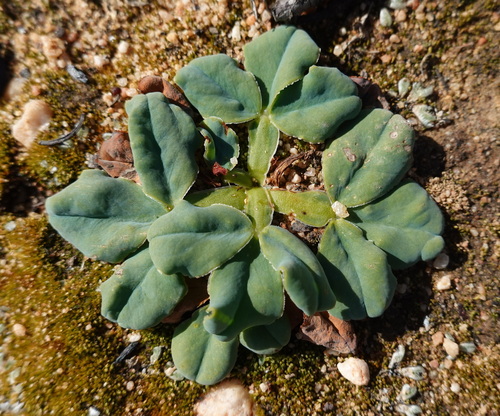
It is a bulb plant. It grows 15-20 cm high and 15-25 cm wide. The leaves have 4 triangular leaflets which meet at the top and fold in as darkness approaches. The flowers are funnel-shaped and pink. There are 4-12 per stem.
Edible Uses
The leaves are edible raw or cooked with a pleasant acid flavour, though they are a little fibrous. Use in moderation. The flowers have a delightful acid flavour, make an attractive addition to the salad bowl, and are especially relished by children. They can be eaten raw. The root is edible cooked but is starchy and of poor quality.
Traditional Uses
The roots are boiled and eaten. The young leaves are used in soups and salads. The flowers are used in salads.
This uses section is brief — help expand it
Medicinal Uses
None known
Known Hazards
The leaves contain oxalic acid, which gives them their sharp flavour. Perfectly all right in small quantities, the leaves should not be eaten in large amounts since oxalic acid can bind up the body's supply of calcium leading to nutritional deficiency. The quantity of oxalic acid will be reduced if the leaves are cooked. People with a tendency to rheumatism, arthritis, gout, kidney stones or hyperacidity should take especial caution if including this plant in their diet since it can aggravate their condition.
Distribution
It is a warm temperate plant. It can tolerate light frosts. It needs moderate but regular moisture. It needs a fertile, humus-rich, well-drained soil. It suits hardiness zones 8-10.
Where It Grows
Africa, Asia, Australia, Austria, Britain, Cameroon, Central America*, El Salvador, Europe, France, Guatemala, Himalayas, India, Indonesia, Korea, Mexico, North America, Northeastern India, Panama, Reunion, South America, Tasmania, Vietnam, Yugoslavia,
Cultivation
A very easily grown plant, preferring a sandy soil in a warm dry position. Our plants have proved to be very tolerant of neglect, succeeding for a number of years even in the dense growth of grass weeds. When well-tended, clumps can spread quite quickly. This species is not hardy in the colder areas of the country, it tolerates temperatures down to between -5 and -10°c. Closely related to O. deppei, which is included in this species by many botanists.
Propagation
Seed is best sown as soon as ripe in a cold frame. Prick out seedlings into individual pots when large enough to handle and plant out in late spring or early summer. For division in spring, larger divisions can go directly into their permanent positions. Smaller divisions are better potted up and grown on in light shade in a cold frame until well established before planting out in late spring or early summer.
Other Uses
The plants make an effective ground cover in full sun or light shade. Although dormant for about five months of the year, they grow so densely in summer that they suppress weeds well during the growing season.
Notes
There are about 500-800 Oxalis species.
Synonyms
Also Known As
Lucky clover
References (16)
- Brickell, C. (Ed.), 1999, The Royal Horticultural Society A-Z Encyclopedia of Garden Plants. Convent Garden Books. p 737
- Brickell, C. (Ed.), 1999, The Royal Horticultural Society A-Z Encyclopedia of Garden Plants. Convent Garden Books. p 736 (As Oxalis deppei)
- Duke, J.A., 1992, Handbook of Edible Weeds. CRC Press. p 140 (As Oxalis deppei)
- Hedrick, U.P., 1919, (Ed.), Sturtevant's edible plants of the world. p 456 (As Oxalis deppei)
- Hedrick, U.P., 1919, (Ed.), Sturtevant's edible plants of the world. p 457
Show all 16 references Hide references
- Hibbert, M., 2002, The Aussie Plant Finder 2002, Florilegium. p 216
- Icon. 3(1):19, t. 237. 1795
- Kermath, B. M., et al, 2014, Food Plants in the Americas: A survey of the domesticated, cultivated and wild plants used for Human food in North, Central and South America and the Caribbean. On line draft. p 598
- Kew Plants of the World Online
- Morley, B. & Everard, B., 1970, Wild Flowers of the World. Ebury press. Plate 171 (As Oxalis deppei)
- Joyce, D., 1998, The Garden Plant Selector. Ryland, Peters and Small. p 306
- Llamas, K.A., 2003, Tropical Flowering Plants. Timber Press. p 306
- Plants for a Future database, The Field, Penpol, Lostwithiel, Cornwall, PL22 0NG, UK. http://www.scs.leeds.ac.uk/pfaf/ (As Oxalis deppei)
- Terra, G.J.A., 1973, Tropical Vegetables. Communication 54e Royal Tropical Institute, Amsterdam, p 64 (As Oxalis deppei)
- Terra, G.J.A., 1973, Tropical Vegetables. Communication 54e Royal Tropical Institute, Amsterdam, p 64
- World Checklist of Useful Plant Species 2020. Royal Botanic Gardens, Kew