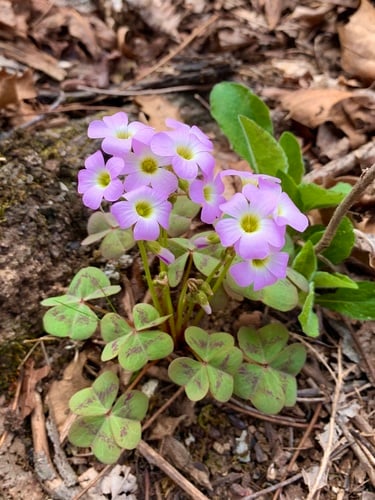
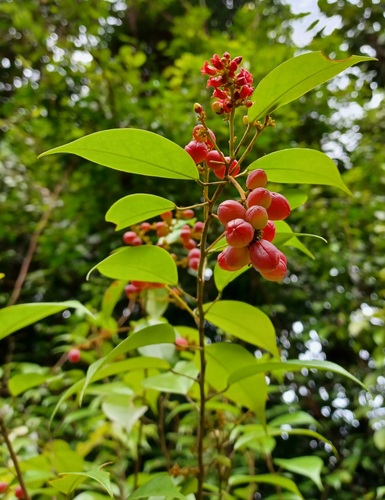
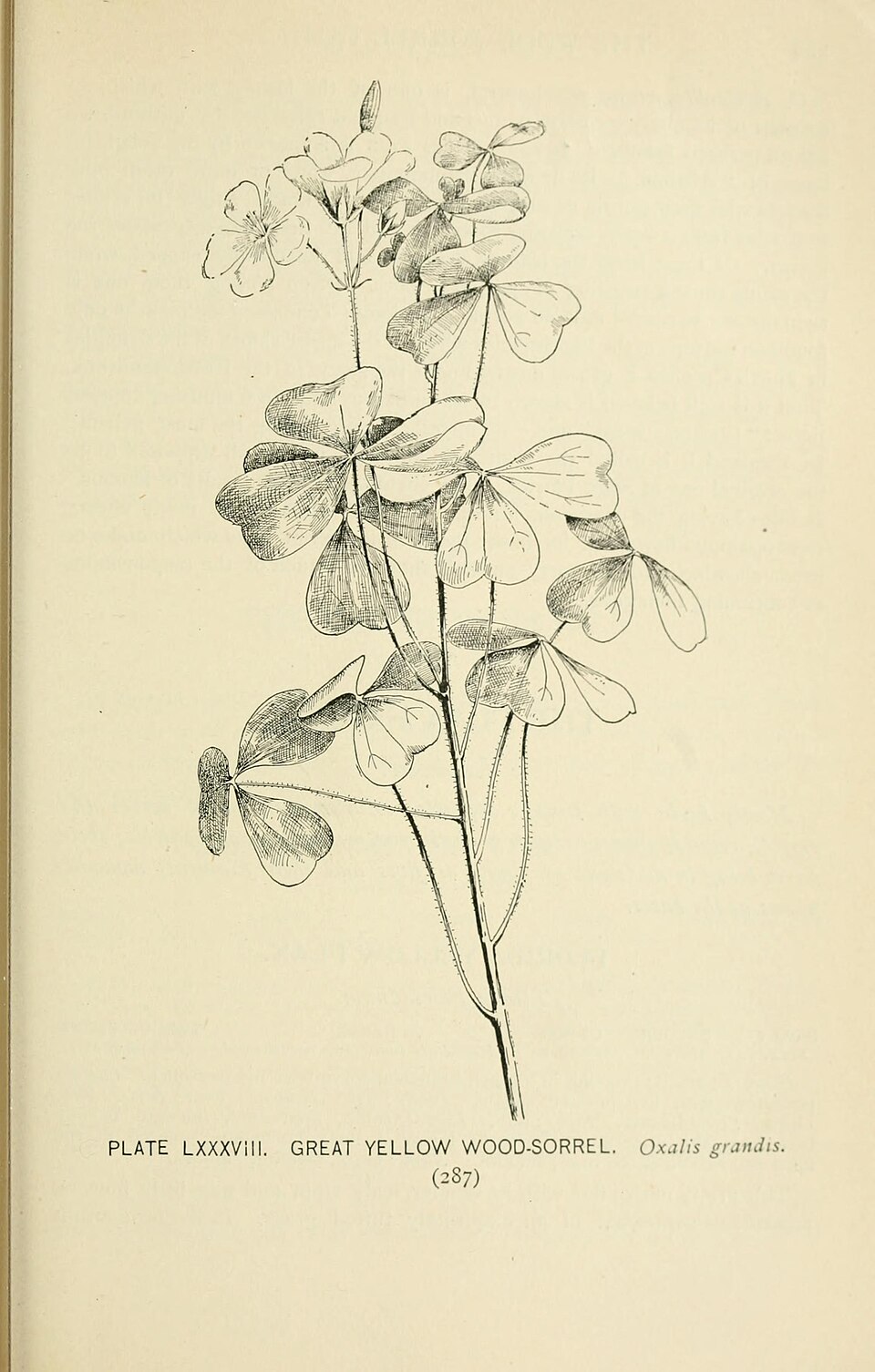
Oxalis montana
Raf.
Mountain Wood Sorrel
iNaturalist· cc-by
(c) Jason Hollinger, some rights reserved (CC BY)
iNaturalist· cc-by-sa
(c) Jörg Hempel, some rights reserved (CC BY-SA), uploaded by Jörg Hempel
Description
Oxalis montana is a PERENNIAL growing to 0.1 m (0ft 4in) by 0.3 m (1ft). The species is hermaphrodite (has both male and female organs) and is pollinated by Insects. Suitable for: light (sandy), medium (loamy) and heavy (clay) soils and prefers well-drained soil. Suitable pH: mildly acid, neutral and basic (mildly alkaline) soils. It can grow in semi-shade (light woodland). It prefers moist soil.
Edible Uses
Leaves - raw or cooked. Use in moderation, see notes at top of sheet. Powerfully and most agreeably acid, the leaves can be used to make a conserve, its flavour resembling green tea.
Known Hazards
The leaves contain oxalic acid, which gives them their sharp flavour. Perfectly all right in small quantities, the leaves should not be eaten in large amounts since oxalic acid can bind up the body's supply of calcium leading to nutritional deficiency. The quantity of oxalic acid will be reduced if the leaves are cooked. People with a tendency to rheumatism, arthritis, gout, kidney stones or hyperacidity should take especial caution if including this plant in their diet since it can aggravate their condition.
Distribution
Eastern N. America - S. Newfoundland and E. Quebec to Manitoba, south to Wisconsin and Minnesota.
Where It Grows
TEMPERATE ASIA: Azerbaijan, China, Ciscaucasia, Eastern Siberia, Far East, Georgia, Hokkaidô, Honshu, Japan, Mongolia, Russian Federation-Ciscaucasia, Russian Federation-Eastern Siberia, Russian Federation-Far East, Russian Federation-Western Siberia, Western Siberia,Turkey. TROPICAL ASIA: Bhutan, Nepal, Myanmar (north), EUROPE: Denmark, Finland, United Kingdom (U.K.), Ireland, Norway, Sweden, Czechoslovakia (Czech Republic and Slovakia), Austria, Belgium, Switzerland, Germany, Hungary, Netherlands, Poland, Belarus, Estonia, Lithuania, Latvia, Ukraine, Former Yugoslavia, Albania, Bulgaria, Greece, Italy, Romania, Spain, France (incl. Corsica), Portugal,
Cultivation
We have almost no information on this species and do not know if it will be hardy in Britain, though judging by its native range it should succeed in most parts of the country. It is likely to prefer a semi-shaded position in a moist light well-drained soil.
Propagation
Seed - best sown as soon as ripe in a cold frame. Prick out the seedlings into individual pots when they are large enough to handle and plant them out in late spring or early summer. Division in spring. Larger divisions can be planted out direct into their permanent positions. We have found that it is better to pot up the smaller divisions and grow them on in light shade in a cold frame until they are well established before planting them out in late spring or early summer.
Other Uses
DyeA yellow dye is obtained by boiling the whole plant.