Oxalis perennans
Haw.
Scour Grass, Native Oxalis, Grassland woodsorrel
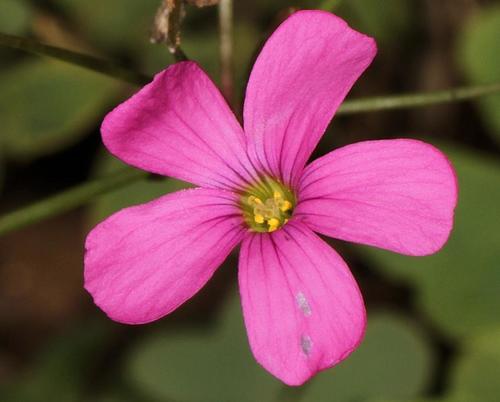
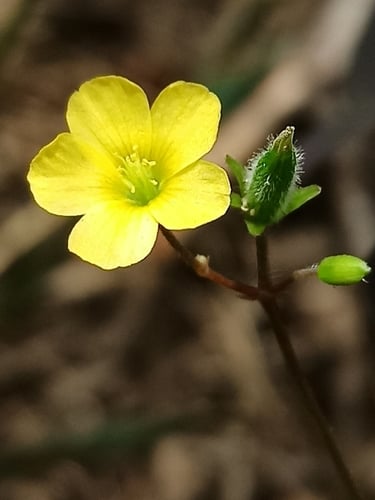
iNaturalist· cc-by-nc
(c) James Bailey, some rights reserved (CC BY-NC), uploaded by James Bailey
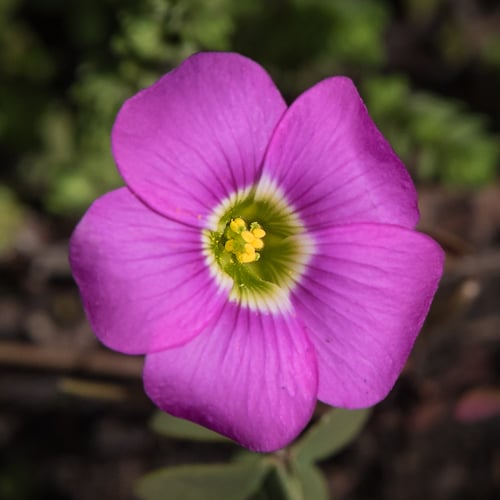
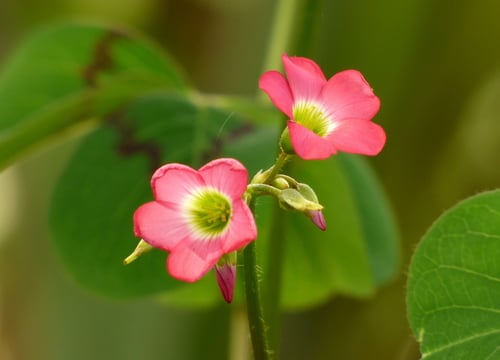
iNaturalist· cc-by-nc-sa
(c) Reiner Richter, some rights reserved (CC BY-NC-SA), uploaded by Reiner Richter
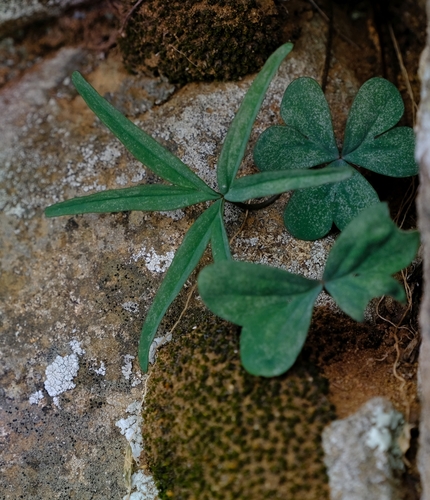
iNaturalist· cc-by-nc
(c) sunphlo, some rights reserved (CC BY-NC)
Description
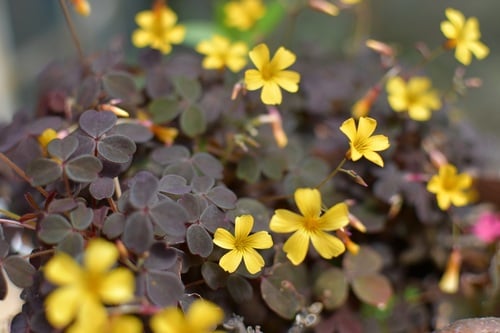
A herb. It keeps growing from year to year. It can be creeping or curve upwards. It grows 10-20 cm high and spreads 30 cm wide. It has a stout taproot. The stems are slender and there are hairs which point forward. The stems can be 25 cm long. The leaves have 3 leaflets like a clover leaf. But they hang down like a pleated skirt. They are rounded or heart shaped. They are 0.4-1.5 cm long by 0.2-0.8 cm across. The flowers are in the axils of leaves. There are 1-5 flowers in a cluster. The flowers are yellow and 8 mm across. The fruit is a capsule 1-3 cm long by 0.15-0.25 cm wide. It is red and hairy and held above the leaves.
Edible Uses
The leaves, tubers, and roots are edible.
Distribution
It grows in temperate and tropical places. It grows in dry locations. It grows in inland regions in Australia. Tasmania Herbarium.
Where It Grows
Australia*, New Zealand, Tasmania*,
Cultivation
Plants are grown from seed.
Notes
There are about 500 Oxalis species.
References (14)
- Clarke, P. A., 2013, The Aboriginal Ethnobotany of the Adelaide Region, South Australia. Transactions of the Royal Society of South Australia. (2013), 137(1): 97-126
- Dashorst, G.R.M., and Jessop, J.P., 1998, Plants of the Adelaide Plains & Hills. Botanic Gardens of Adelaide and State Herbarium. p 92
- Elliot, W.R., & Jones, D.L., 1997, Encyclopedia of Australian Plants suitable for cultivation. Vol 7. Lothian. p 127
- Gilfedder, L et al, 2003, The Nature of the Midlands. Midlands Bushweb. PO Box 156 Longford, Tasmania. p 82
- Harris, S., Buchanan, A., Connolly, A., 2001, One Hundred Islands: The Flora of the Outer Furneaux. Tas Govt. p 196
Show all 14 references Hide references
- Hussey, B.M.J., Keighery, G.J., Cousens, R.D., Dodd, J., Lloyd, S.G., 1997, Western Weeds. A guide to the weeds of Western Australia. Plant Protection Society of Western Australia. p 190
- Jackes, B.R., 2001, Plants of the Tropics. Rainforest to Heath. An Identification Guide. James Cook University. p 72
- Lazarides, M. & Hince, B., 1993, Handbook of Economic Plants of Australia, CSIRO. p 178
- Lim, T. K., 2015, Edible Medicinal and Non Medicinal Plants. Volume 9, Modified Stems, Roots, Bulbs. Springer p 61
- Low, T., 1991, Wild Food Plants of Australia. Australian Nature FieldGuide, Angus & Robertson. p 99
- Paczkowska, G . & Chapman, A.R., 2000, The Western Australian Flora. A Descriptive Calatogue. Western Australian Herbarium. p 415
- Tasmanian Herbarium Vascular Plants list p 43
- Whiting, J. et al, 2004, Tasmania's Natural Flora. Tasmania's Natural Flora Editorial Committee PO Box 194, Ulverstone, Tasmania, Australia 7315 p 249
- Woolmore, E et al, 2002, King Island Flora: A Field Guide. p 63