Oxalis oregana
Nutt.
Redwood sorrel, Oregon oxalis
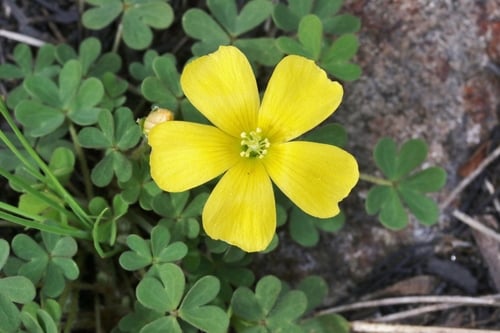
iNaturalist· cc-by-nc
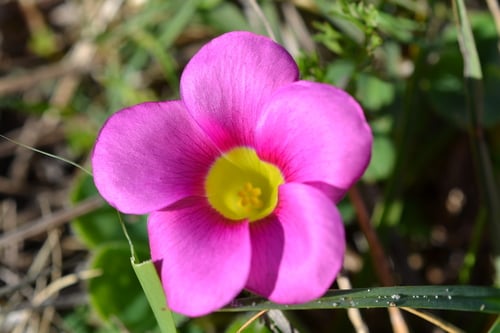
(c) Saelon Renkes, some rights reserved (CC BY-NC), uploaded by Saelon Renkes
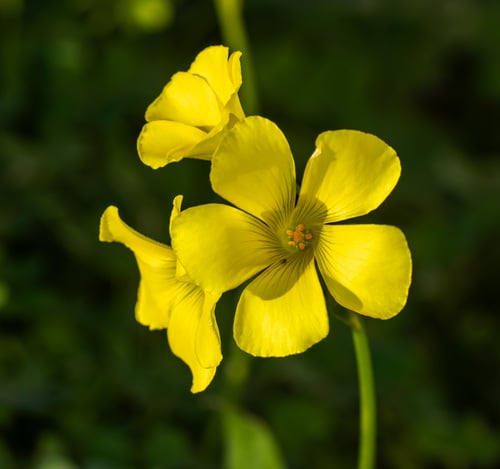
iNaturalist· cc-by-nc
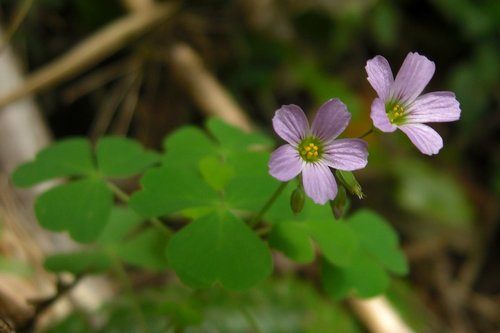
(c) botanicalkg, some rights reserved (CC BY-NC), uploaded by botanicalkg
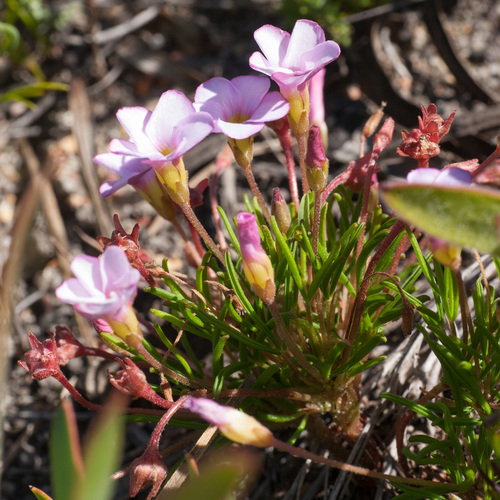
iNaturalist· cc-by-nc
(c) accidentalshrike, some rights reserved (CC BY-NC), uploaded by accidentalshrike
Summary
Source: WikipediaOxalis oregana, known as redwood sorrel or Oregon oxalis, is a species of the wood sorrel family, Oxalidaceae, in the genus Oxalis native to moist Douglas-fir and coast redwood forests of western North America from southwestern British Columbia to Washington, Oregon, and northern California. The species is now recognized as distinct from Oxalis smalliana, with which it was previously conflated.
Description
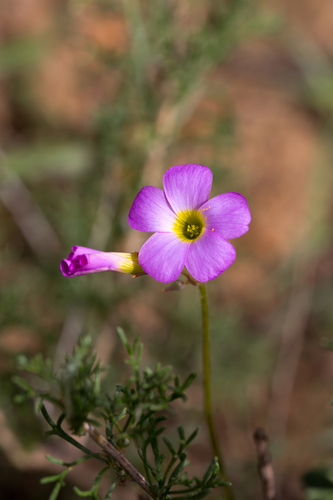
A creeping herb which keeps growing from year to year. It grows 18-20 cm high and spreads 100 cm wide. The leaves have 3 leaflets. They are mid-green. The flowers are pink. They can be lilac or white.
Edible Uses
The leaves and stems are edible raw or cooked, with an acid flavour that children especially enjoy, making them an excellent addition to mixed salads. They can be harvested year round. A mass of leaves and stems allowed to ferment slightly makes a tasty dessert. A sort of rhubarb pie can be made from the leaf stalks, though the stalks are very thin, so a large quantity would be needed. Use in moderation. Flowers are edible raw and have a pleasant acid flavour.
Traditional Uses
The leaves are eaten raw in salads. They are also allowed to ferment to a tasty dessert. The sour leaf stalks are used to make a pie.
This uses section is brief — help expand it
Medicinal Uses
A decoction of the whole plant can be used as a wash to treat rheumatism. The fresh plant juice has been used as eye drops to ease sore eyes. Wilted leaves made into a poultice serve as a dressing on boils, sores, and swollen areas of skin.
Known Hazards
The leaves contain oxalic acid, which gives them their sharp flavour. Perfectly all right in small quantities, the leaves should not be eaten in large amounts since oxalic acid can bind up the body's supply of calcium leading to nutritional deficiency. The quantity of oxalic acid will be reduced if the leaves are cooked. People with a tendency to rheumatism, arthritis, gout, kidney stones or hyperacidity should take especial caution if including this plant in their diet since it can aggravate their condition.
Distribution
It is a warm temperate plant. It suits hardiness zones 7-10.
Where It Grows
Australia, Canada, North America, USA,
Cultivation
Easily grown in a moisture-retentive humus-rich soil in shade or dappled sunlight. Succeeds in dense shade. Grows well in a wild or woodland garden. Plants can be very invasive when in suitable conditions. Plant is growing very vigorously in quite dense shade under an Elaeagnus shrub in Cornwall - it stays green all year round and is fairly productive.
Propagation
Seed is best sown as soon as ripe in a cold frame. Prick out seedlings into individual pots when large enough to handle and plant out in late spring or early summer. For division in spring, larger divisions can go directly into their permanent positions. Smaller divisions are better potted up and grown on in light shade in a cold frame until well established before planting out in late spring or early summer.
Other Uses
Makes a good ground cover plant for a woodland garden, though it can become invasive and may require weeding for the first year or so.
Notes
There are about 500 Oxalis species.
Synonyms
References (7)
- Cundall, P., (ed.), 2004, Gardening Australia: flora: the gardener's bible. ABC Books. p 966
- Facciola, S., 1998, Cornucopia 2: a Source Book of Edible Plants. Kampong Publications, p 165
- Jackes, D. A., Edible Forest Gardens
- Kermath, B. M., et al, 2014, Food Plants in the Americas: A survey of the domesticated, cultivated and wild plants used for Human food in North, Central and South America and the Caribbean. On line draft. p 597
- Kuhnlein, H. V. et al, 2009, Indigenous Peoples' food systems. FAO Rome
Show all 7 references Hide references
- Moerman, D. F., 2010, Native American Ethnobotany. Timber Press. p 373
- Plants for a Future database, The Field, Penpol, Lostwithiel, Cornwall, PL22 0NG, UK. http://www.scs.leeds.ac.uk/pfaf/