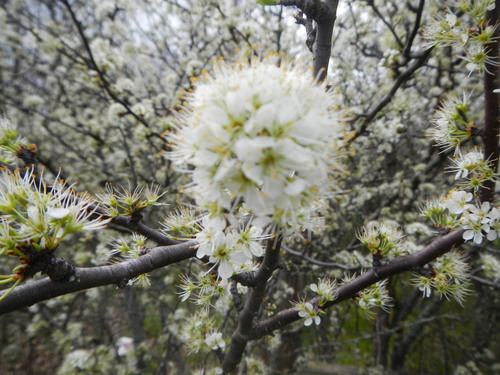
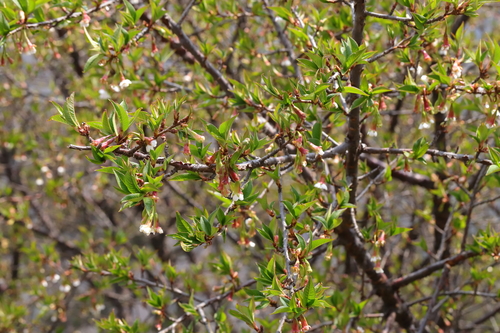
Osteomeles obtusifolia
(Pers.) Kunth ex Steud.
wikimedia· cc-by-sa
Wikimedia Commons - Franz Xaver
wikimedia· cc-by-sa
Wikimedia Commons - Nicolas Ramirez
Summary
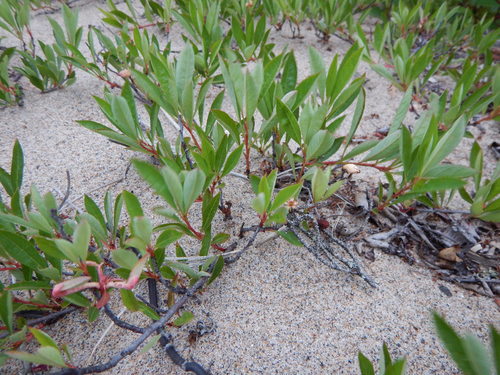
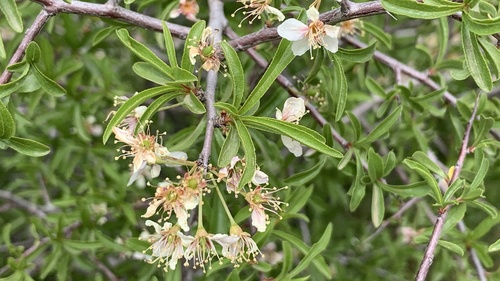
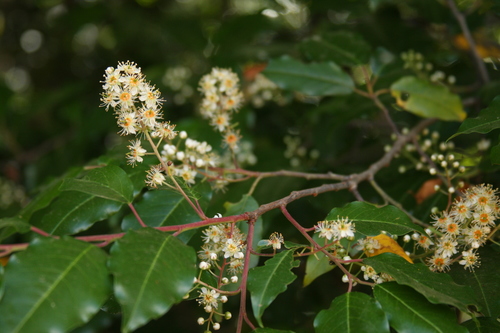
Source: WikipediaOsteomeles obtusifolia is an evergreen shrub that retains its foliage year-round. It produces hermaphroditic flowers pollinated by insects. This species thrives in light sandy, medium loamy, and heavy clay soils with good drainage. It tolerates mildly acidic, neutral, and mildly alkaline pH levels. Requires full sun and prefers consistently moist soil.
Description
Osteomeles obtusifolia is an evergreen shrub that retains its foliage year-round. It produces hermaphroditic flowers pollinated by insects. This species thrives in light sandy, medium loamy, and heavy clay soils with good drainage. It tolerates mildly acidic, neutral, and mildly alkaline pH levels. Requires full sun and prefers consistently moist soil.
Edible Uses
The fruit is edible. No further details are available.
Medicinal Uses
None known
Distribution
It is a tropical plant.
Where It Grows
Peru, South America,
Cultivation
We have almost no information on this species and do not even know its country of origin, though it is likely to be eastern Asia. The following notes are based on the general needs of the genus. Prefers a well-drained fertile loamy or peaty soil in a sheltered sunny position. Requires a south or south-west facing wall where temperatures often fall to -5 and -10°c.
Propagation
Seed requires a period of cold stratification and can be sown in late autumn in a cold frame. Once large enough to handle, prick seedlings out into individual pots and grow on in a greenhouse for at least their first winter. Plant out into permanent positions in late spring or early summer, after the last expected frosts. Cuttings of half-ripe wood, 5–8cm with a heel, can be taken in July or August and rooted in a frame, then potted up in autumn and overwintered in a greenhouse — with a fair to good success rate. Layering is also an option.
Other Uses
No uses known.
Notes
Unresolved in The Plant List. Possibly Hesperomeles obtusifolia.
References (2)
- Nomencl. bot. ed. 2, 1:433; 2:236. 1841
- Plants for a Future database, The Field, Penpol, Lostwithiel, Cornwall, PL22 0NG, UK. http://www.scs.leeds.ac.uk/pfaf/