Photinia parvifolia
(E. Pritz.) C. K. Schneid.
iNaturalist· cc-by-nc
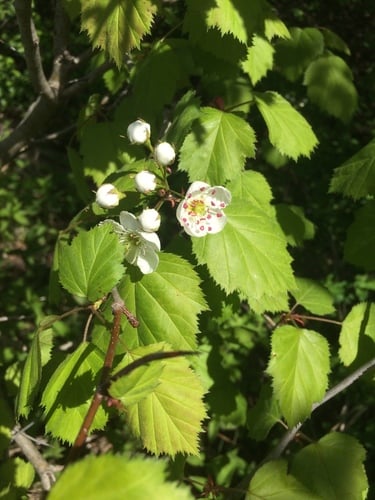
(c) MP Zhou, some rights reserved (CC BY-NC), uploaded by MP Zhou
iNaturalist· cc-by-nc
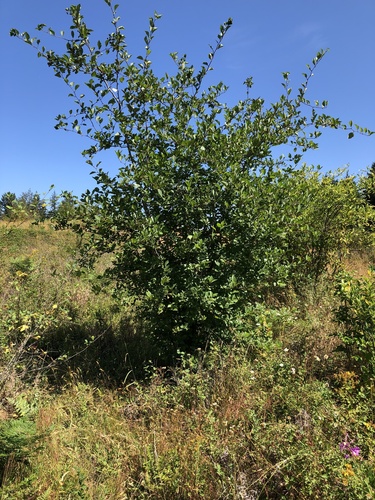
(c) MP Zhou, some rights reserved (CC BY-NC), uploaded by MP Zhou
iNaturalist· cc-by-nc
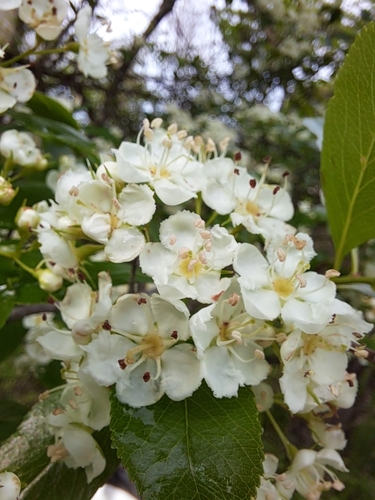
(c) MP Zhou, some rights reserved (CC BY-NC), uploaded by MP Zhou
Summary
Source: WikipediaDeciduous shrub reaching 3 m tall, hardy to UK zone 6. Hermaphrodite flowers appear in May, with seeds ripening August to September. Thrives in light sandy, medium loamy, or heavy clay soils that are well-drained and moist. Tolerates mildly acid to neutral pH. Grows in semi-shade or full sun.
Description
A shrub. It grows 1-3 m tall. It loses its leaves during the year. Young branches are reddish brown. The leaves are narrowly oval and 4-8 cm long by 1-4 cm wide. There are several flowers in a group at the ends of branches. The petals are white. The fruit are orange red to purple and oval. They are 9-12 mm long by 5-7 mm wide.
Edible Uses
The fruit is edible, though no preparation details are recorded. The fruit is approximately 10mm in diameter.
Medicinal Uses
None known.
Distribution
It is a temperate and subtropical plant. It grows in mountain valleys and rocky slopes between 300-2,500 m above sea level in southern China. In Sichuan.
Where It Grows
Asia, China,
Propagation
Seed is best sown in a cold frame as soon as it ripens in autumn. Stored seed will likely need stratification and should be sown as early in the year as possible. Germination is usually good. Prick seedlings into individual pots when large enough to handle and grow on in a greenhouse through their first winter, then plant out in late spring or early summer after the last expected frosts. Basal cuttings can be taken in a frame — harvest shoots with plenty of underground stem when they are 8–10cm above ground, pot individually, and keep in light shade in a cold frame or greenhouse until rooting well, then plant out in summer. Half-ripe wood cuttings, 7–10cm with a heel, taken July/August in a frame, take about 2 months to root; overwinter in a greenhouse and plant out in late spring — fair to good success rate. Cuttings of almost ripe side shoots, 7–12cm with a heel, taken October/November in a cold frame, are lifted the following autumn and planted into permanent positions. Layering in autumn with partial severing of the layer about 12 months later and lifting the following spring gives a high percentage.
Other Uses
The wood is hard and heavy, making it suitable for furniture and other small articles.
Production
In China plants flower in April to May and fruit July to August.
Notes
There are about 60 Photinia species.
References (3)
- Ill. Handb. Laubholzk. 1:711. 1906
- Plants for a Future database, The Field, Penpol, Lostwithiel, Cornwall, PL22 0NG, UK. http://www.scs.leeds.ac.uk/pfaf/
- www.efloras.org Flora of China Volume 9
More from Rosaceae
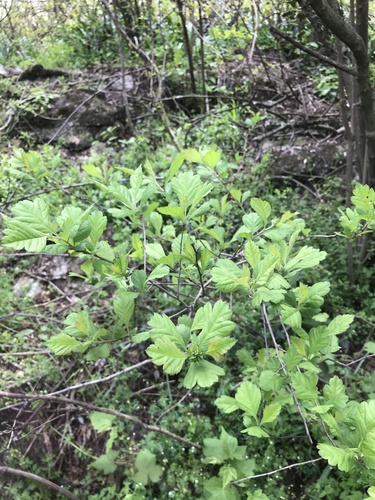
Crataegus coccinioides
Columbian hawthorn, Kansas hawthorn, Mississippi hawthorn
Crataegus coccinoides
Kansas Hawthorn
Crataegus columbiana
Columbia Hawthorn, Red hawthorn
Crataegus crus-galli
Cockspur hawthorn, Cockspurthorn, Hog-apple, Newcastle-thorn
Crataegus cuneata
Chinese Hill Haw, Chinese Hawthorn, Red haw
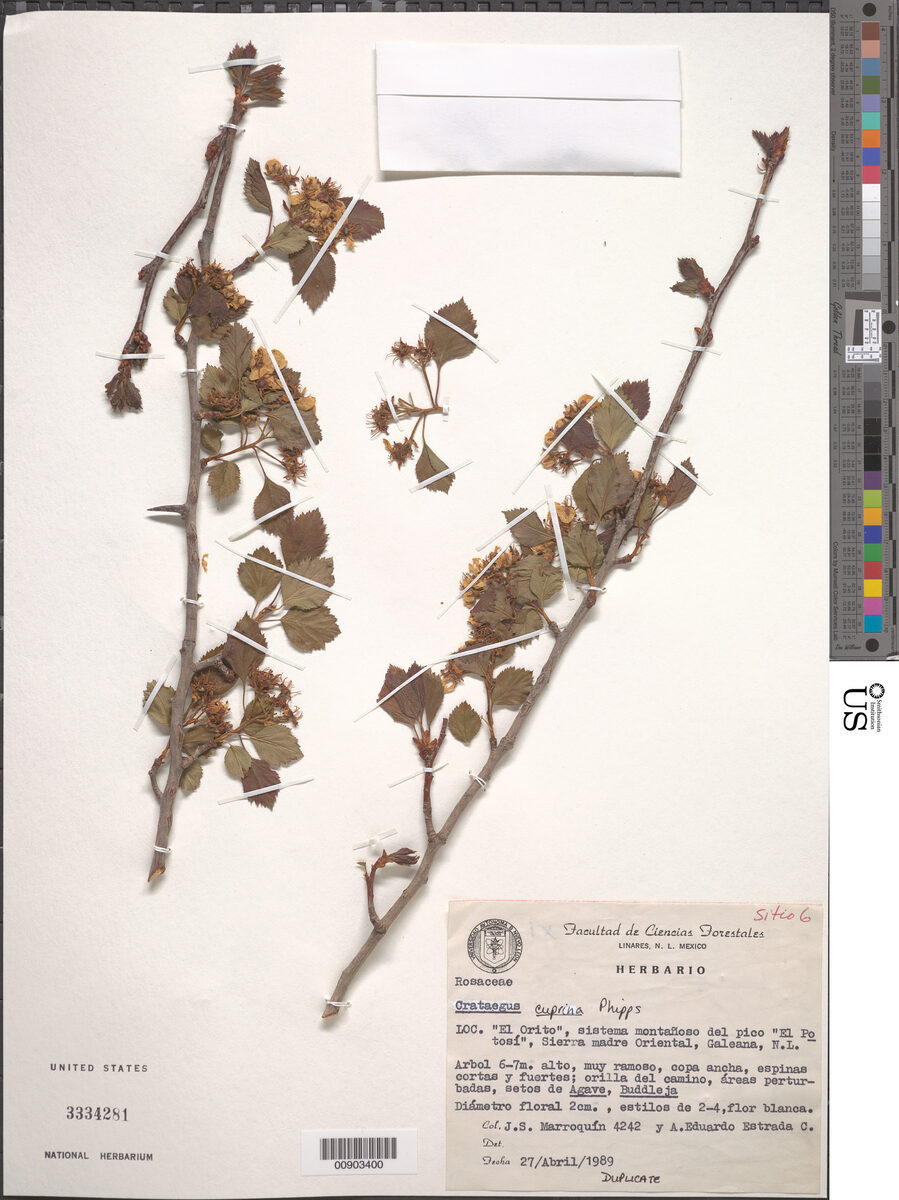
Crataegus cuprina