Photinia glabra
(Thunb.) Maxim.
Japanese photinia
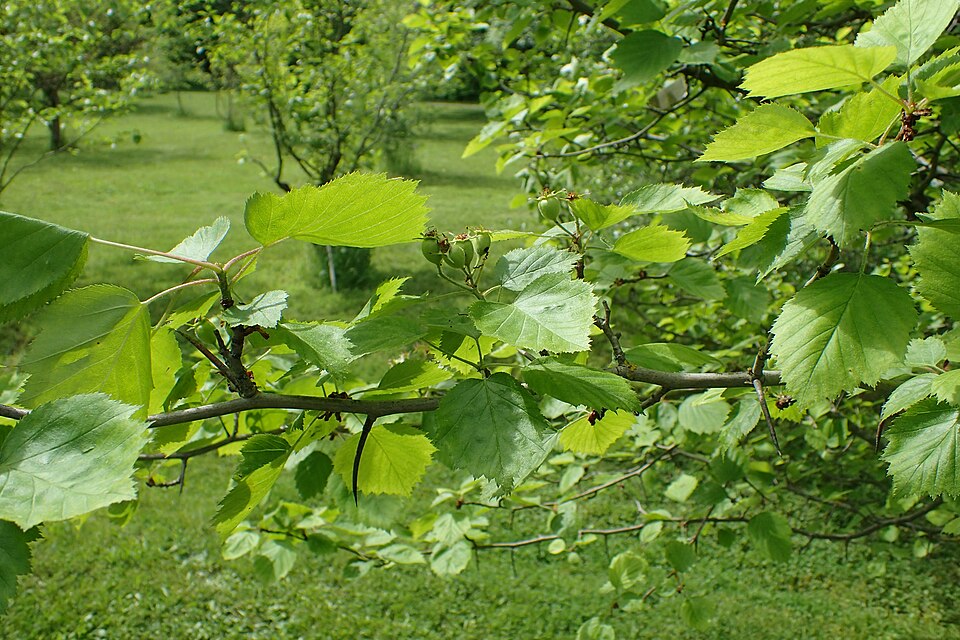
iNaturalist· cc-by-nc
(c) 小铖/Smalltown, some rights reserved (CC BY-NC), uploaded by 小铖/Smalltown
iNaturalist· cc-by-sa
(c) harum.koh, some rights reserved (CC BY-SA), uploaded by harum.koh
iNaturalist· cc-by-nc
(c) onidiras-iNaturalist, some rights reserved (CC BY-NC), uploaded by onidiras-iNaturalist
Summary
Source: WikipediaPhotinia glabra, or the Japanese photinia, is a species in the family Rosaceae.
Description
A small tree. It has a crown which is narrow and domed. The leaves are bright red when new but become green. The flowers are small and white. They occur in clusters. The fruit are small and fleshy. They are red and ripen to black.
Edible Uses
The fruit is used dried. It is approximately 5mm in diameter.
Medicinal Uses
The plant is used as an anthelmintic and in the treatment of obstinate dysentery, piles, and jaundice.
Distribution
It is a temperate plant. It grows in mixed forests between 500-800 m above sea level in China. It suits hardiness zones 7-10. In Sichuan and Yunnan.
Where It Grows
Asia, Australia, China, Indochina, Japan, Korea, Myanmar, SE Asia, Thailand, Vietnam,
Propagation
Seed is best sown in a cold frame as soon as it ripens in autumn. Stored seed will likely need stratification and should be sown as early in the year as possible. Germination is usually good. Prick seedlings into individual pots when large enough to handle and grow on in a greenhouse through their first winter, then plant out in late spring or early summer after the last expected frosts. Basal cuttings can be taken in a frame — harvest shoots with plenty of underground stem when they are 8–10cm above ground, pot individually, and keep in light shade in a cold frame or greenhouse until rooting well, then plant out in summer. Half-ripe wood cuttings, 7–10cm with a heel, taken July/August in a frame, take about 2 months to root; overwinter in a greenhouse and plant out in late spring — fair to good success rate. Cuttings of almost ripe side shoots, 7–12cm with a heel, taken October/November in a cold frame, are lifted the following autumn and planted into permanent positions. Layering in autumn with partial severing of the layer about 12 months later and lifting the following spring gives a high percentage.
Other Uses
The wood is hard and heavy, making it suitable for furniture and other small articles.
Production
In China plants flower in April to May and fruit September to October.
Notes
There are about 60 Photinia species.
Synonyms
Also Known As
Du khong-long
References (5)
- Cundall, P., (ed.), 2004, Gardening Australia: flora: the gardener's bible. ABC Books. p 1032
- Enum. pl. Jap. 1:141. 1873 Nov 4 (Maxim., Bull. Acad. Imp. Sci. Saint-Petersbourg 19:178. 30 Nov 1873)
- Flora of China @ efloras.org Volume 9
- Lord, E.E., & Willis, J.H., 1999, Shrubs and Trees for Australian gardens. Lothian. p 251
- Plants for a Future database, The Field, Penpol, Lostwithiel, Cornwall, PL22 0NG, UK. http://www.scs.leeds.ac.uk/pfaf/