Osmorhiza aristata
(Thunb.) Mak. & Yabe
Sweet Cicely, Longstyle sweetroot
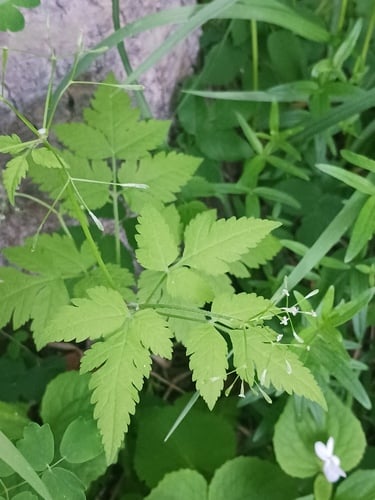
iNaturalist· cc-by-sa
(c) harum.koh, some rights reserved (CC BY-SA), uploaded by harum.koh
iNaturalist· cc-by-sa
(c) harum.koh, some rights reserved (CC BY-SA), uploaded by harum.koh
iNaturalist· cc-by-nc
(c) Svetlana Nesterova, some rights reserved (CC BY-NC), uploaded by Svetlana Nesterova
Summary
Source: WikipediaOsmorhiza aristata (Chinese: 香根芹, Japanese: 藪人参) is a perennial plant belonging to the genus Osmorhiza, in the family Apiaceae. It is native to East Asia.
Description
A herb. It grows 25-70 cm tall. It has a taproot that has a smell. The stems are green and can have a purple tinge. The leaves are 29 cm long by 25 cm wide and divided into leaflets.
Edible Uses
The root can be eaten raw or cooked — peel it first when eating raw, as it is aromatic. Young plants and young leafstalks can also be cooked, either boiled or added to soups.
Traditional Uses
The roots are peeled, washed and eaten raw. The young leaf stalks are eaten boiled or put into soups. The young plant is also cooked and eaten.
This uses section is brief — help expand it
Medicinal Uses
None known
Distribution
It is a temperate plant. It grows in forests, grasslands and along stream banks between 200-3,500 m above sea level.
Where It Grows
Asia, Bhutan, China, Himalayas, India, Japan, Korea, Mongolia, Nepal, North America, Pakistan, Russia, Siberia,
Propagation
Sow seed in a cold frame as soon as it is ripe where possible, otherwise sow in early spring. Prick seedlings into individual pots when large enough to handle and grow on in the greenhouse through their first winter. Plant out into permanent positions in late spring or early summer, after the last expected frosts.
Other Uses
None known
Notes
In Flora of China as Osmorhiza aristata (Thunb.) Rydberg
Synonyms
Also Known As
Yabu-ninjin
References (5)
- Bot. Surv. Nebr. 3:37. 1894 (As (Thunb.) Rydb.)
- Kermath, B. M., et al, 2014, Food Plants in the Americas: A survey of the domesticated, cultivated and wild plants used for Human food in North, Central and South America and the Caribbean. On line draft. p 594
- Lim, T. K., 2015, Edible Medicinal and Non Medicinal Plants. Volume 9, Modified Stems, Roots, Bulbs. Springer p 61
- Plants for a Future database, The Field, Penpol, Lostwithiel, Cornwall, PL22 0NG, UK. http://www.scs.leeds.ac.uk/pfaf/
- READ
More from Apiaceae
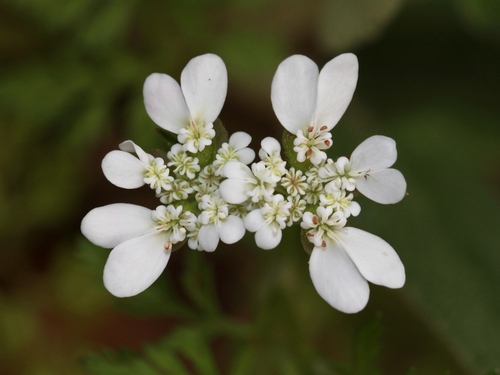
Orlaya daucoides
Bud parsley, Hen's foot, Bastard parsley
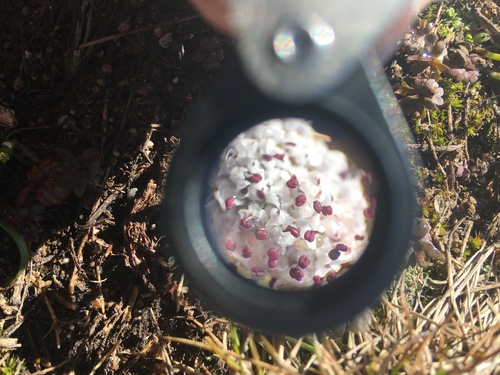
Orogenia linearifolia
Indian potato
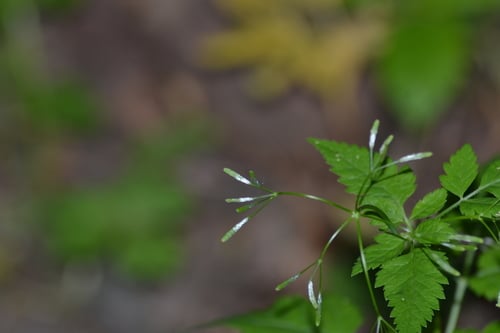
Osmorhiza chilensis
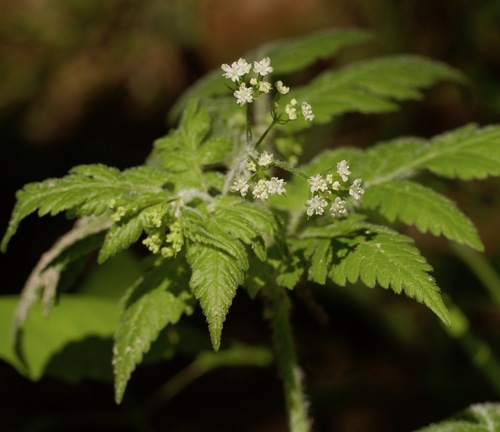
Osmorhiza claytonii
Woolly sweet-cicely, Clayton's Sweetroot, Hairy Sweet-cicely, Anise sweet-cicely
Osmorhiza depauperata
Bluntseed sweetroot, Antenna plant
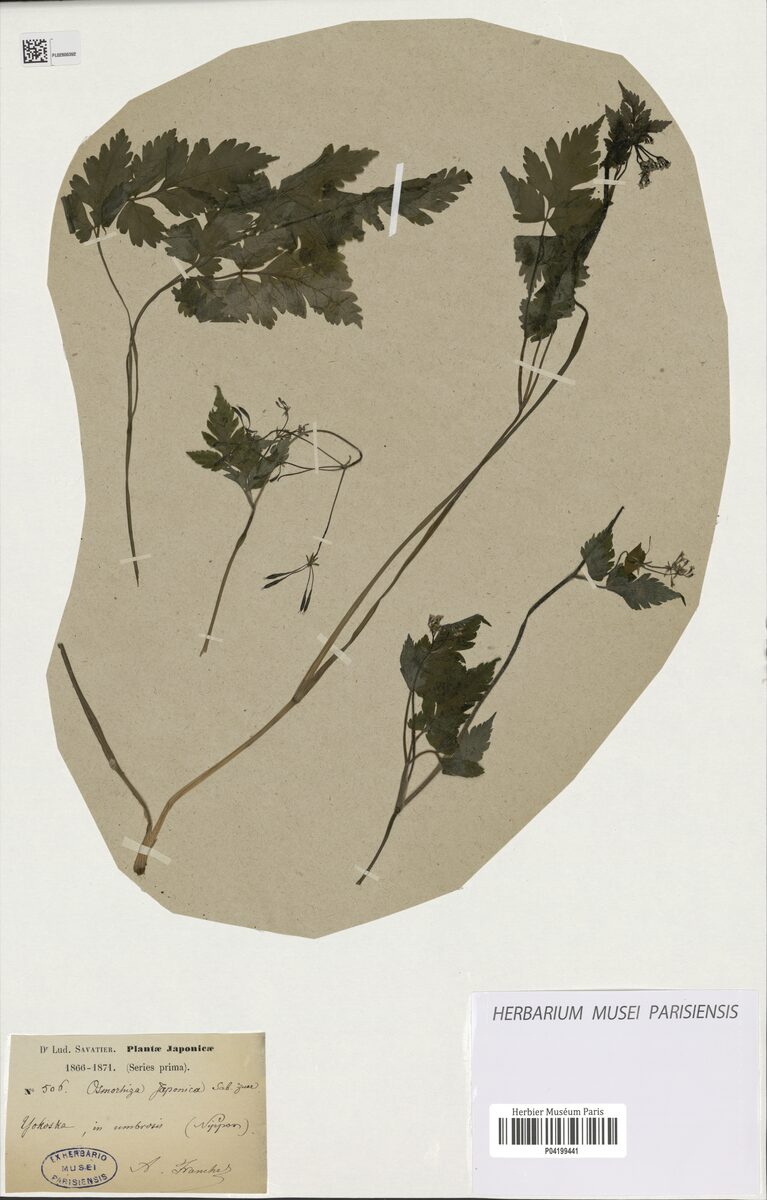
Osmorhiza japonica
Japanese sweet cicely