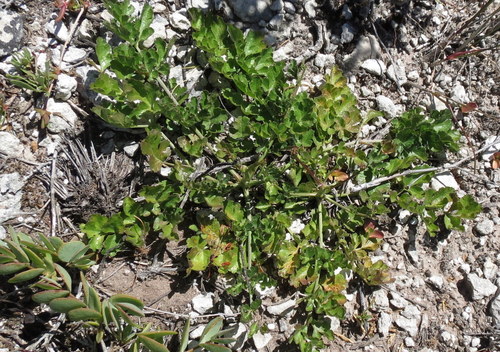
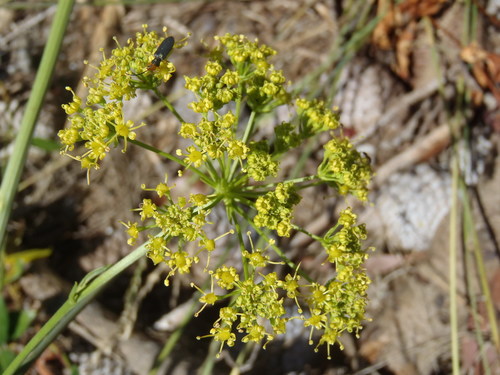
Bolax gummifera
(Lam.) Spreng.
Bolsam-bog
iNaturalist· cc-by
(c) John Brew, some rights reserved (CC BY), uploaded by John Brew
iNaturalist· cc-by
(c) John Brew, some rights reserved (CC BY), uploaded by John Brew
Summary
Source: WikipediaBolax gummifera is a species of flowering plant in the genus Bolax, found in the Patagonian Andes and the Falkland Islands.
Description
A herb or small shrub. It keeps growing from year to year. It forms hard dense cushions. These can be 1.3 m tall.
This description is brief — help expand it
Edible Uses
Edible Parts: Root Edible Uses: Root - raw or roasted.
Traditional Uses
The roots are eaten raw and used for flavouring.
This uses section is brief — help expand it
Medicinal Uses
Antispasmodic Deobstruent An oleo-resin obtained from incisions made at the base of the main stem is antispasmodic and deobstruent.
Distribution
It is a temperate plant. In Argentina it grows from sea level to 3,500 m above sea level.
Where It Grows
Argentina, Chile, Falklands, South America,
Propagation
Seed - it may be best to sow the seed as soon as it is ripe in a greenhouse and plant out in late spring. Stored seed should be sown in late winter in a greenhouse. When they are large enough to handle, prick the seedlings out into individual pots and grow them on in the greenhouse for at least their first winter. Plant them out into their permanent positions in late spring or early summer, after the last expected frosts. Division of rooting rosettes in the summer
Other Uses
Plants can be used for ground cover, forming a very dense carpet of growth. Special Uses Ground cover
Synonyms
References (3)
- Leon-Lobos, P., et al, 2022, Patterns of Traditional and Modern Uses of Wild Edible Native Plants of Chile: Challenges and Future Perspectives. Plants (Basel) v 11 (6) Table S1
- Plants for a Future database, The Field, Penpol, Lostwithiel, Cornwall, PL22 0NG, UK. http://www.scs.leeds.ac.uk/pfaf/
- Upson, R., & Lewis R., 2014, Updated Vascular Plant Checklist and Atlas for the Falkland Islands. Falklands Conservation and Kew.