Bunium bulbocastanum
L.
Black caraway, Earth Chestnut, Great earth-nut, Tuberous rooted caraway
iNaturalist· cc0
no rights reserved
iNaturalist· cc0
no rights reserved
iNaturalist· cc0
no rights reserved
Summary
Source: WikipediaBunium bulbocastanum is a plant species in the family Apiaceae. It was once used as a root vegetable in parts of western Europe, and has been called great pignut or earthnut.
Description
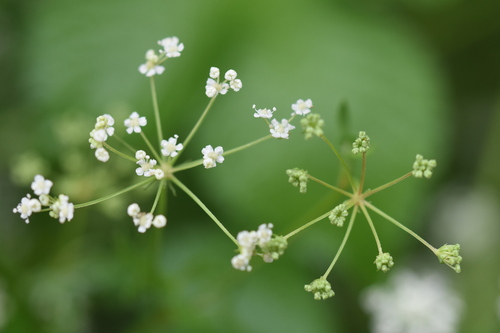
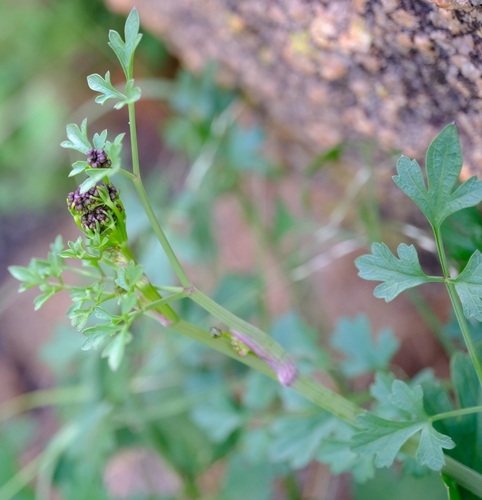
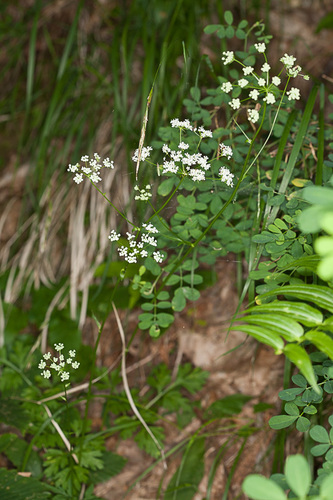
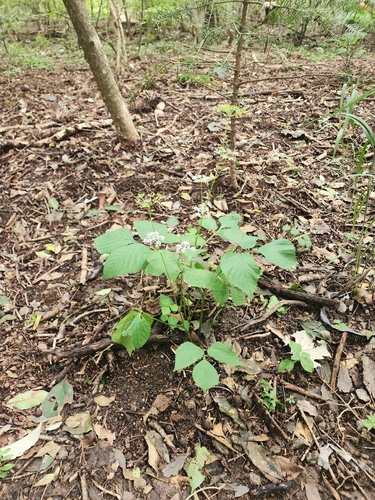
A herb. It grows 20-30 cm tall. It keeps growing from year to year. The roots are round and like tubers. They are starchy.
This description is brief — help expand it
Edible Uses
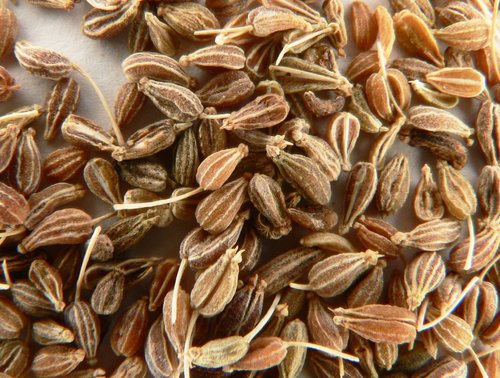
Edible Parts: Leaves Root Edible Uses: Condiment Root - raw or cooked. A delicious taste very much like sweet chestnuts when cooked[2, K], but the tubers are very small and fiddly to harvest. Seed and flowers. Used as a flavouring, they are a cumin substitute. Leaves - raw or cooked. They are used as a garnish and a flavouring in much the same way as parsley.
Traditional Uses
The seeds are used as flavouring for bread. The roots are used as famine food, raw or roasted. They are used raw in salads or boiled as a vegetable. The leaves are used like parsley. The starchy tubers are eaten as a vegetable and in salads. The fruit/seeds are used as a spice.
Medicinal Uses
Astringent Astringent.
Distribution
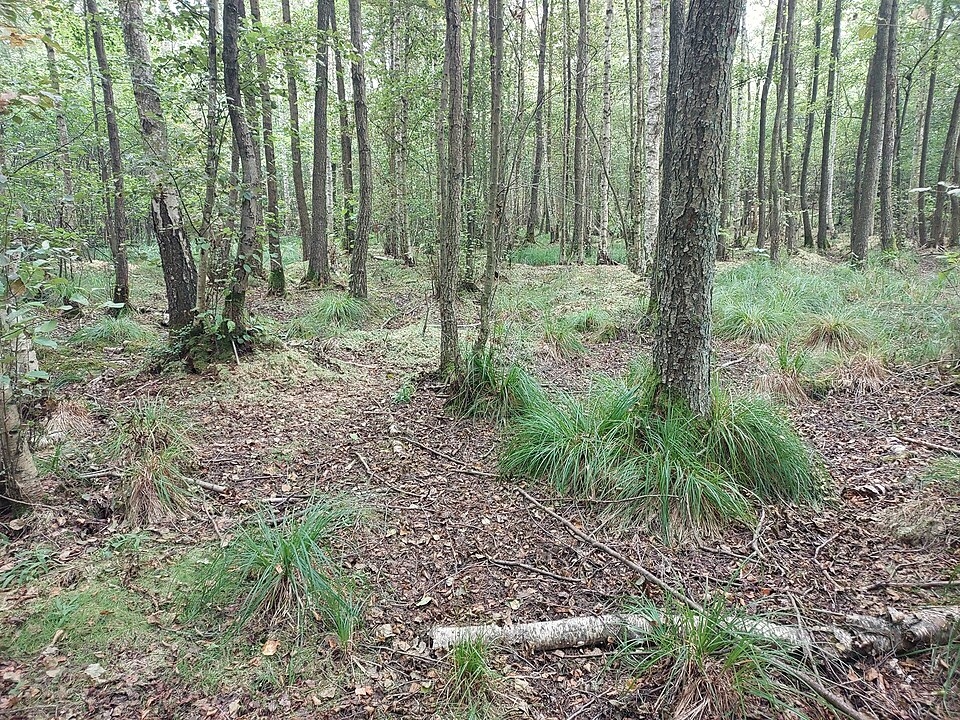
It is a temperate plant. It can grow in arid places. It suits hardiness zone 5.
Where It Grows
Afghanistan, Africa, Algeria, Asia, Australia, Austria, Belgium, Britain, Canada, Czech Republic, Denmark, England, Europe, France, Germany, India, Italy, Luxembourg, Mediterranean, Morocco, Netherlands, North Africa, North America, Portugal, Scandinavia, Slovenia, Spain, Sweden, Switzerland, USA, Yugoslavia,
Cultivation
See the plants native habitat for ideas on its cultivation needs. The pig nut has at times been cultivated for its edible root. Although quite small in the wild, there is a potential to improve the size of this root through selective breeding and cultivation.
Propagation
Seed - sow spring in a cold frame. The seedlings only have one cotyledon. Germination is usually free and quick, prick out the seedlings into individual pots as soon as they are large enough to handle and grow on for their first season in pots. Plant them out into their final positions when dormant in the autumn. The seed can also be sown in situ, but this is best done only if you have lots of seed since far fewer plants will result. Division in spring or autumn.
Other Uses
None known Special Uses Food Forest
Other Information
It is a famine food.
Notes
There are 45-50 Bunium species.
Synonyms
Also Known As
Black caraway, Black zira, Bulvuska hliznata, Gravioun, Gunyun, Kala-zirah, Pignut, Pilappu shiragam, Shah-zirah, Shemai-shiragam, Shima-kirakam, Shimejeerige, Sima-jilakara, Wild caraway
References (28)
- Abbet, C., et al, 2014, Ethnobotanical survey on wild alpine food plants in Lower and Central Valais (Switzerland). Journal of Ethnopharmacology 151 (2014) 624–634
- Ambasta S.P. (Ed.), 2000, The Useful Plants of India. CSIR India. p 107 (As Carum bulbocastanum)
- Bircher, A. G. & Bircher, W. H., 2000, Encyclopedia of Fruit Trees and Edible Flowering Plants in Egypt and the Subtropics. AUC Press. p 69 (Also as Carum bulbocastanum)
- Brouk, B., 1975, Plants Consumed by Man. Academic Press, London. p 288 (As Carum bulbocastanum)
- Crawford, M., 2012, How to grow Perennial Vegetables. Green Books. p 149
Show all 28 references Hide references
- Facciola, S., 1998, Cornucopia 2: a Source Book of Edible Plants. Kampong Publications, p 16
- Hammer, K. & Spahillari, M., 1999, Crops of European origin. in Report of a networking group on minor crops. IPGRI p 44
- Hedrick, U.P., 1919, (Ed.), Sturtevant's edible plants of the world. p 165 (As Carum bulbocastanum)
- Heywood, V.H., Brummitt, R.K., Culham, A., and Seberg, O. 2007, Flowering Plant Families of the World. Royal Botanical Gardens, Kew. p 37
- Hibbert, M., 2002, The Aussie Plant Finder 2002, Florilegium. p 48
- Jackes, D. A., Edible Forest Gardens
- Jardin, C., 1970, List of Foods Used In Africa, FAO Nutrition Information Document Series No 2.p 62 (As Bunium mauritanicum)
- Lim, T. K., 2015, Edible Medicinal and Non Medicinal Plants. Volume 9, Modified Stems, Roots, Bulbs. Springer p 18
- Luczaj, L. et al, 2012, Wild food plant use in 21st century Europe: the disappearance of old traditions and the search for new cuisines involving wild edibles. Acta Soc Bot Pol 81(4):359–370
- Mattalia, G., et al, 2012, Traditional uses of wild food and medicinal plants among Brigasc, Kye ́, and Provenc ̧al communities on the Western Italian Alps. Genet Resour Crop Evol. Springer
- Nova Acta Phys.-Med. Acad. Caes. Leop.-Carol. Nat. Cur. 12(1):121. 1824 (As Carum bulbocastanum)
- PARMENTIER
- Peter, K. V. (Ed.), 2004, Handbook of Herbs and Spices Vol. 2 Woodhead Publishing and CRC Press. p
- Plants for a Future database, The Field, Penpol, Lostwithiel, Cornwall, PL22 0NG, UK. http://www.scs.leeds.ac.uk/pfaf/
- Royal Botanic Gardens, Kew (1999). Survey of Economic Plants for Arid and Semi-Arid Lands (SEPASAL) database. Published on the Internet; http://www.rbgkew.org.uk/ceb/sepasal/internet [Accessed 13th June 2011] (As Carum bulbocastanum)
- Seidemann J., 2005, World Spice Plants. Economic Usage, Botany, Taxonomy. Springer. p 71
- Self, M., 199, Phoenix Seeds catalogue. p 5
- Simkova, K. et al, 2014, Ethnobotanical review of wild edible plants used in the Czech Republic. Journal of Applied Botany and Food Quality 88, 49-67
- Sp. pl. 1:243. 1753
- Turner, N. J. et al, 2011, Edible and Tended Wild Plants, Traditional Ecological Knowledge and Agroecology. Critical Reviews in Plant Sciences, 30:198-225
- Tyagi, R. K., et al, 2004, Conservation of Spices Germplasm in India. Indian J. Plant Genet. Resour. 17(3): 163-174 (As Carum bulbocastanum)
- USDA, ARS, National Genetic Resources Program. Germplasm Resources Information Network - (GRIN). [Online Database] National Germplasm Resources Laboratory, Beltsville, Maryland. Available: www.ars-grin.gov/cgi-bin/npgs/html/econ.pl (10 April 2000)
- Wiersema, J. H. & Leon, B., 2013, World Economic Plants. A Standard Reference CRC Press. 2nd Ed. p 124