Osbornia octodonta
F. Muell
Myrtle mangrove
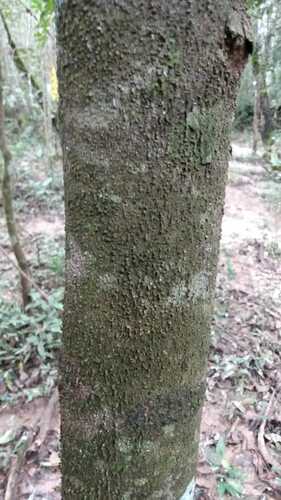
iNaturalist· cc-by
(c) coenobita, some rights reserved (CC BY), uploaded by coenobita
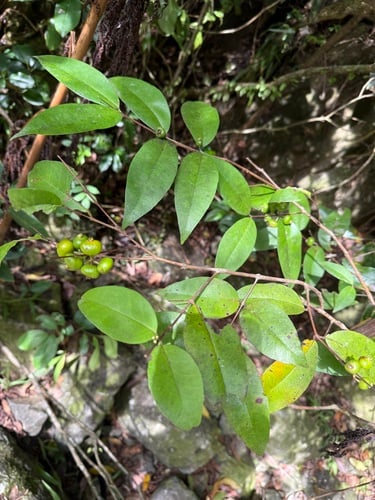
iNaturalist· cc-by-nc-sa
(c) wan_hong, some rights reserved (CC BY-NC-SA)
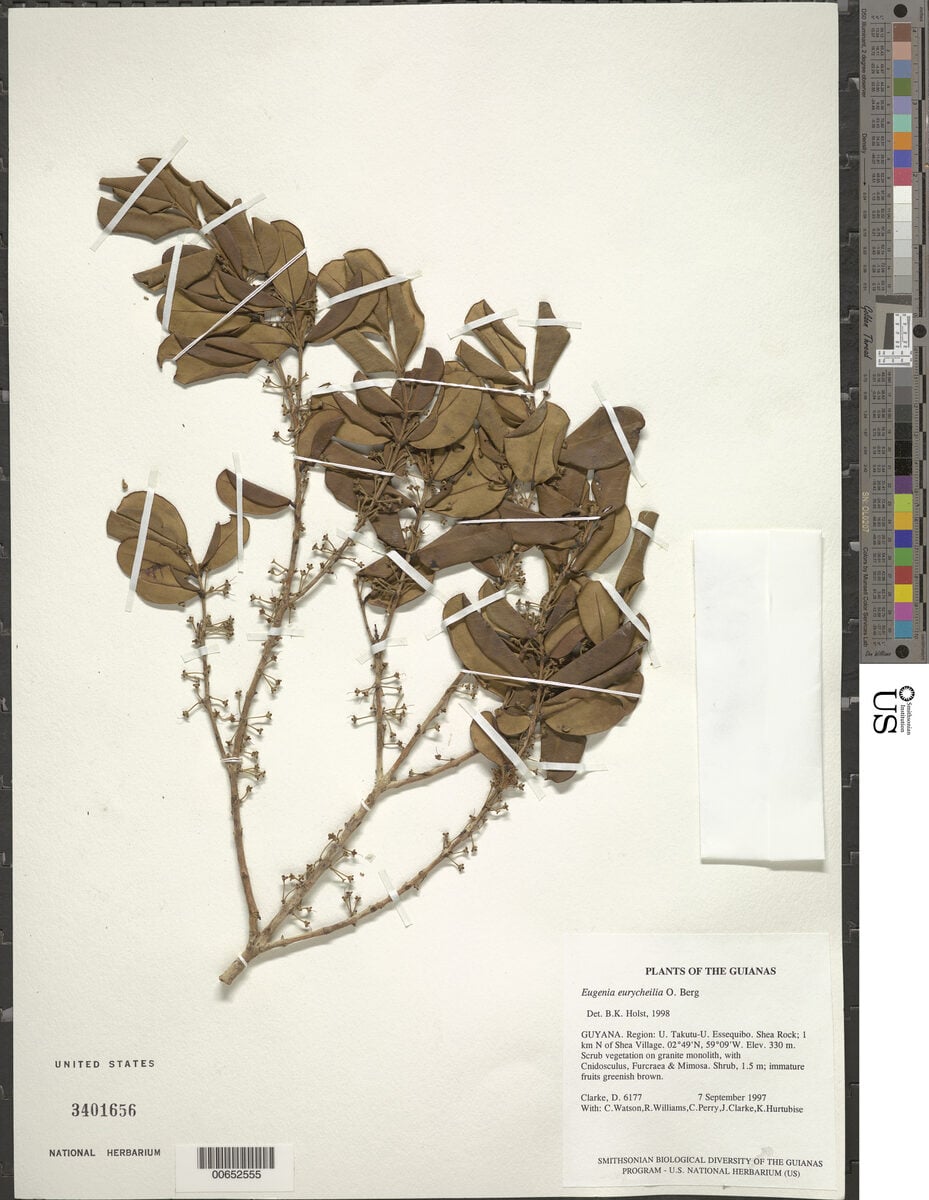
iNaturalist· cc-by-sa
(c) Abu Hamas, some rights reserved (CC BY-SA), uploaded by Abu Hamas
Description
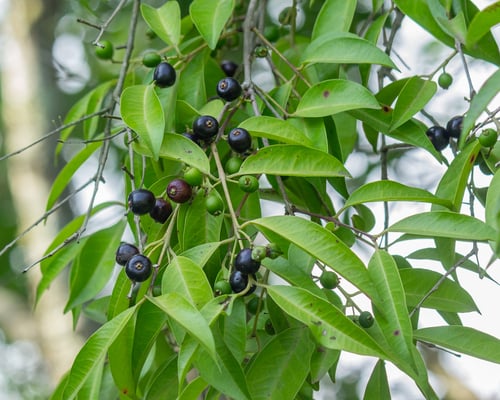
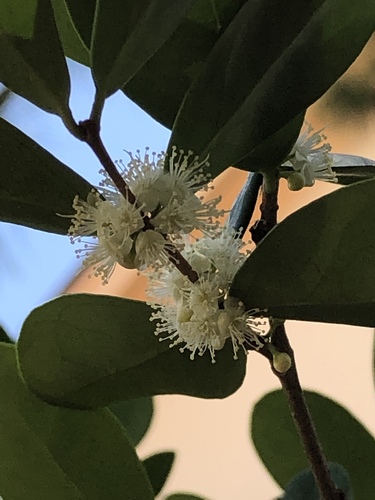
A shrub with many stems. It grows 2-4 m tall. The leaves are opposite and smooth. They become wider and rounded towards the tip and taper to the base. The blade is 2-5 cm long by 1-2.1 cm wide. The stalks are short. The flowers are pale green and without stalks. They are slightly like tubes and 0.7-1 cm long by 0.4 cm wide. About 1-3 flowers occur together in the axils of the upper leaves. The fruit are cone shaped and 0.7-1 cm long by 0.4-0.7 cm wide. They are in a velvety tube with lobes at the tip. These contain 1-2 seeds.
Edible Uses
The leaves are used as flavouring when cooking turtles.
Traditional Uses
The leaves are used as flavouring when cooking turtles.
This uses section is brief — help expand it
Distribution
It is a tropical plant. They grow in mangrove forests near the landward side. They can grow along tidal watercourses.
Where It Grows
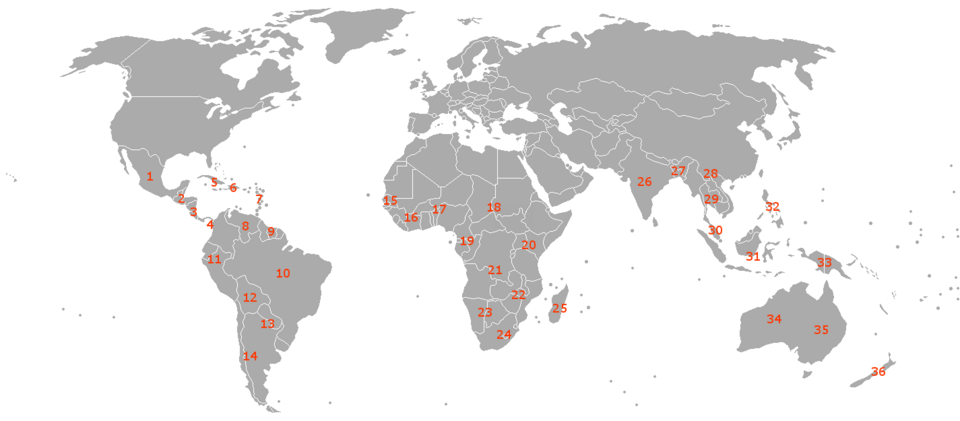
Asia, Australia*, Indonesia, Pacific, Papua New Guinea, PNG, Philippines, SE Asia,
Cultivation
Plants are grown from seed.
Notes
There is only one Osbornia species.
References (13)
- Brock, J., 1993, Native Plants of Northern Australia, Reed. p 271
- Cooper, W. and Cooper, W., 2004, Fruits of the Australian Tropical Rainforest. Nokomis Editions, Victoria, Australia. p 350
- Elliot, W.R., & Jones, D.L., 1997, Encyclopedia of Australian Plants suitable for cultivation. Vol 7. Lothian. p 120
- Frodin, D.G. & Leach, G.L., 1982, Mangroves of the Port Moresby Region. Biology Department Occasional Paper No 3 Revised edition. Papua New Guinea, p 48
- Jackes, B. R., 2010, Plants of Magnetic Island. 3rd Edition. James Cook University, Australia. p 20
Show all 13 references Hide references
- Kenneally, K.E., Edinger, D. C., and Willing T., 1996, Broome and Beyond, Plants and People of the Dampier Peninsula, Kimberley, Western Australia. Department of Conservation and Land Management. p 148
- Lazarides, M. & Hince, B., 1993, Handbook of Economic Plants of Australia, CSIRO. p 177
- Lovelock, C., & Clarke, S., 1999, Field Guide to the Mangroves of Queensland. Australian Institute of Marine Science. p 34
- Melzer, R. & Plumb, J., 2011, Plants of Capricornia. Belgamba, Rockhampton. p 262
- Paczkowska, G . & Chapman, A.R., 2000, The Western Australian Flora. A Descriptive Calatogue. Western Australian Herbarium. p 400
- Scarth-Johnson, V., 2000, National Treasures. Flowering Plants of Cooktown and Northern Australia. Vera Scarth-Johnson Gallery Association. Cooktown, Australia. p 27
- Wheeler, J.R.(ed.), 1992, Flora of the Kimberley Region. CALM, Western Australian Herbarium, p 540
- Williams, K.A.W., 1999, Native Plants of Queensland Volume 4. Keith A.W. Williams North Ipswich, Australia. p 292