Syzygium aromaticum
(L.) Merr. & L. M. Perry
Clove
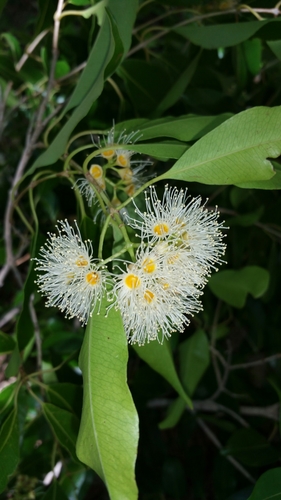
iNaturalist· cc-by-nc
(c) Frédéric LEVIEZ, some rights reserved (CC BY-NC), uploaded by Frédéric LEVIEZ
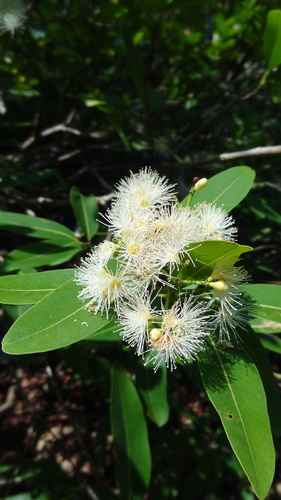
iNaturalist· cc-by-nc
(c) dennis-mada, some rights reserved (CC BY-NC)
iNaturalist· cc-by-nc
(c) Herbert Bacher, some rights reserved (CC BY-NC)
Summary
Source: WikipediaSyzygium aromaticum is an evergreen tree reaching 20 m (65 ft) tall and wide with slow growth. Hardy to UK zone 10 and frost tender, it flowers with bee-pollinated hermaphrodite blooms and is self-fertile. It tolerates light sandy or medium loamy soils with good drainage, thriving in mildly acidic to neutral pH and even very acidic or saline conditions. The plant grows in semi-shade or full sun, prefers moist soil, and can tolerate maritime exposure.
Description
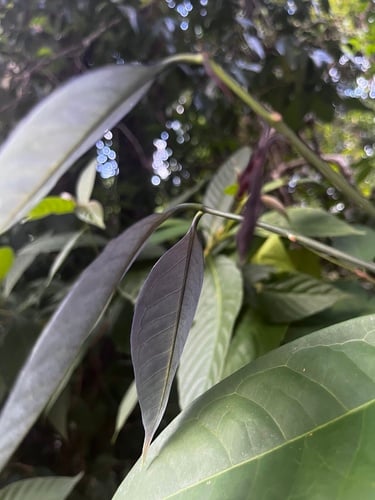
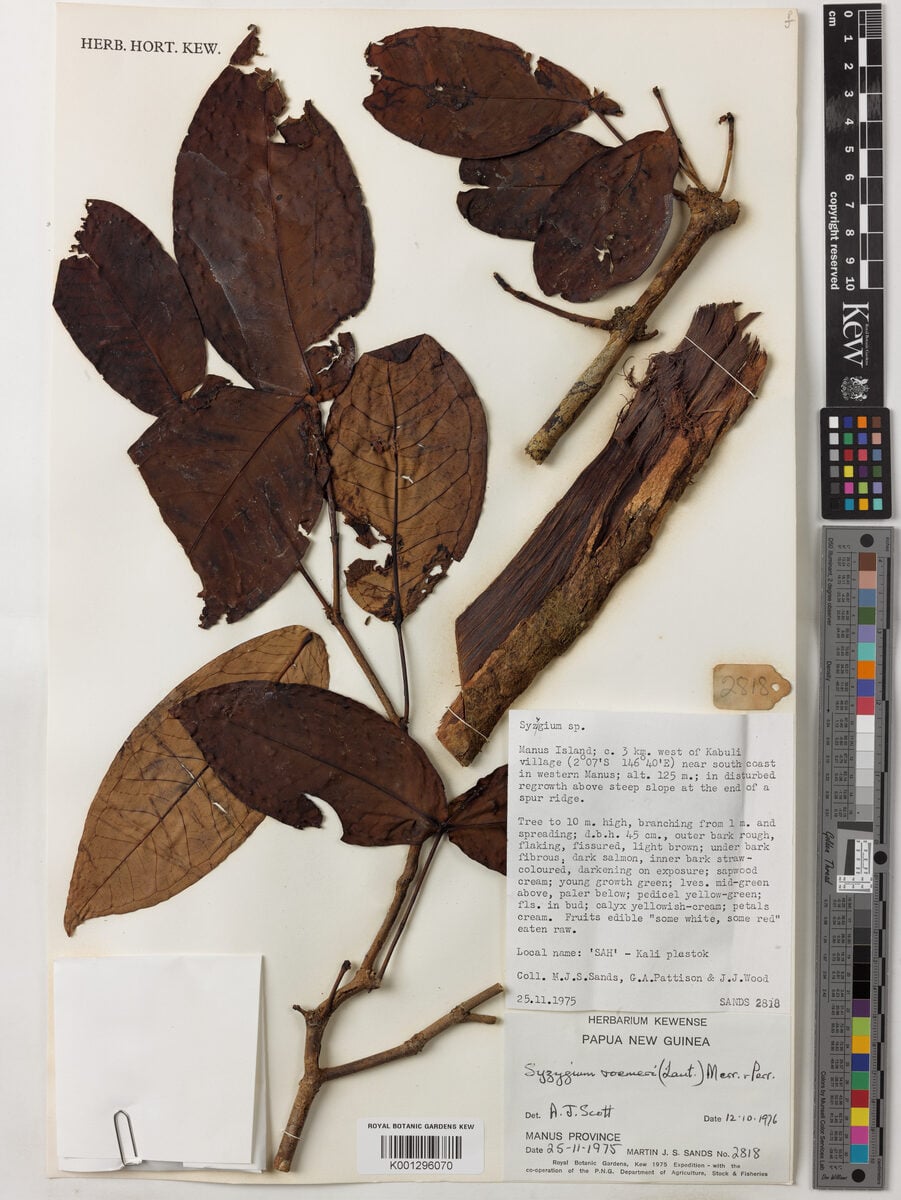
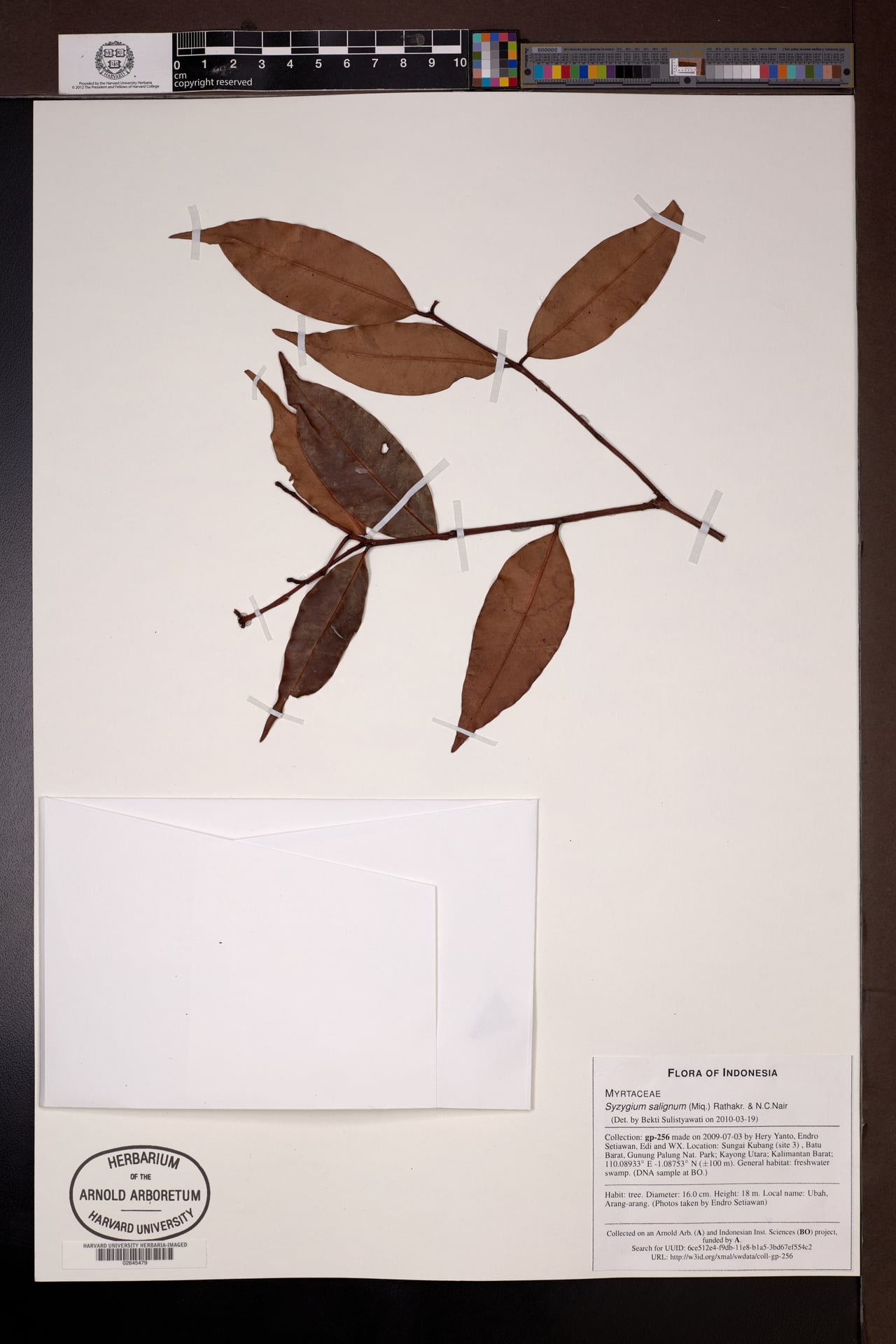
A tall tree up to 20 m tall with bright red flowers. The trunk is about 30 cm across. It is normally divided into 2 or 3 trunks. The bark is grey and the small branches are very brittle. The leaf stalk has a swollen reddish base and the leaf is about 10 cm x 4 cm. The young leaves are reddish. They became dark green on the upper surface and paler underneath. Flowers are on the ends of branches. Up to 20 small flowers occur together. The fruit are oblong, red and fleshy. They are about 3 cm long with 1 or 2 seeds.
Edible Uses
The dried flower buds, known as cloves, are widely used as a spice in foods such as cakes, baked apples and mincemeat, and are sometimes chewed after meals. An essential oil extracted from the plant is used as a flavouring in bakery products, chewing gums, ice cream, sauces and candies. The fruit pulp is also edible.
Traditional Uses
The dried flower buds are used to flavour foods. They are used with ham, sausages, baked apples, mincemeat, pies, preserves, and pickles. They are the source of an oil used in the food industry to flavour drinks, desserts, chewing gum, bakery products and ice cream. The fruit pulp is eaten. Dried flowers are also chewed. CAUTION: Use in large amounts can cause allergies.
Medicinal Uses
Cloves and their essential oil are widely used medicinally. The herb is spicy, warming and stimulating — strongly antiseptic, pain-relieving, and useful for controlling nausea and vomiting, improving digestion, protecting against intestinal parasites and stimulating uterine contractions. Taken internally as a tea, cloves are used to treat internal parasites, stomach upsets, chills and impotence. The flower buds can be chewed to freshen the breath or ease toothache pain. The essential oil is applied externally for toothache, headache, colds, arthritis and rheumatism, and is also useful for ulcers, bruises, burns, bronchitis, asthma, minor infections and colic, and is sometimes used to ease nausea. Two lesser-known compounds in clove oil have shown strong activity against bacteria linked to plaque and gum disease. Clove oil is very potent and may cause gum irritation; diluting it with an equal amount of vegetable oil is advisable, and an even milder dilution is required for infants. Use should be avoided during pregnancy or by those with sensitive skin. An infusion of the shoots and dried, unopened flower buds is also used as an excitant.
Known Hazards
The use of clove for any medicinal purpose has not been approved by the US Food and Drug Administration, and its use may cause adverse effects if taken orally by people with liver disease, blood clotting and immune system disorders, or food allergies. Cloves are used in traditional medicine as an essential oil, which is intended to be an anodyne (analgesic) mainly for dental emergencies. There is evidence that clove oil containing eugenol is effective for toothache pain and other types of pain. Clove essential oil may prevent the growth of Enterococcus faecalis bacteria which may be present in an unsuccessful root canal treatment. One review reported the efficacy of eugenol combined with zinc oxide as an analgesic for alveolar osteitis. Studies to determine its effectiveness for fever reduction, as a mosquito repellent, and to prevent premature ejaculation have been inconclusive. It remains unproven whether blood sugar levels are reduced by cloves or clove oil. The essential oil may be used in aromatherapy.
Distribution
A tropical plant. They grow best on small islands near the sea in tropical places. They prefer a place which is warm and humid all year round. It needs temperatures above 10°C but below 38°C. It grows in the lowlands. It suits hardiness zones 11-12.
Where It Grows
Africa, Andamans, Asia, Australia, Bangladesh, Brazil, Cambodia, Central America, China, Colombia, Cuba, East Africa, East Timor, Ethiopia, Fiji, Ghana, Grenada, Guianas, Haiti, Hawaii, Himalayas, India, Indochina, Indonesia, Jamaica, Kenya, Madagascar, Malaysia, Mali, Mauritius, Mexico, Mozambique, Myanmar, Nepal, Nicaragua, Norway, Pacific, Papua New Guinea, PNG, Pohnpei, Reunion, Sao Tome and Principe, Scandinavia, SE Asia, Seychelles, Sierra Leone, Sri Lanka, Suriname, Tanzania, Thailand, Timor-Leste, USA, West Africa, West Indies, West Timor,
Cultivation
They grow easily from fresh seed. Seedling trees can be transplanted when about 15 months old. Vegetative propagation is not easy. They can be grown from cuttings.
Propagation
Seed has a very short viability of about 2 weeks and should be sown as soon as it is ripe in shady nursery beds, placed approximately 25mm deep in the soil. Around 70% of seeds germinate, typically within 1 to 6 weeks. Plant out when seedlings reach about 25cm tall. Cuttings of terminal leafy softwood can be taken and kept in a frame at high humidity until rooted.
Other Uses
Clove oil is extracted by water distillation and blends well with cinnamon, cedar, lavender, rose and bergamot. Good quality cloves may contain more than 15% essential oil, dominated by eugenol (70–85%), eugenol acetate (15%) and beta-caryophyllene (5–12%). Cloves also contain about 2% of the triterpene oleanolic acid. The oil is used in perfumery, as a flavouring and medicinally. Dried cloves are used in potpourris and pomanders.
Production
Trees start to produce at 6-8 years of age. The flower buds are harvested when light red and dried in the sun. Trees last for 80 years or so.
Other Information
An occasional tree occurs in PNG. Over 100,000 tons are grown worldwide each year to flavour cigarettes. It is cultivated.
Synonyms
Also Known As
Bungah cengkeh, Chengkeh, Chingkeh, Choji, Cingkeh, Clavo, Cravo, Ding xiang, Garofano, Gewurznelke, Giroffe, Giroflier, Gvozdika, Ilavangappu, Kaan ploo, Karabu, Karabu-neti, Karayampu, Karuvappu, Kirambu, Klam pu, Krambu, Kruidnagel, Kyrddernellik, Kusum, Labongo, Lamanga, Laung, Lavang, Lavanga, Lavangamuchettu, Lavangamulu, Lay-hnyin, Ley-nyin-bwint, Mkarafuu, Qaranful, Ting hsiang
References (56)
- Ambasta, S.P. (Ed.), 2000, The Useful Plants of India. CSIR India. p 613
- Ashton, M. S., et al 1997, A Field Guide to the Common Trees and Shrubs of Sri Lanka. WHT Publications Ltd. pdf p 296
- Barwick, M., 2004, Tropical and Subtropical Trees. A Worldwide Encyclopedic Guide. Thames and Hudson p 391
- Bianchini, F., Corbetta, F., and Pistoia, M., 1975, Fruits of the Earth. Cassell. p 214 (As Eugenia caryophyllata)
- Bremness, L., 1994, Herbs. Collins Eyewitness Handbooks. Harper Collins. p 85
Show all 56 references Hide references
- Brickell, C. (Ed.), 1999, The Royal Horticultural Society A-Z Encyclopedia of Garden Plants. Convent Garden Books. p 995
- Brouk, B., 1975, Plants Consumed by Man. Academic Press, London. p 295
- Burkill, H. M., 1985, The useful plants of west tropical Africa, Vol. 4. Kew.
- Burkill, I.H., 1966, A Dictionary of the Economic Products of the Malay Peninsula. Ministry of Agriculture and Cooperatives, Kuala Lumpur, Malaysia. Vol 1 (A-H) p 976 (As Eugenia aromatica)
- Cobley, L.S. (rev. Steele, W.M.) 2nd Ed., 1976, An Introduction to the Botany of Tropical Crops. Longmans. p 240
- Coe, F. G., and Anderson, G. J., 1996, Ethnobotany of the Garifuna of Eastern Nicaragua. Economic Botany 50(1) pp 71-107
- Coe, F. G. & Anderson, G. J., 1997, Ethnobotany of the Miskitu of Eastern Nicaragua. Journal of Ethnobiology 17(2): 171-214
- Coe, F. G. and Anderson, G. J., 1999, Ethnobotany of the Sumu (Ulwa) of Southeastern Nicaragua and Comparisons with Miskitu Plant Lore. Economic Botany Vol. 53. No. 4. pp. 363-386
- Cundall, P., (ed.), 2004, Gardening Australia: flora: the gardener's bible. ABC Books. p 1392
- Dangol, D. R. et al, 2017, Wild Edible Plants in Nepal. Proceedings of 2nd National Workshop on CUAOGR, 2017.
- Esperanca, M. J., 1988. Surviving in the wild. A glance at the wild plants and their uses. Vol. 1. p 238 (As Eugenia caryophillata)
- Facciola, S., 1998, Cornucopia 2: a Source Book of Edible Plants. Kampong Publications, p 160
- Flowerdew, B., 2000, Complete Fruit Book. Kyle Cathie Ltd., London. p 163 (As Eugenia caryophyllus)
- French, B.R., 1986, Food Plants of Papua New Guinea, A Compendium. Asia Pacific Science Foundation p 239
- Gautam, R. S., et al, 2020, Wild Edible Fruits of Nepal. Int. J. Appl. Sci. Biotechnol. Vol 8(3): 289-304
- Ghimeray, A. K., Lamsal, K., et al, 2010, Wild edible angiospermic plants of the Illam Hills (Eastern Nepal) and their mode of use by local community. Korean J. Pl. Taxon. 40(1)
- Girard, N. J., 2020, Sustainable Foraging of Wild Edible Plants in Norway. A Biocultural Approach. M. Sc. thesis Norwegian University. p 132
- Hedrick, U.P., 1919, (Ed.), Sturtevant's edible plants of the world. p 296 (As Eugenia caryophyllata)
- Hemphill, I, 2002, Spice Notes. Macmillan. p 144
- Hutton, W., 1997, Tropical Herbs and Spices of Indonesia. Periplus. p 24
- Hu, Shiu-ying, 2005, Food Plants of China. The Chinese University Press. p 579
- Kermath, B. M., et al, 2014, Food Plants in the Americas: A survey of the domesticated, cultivated and wild plants used for Human food in North, Central and South America and the Caribbean. On line draft. p 847
- Kiple, K.F. & Ornelas, K.C., (eds), 2000, The Cambridge World History of Food. CUP p 432, 1758
- Kybal, J., 1980, Herbs and Spices, A Hamlyn Colour Guide, Hamlyn Sydney p 96
- Liu, Yi-tao, & Long, Chun-Lin, 2002, Studies on Edible Flowers Consumed by Ethnic Groups in Yunnan. Acta Botanica Yunnanica. 24(1):41-56
- Macmillan, H.F. (Revised Barlow, H.S., et al), 1991, Tropical Planting and Gardening. Sixth edition. Malayan Nature Society. Kuala Lumpur. p 378
- Maundu, P. et al, 1999, Traditional Food Plants of Kenya. National Museum of Kenya. 288p
- Mem. Amer. Acad. Arts 18:196. 1939
- Menninger, E.A., 1977, Edible Nuts of the World. Horticultural Books. Florida p 81
- Miguel, E., et al, 1989, A checklist of the cultivated plants of Cuba. Kulturpflanze 37. 1989, 211-357
- Molla, A., Ethiopian Plant Names. http://www.ethiopic.com/aplants.htm
- Mulherin, J., 1994, Spices and natural flavourings. Tiger Books, London. p 41 (As Eugenia caryophyllata)
- Ochse, J. J. et al, 1931, Vegetables of the Dutch East Indies. Asher reprint. p 530 (As Eugenia aromatica)
- Owen, S., 1993, Indonesian Food and Cookery, INDIRA reprints. p 52
- Phon, P., 2000, Plants used in Cambodia. © Pauline Dy Phon, Phnom Penh, Cambodia. p 576
- Purseglove, J.W., 1968, Tropical Crops Dicotyledons, Longmans. p 401
- Rajapaksha, U., 1998, Traditional Food Plants in Sri Lanka. HARTI, Sri Lanka. p 319 (As Eugenia caryophyllata)
- Roa, J. A. G. & Boada, D. S. G., 2018, Fundación para el Fortalecimiento de la Fruticultura y Plantas Alimenticias no Convencionales en Colombia. (As Caryophyllus aromaticus)
- Schatz, G.E., 2001, Generic Tree Flora of Madagascar. Royal Botanical Gardens, Kew and Missouri Botanical Garden. p 289
- Slik, F., www.asianplant.net
- Solomon, C., 2001, Encyclopedia of Asian Food. New Holland. p 98
- Sukenti, K., et al, 2016, Ethnobotanical study on local cuisine of the Sasak tribe in Lombok Island, Indonesia. Journal of Ethnic Foods. 3 (2016) 189-200 p 198
- Tyagi, R. K., et al, 2004, Conservation of Spices Germplasm in India. Indian J. Plant Genet. Resour. 17(3): 163-174
- van Wyk, B., 2005, Food Plants of the World. An illustrated guide. Timber press. p 357
- Vickery, M.L. and Vickery, B., 1979, Plant Products of Tropical Africa, Macmillan. p 84
- Wiersema, J. H. & Leon, B., 2013, World Economic Plants. A Standard Reference CRC Press. 2nd Ed. p 671
- Williams, C.N., Chew, W.Y., and Rajaratnam, J.A., 1989, Tree and Field Crops of the Wetter Regions of the Tropics. Longman, p 226
- Wit, F., 1979, Clove, in Simmonds, N.W., (ed), Crop Plant Evolution. Longmans. London. p 216
- World Checklist of Useful Plant Species 2020. Royal Botanic Gardens, Kew
- www.worldagroforestrycentre.org/treedb/
- Zeven, A. C. & de West, J. M. J., 1982, Dictionary of cultivated plants and their regions of diversity. Wageningen. p 60