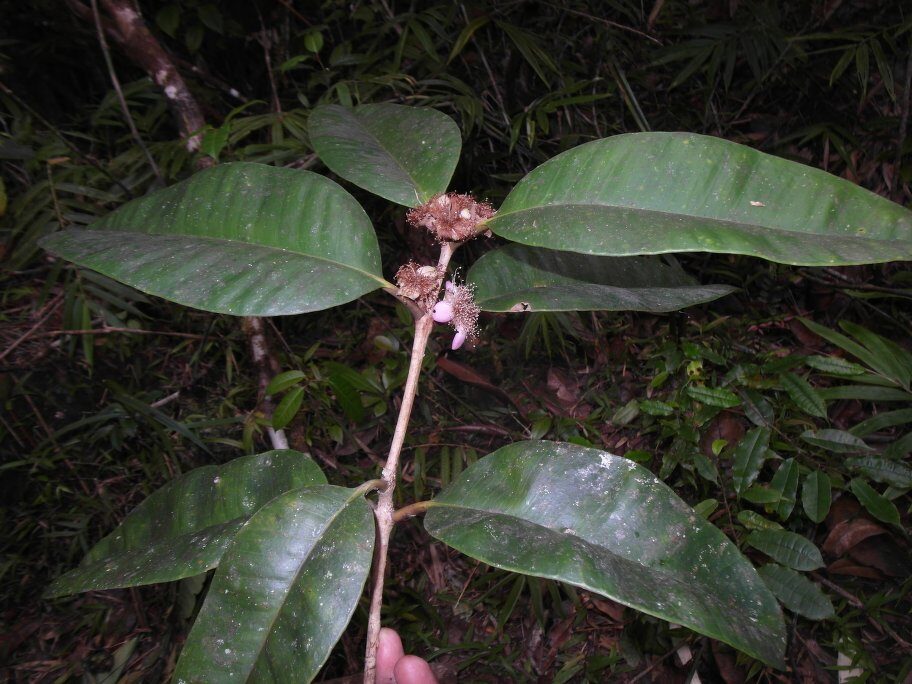
Syzygium armstrongii
(Benth.) B. Hyland
Armstrong’s satinash, Black Lillypilly
iNaturalist· cc-by-nc
(c) atwebb, some rights reserved (CC BY-NC)
iNaturalist· cc-by-nc
(c) atwebb, some rights reserved (CC BY-NC)
Summary
Source: WikipediaSyzygium armstrongii is a species of tree in the family Myrtaceae. It is endemic to the Northern Territory and the Kimberley of Western Australia.
Description
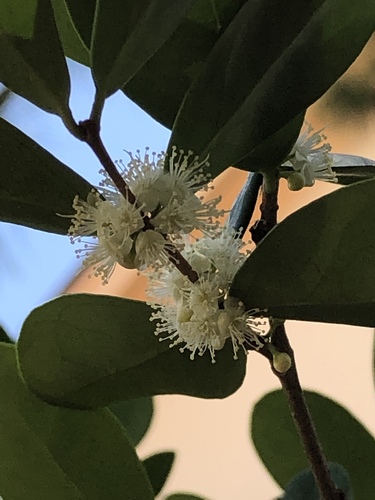
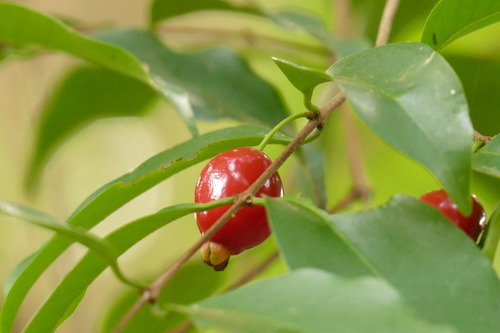
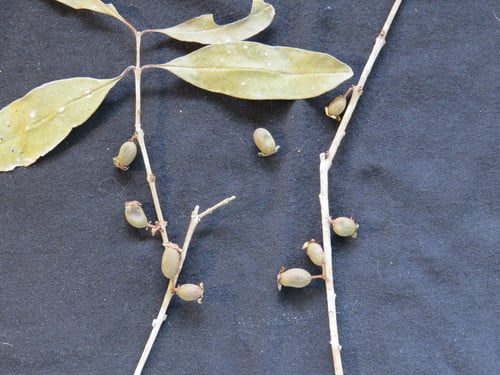
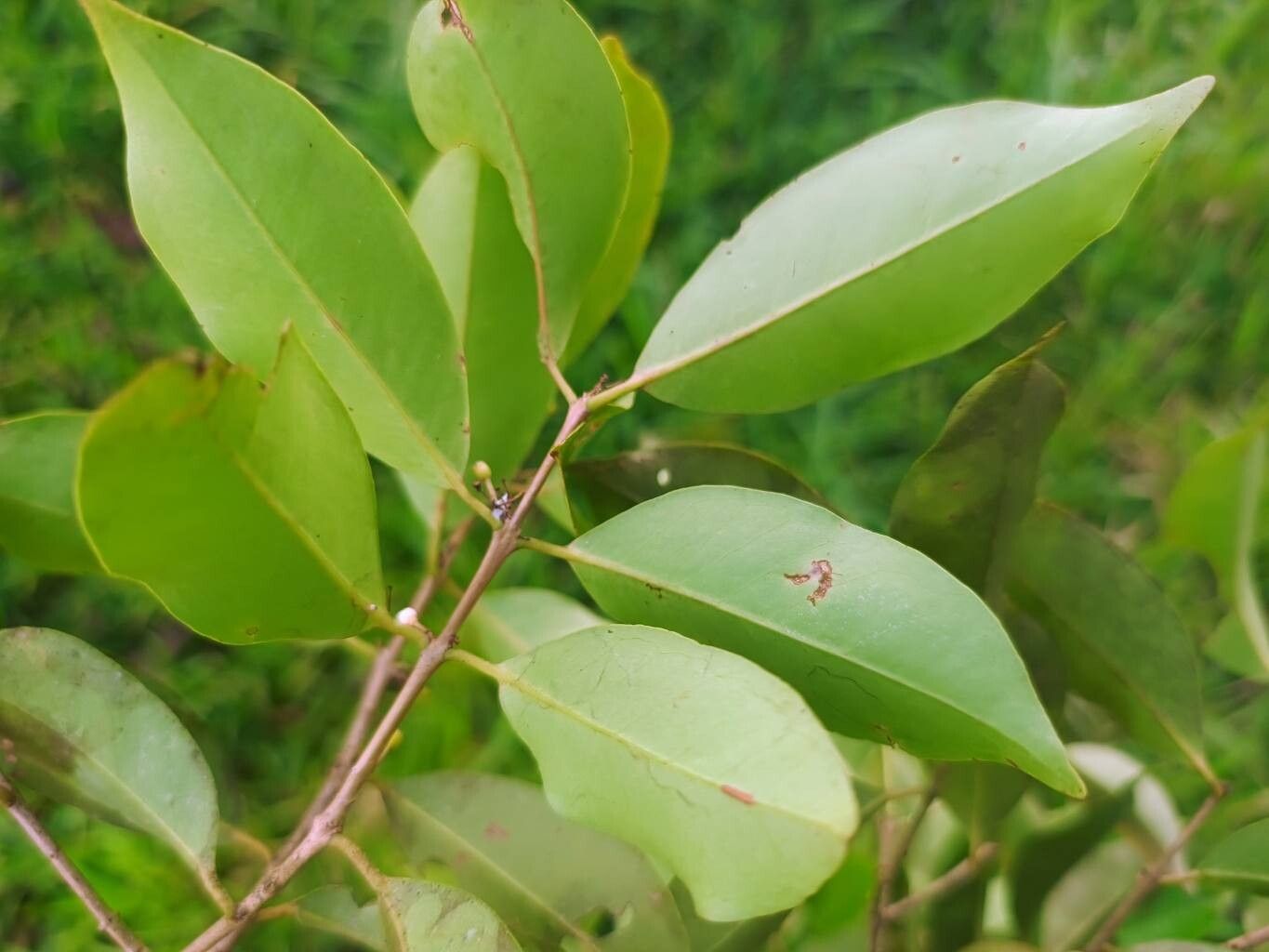
An evergreen tree up to 10-20 m tall. It has a widely spreading crown and a dense cover of leaves. The tree often has buttresses. The bark is slightly rough but clings tightly to the trunk. The young stems are almost round in cross section. The leaves are sword shaped and 6-14 cm long by 2-4 cm wide. They are shiny light green on the upper surface and paler underneath. They are thick and leathery and taper towards both ends. The midrib is distinct. The leaf stalk is 0.4-0.8 cm long. The flowers are about 1.5 cm wide, cream coloured and with many stamens about 1.5 cm long. The flowers occur in clusters about 5-7 cm across at the ends of branches. The fruit are round or somewhat flattened and 2 cm across. They are white but can become reddish when ripe. They have spongy wrinkled flesh with many oil glands. They are edible. The fruit have one seed.
Edible Uses
The ripe fruit are eaten raw, particularly by children. The fruit floats in water, aiding natural distribution.
Traditional Uses
The ripe fruit are eaten raw.
This uses section is brief — help expand it
Distribution
A tropical plant. It occurs in the northern part of Australia. It is normally found near streams. They require well drained soil. It is often in the monsoon rainforest. As the ripe fruit floats in water this helps the plant get distributed.
Where It Grows
Australia*,
Cultivation
Plants are grown from fresh seed.
Production
Plants are fast growing. In the southern Hemisphere the tree flowers in September to December and fruit are ripe December to February.
Other Information
The fruit are eaten especially by children.
Synonyms
Also Known As
Ankardadjirr, Den, Parntirringa
References (16)
- Bindon, P., 1996, Useful Bush Plants. Western Australian Museum. p 240
- Brock, J., 1993, Native Plants of Northern Australia, Reed. p 305
- Cherikoff V. & Isaacs, J., The Bush Food Handbook. How to gather, grow, process and cook Australian Wild Foods. Ti Tree Press, Australia p 201
- Crawford, I. M., 1982, Traditional Aboriginal Plant Resources in the Kalumburu Area: Aspects in Ethno-economics. Records of the Western Australian Museum Supplement No. 15 (As Eugenia)
- Garde, M., et al, 2003, A Preliminary List of Kundedjnjenghmi Plant Names. Northern Land Council. (Arnhem Land, Australia)
Show all 16 references Hide references
- Hibbert, M., 2002, The Aussie Plant Finder 2002, Florilegium. p 296
- Jones D, L, 1986, Ornamental Rainforest Plants in Australia, Reed Books, p 75
- Lazarides, M. & Hince, B., 1993, Handbook of Economic Plants of Australia, CSIRO. p 232
- Levitt, D., 1981, Plants and people. Aboriginal uses of plants on Groote Eylandt. Australian Institute of Aboriginal Studies, Canberra. p 108 (As Eugenia)
- Norrington, L., & Campbell, C., 2001, Tropical Food Gardens. Bloomings Books. p 89
- Paczkowska, G . & Chapman, A.R., 2000, The Western Australian Flora. A Descriptive Calatogue. Western Australian Herbarium. p 402
- Smith, N and Wightman, G.M., 1990, Ethnobotanical Notes from Belyuen Northern Territory Australia. Northern Territory Botanical Bulletin No 10. Parks and Wildlife Commission of the Northern Territory. p 23
- Smith, N. M., 1991, Ethnobotanical Field Notes from the Northern Territory, Australia, J. Adelaide Bot. Gard. 14(1): 1-65
- Tiwi Plants and Animals. 2001, Aboriginal flora and fauna knowledge from Bathurst and Melville Islands, northern Australia. Northern Territory Botanical Bulletin; No. 24 p 80
- Townsend, K., 1994, Across the Top. Gardening with Australian Plants in the tropics. Society for Growing Australian Plants, Townsville Branch Inc. p 342
- Wheeler, J.R.(ed.), 1992, Flora of the Kimberley Region. CALM, Western Australian Herbarium, p 541