Abobra tenuifolia
(Hook. & Arn.) Cogn.
Cranberry gourd
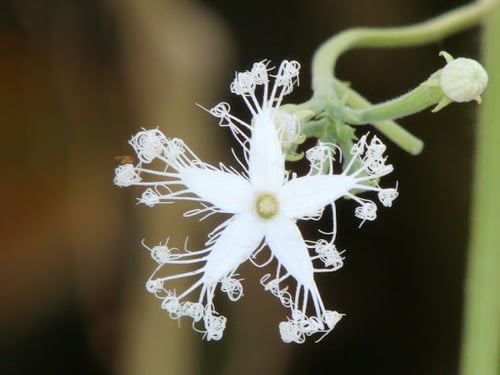
iNaturalist· cc-by-nc
(c) Agos Bordunale, some rights reserved (CC BY-NC), uploaded by Agos Bordunale
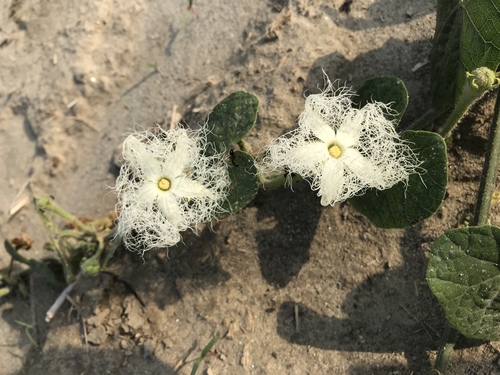
iNaturalist· cc-by-nc
(c) Leonardo Adrián LEIVA, some rights reserved (CC BY-NC)
Summary
Source: WikipediaAbobra tenuifolia is a perennial climbing vine reaching 3.5 m (11 ft 6 in), hardy to UK zone 9 and frost-tender. It flowers July to August with seeds maturing September to October. The species is dioecious, requiring both male and female plants for seed production. It grows in light sandy and medium loamy well-drained soils with mildly acid, neutral, or basic pH. It requires full sun and tolerates both dry and moist soil conditions.
Description
A shrub or small tree. It grows 5 m tall. There are prickles along the stem. The leaves are twice divided and there are 8-18 pairs of pinnae. There are up to 50 pairs of pinnules on each pinnae. The flowers are yellow. They are in large clusters at the ends of branches. The pods are flattened.
Edible Uses
The egg-shaped fruit, around 12mm long, is edible, though no further details are available on preparation or use.
Traditional Uses
The fruit are eaten.
This uses section is brief — help expand it
Medicinal Uses
None known
Distribution
It is a tropical plant. It grows between sea level and 500 m above sea level in Argentina. It is damaged by frost.
Where It Grows
Argentina, Brazil, South America*, Uruguay,
Cultivation
Plants are grown from seed and can be transplanted. Both male and female plants are needed.
Propagation
Sow seed in April in rich compost in a greenhouse. Prick seedlings out into individual pots once large enough to handle, and plant out after the last expected frosts.
Other Uses
None known
Notes
There is only one Abroba species.
Synonyms
References (1)
- Plants for a Future database, The Field, Penpol, Lostwithiel, Cornwall, PL22 0NG, UK. http://www.scs.leeds.ac.uk/pfaf/