Acacia georginae
Bailey
Georgina gidgee
iNaturalist· cc-by-sa
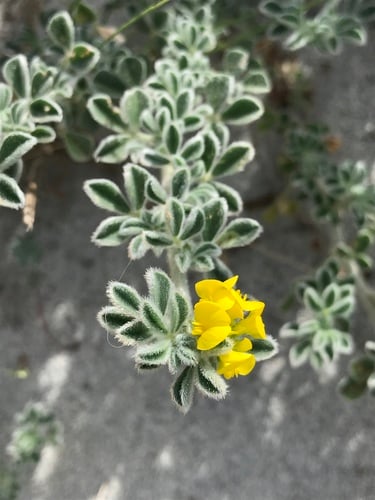
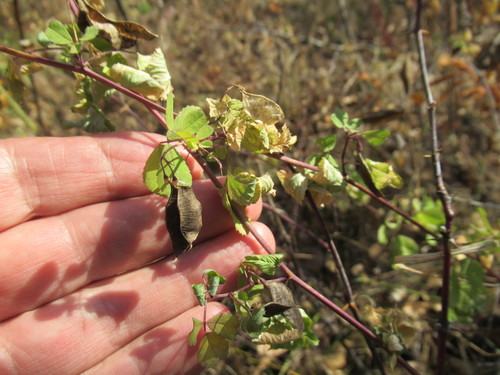
(c) Mark Marathon, some rights reserved (CC BY-SA)
iNaturalist· cc-by-sa
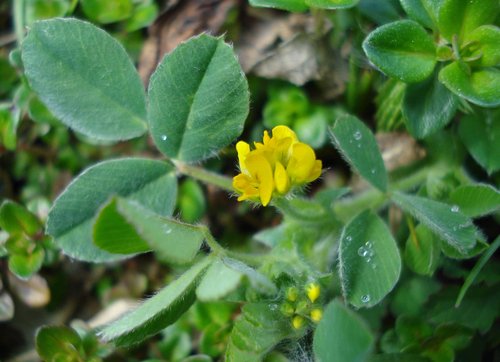
(c) Mark Marathon, some rights reserved (CC BY-SA)
iNaturalist· cc-by-sa
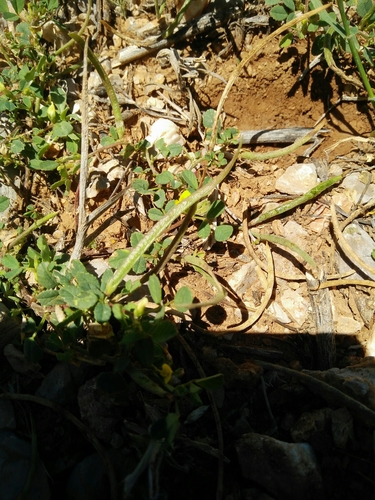
(c) Mark Marathon, some rights reserved (CC BY-SA)
Summary
Source: WikipediaAcacia georginae, commonly known as Georgina gidgee, Georgina gidyea or poison gidyea, is a species of flowering plant in the family Fabaceae and is endemic to arid areas of Central Australia. It is a foul-smelling, gnarled or spreading tree with a dense crown, narrowly elliptic phyllodes, spherical heads of golden yellow flowers and curved to coiled, papery pods.
Description
A shrub or small tree. It grows 5 m tall. There are prickles along the stem. The leaves are twice divided and there are 8-18 pairs of pinnae. There are up to 50 pairs of pinnules on each pinnae. The flowers are yellow. They are in large clusters at the ends of branches. The pods are flattened.
Edible Uses
The gum is eaten. Grubs associated with the plant are also consumed.
Traditional Uses
The gum is eaten. (Due to fluoracetic acid the pods, seeds and leaves are poisonous including to stock.)
This uses section is brief — help expand it
Known Hazards
Acacia georginae is closely related to A. cambagei, but unlike that species, its foliage contains fluoroacetic acid that is extremely poisonous to livestock. The foul smelling odour of the phyllodes that is especially evident in wet weather, is also a characteristic of A. cambagei and A. pachcarpa.
Distribution
Plants naturally occur in clumps together along streams. They occur on loam soils and heavy clay soils. It is very drought and frost resistant. It suits hot arid areas. (Rainfall 22-28 cm and temperatures of over 23°C mean maximum.)
Where It Grows
Australia*, North America, USA,
Cultivation
It is grown from seed.
Production
It is slow growing and long lived.
Notes
There are about 1,350 Acacia species. Over 1,000 occur in Australia. Also as Mimosaceae.
Also Known As
Gidyea
References (8)
- Bot. Bull. Dept. Agric. 13:9. 1896
- Cherikoff V. & Isaacs, J., The Bush Food Handbook. How to gather, grow, process and cook Australian Wild Foods. Ti Tree Press, Australia p 47
- Elliot, W.R., & Jones, D.L., 1982, Encyclopedia of Australian Plants suitable for cultivation. Vol 2. Lothian. p 54
- Hall, N. et al, 1972, The Use of Trees and Shrubs in the Dry Country of Australia, AGPS, Canberra. p 346
- ILDIS Legumes of the World http:www;ildis.org/Legume/Web
Show all 8 references Hide references
- Lazarides, M. & Hince, B., 1993, Handbook of Economic Plants of Australia, CSIRO. p 4
- Milson. J., 2000, Trees and Shrubs of north-west Queensland. DPI p 122
- Pennock, A., et al, Australian Dry-zone Acacias for Human Food: Proceedings of a Workshop.