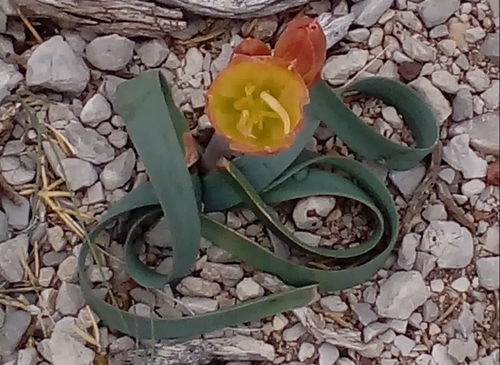
Allium thunbergii
G. Don.
Japanese onion
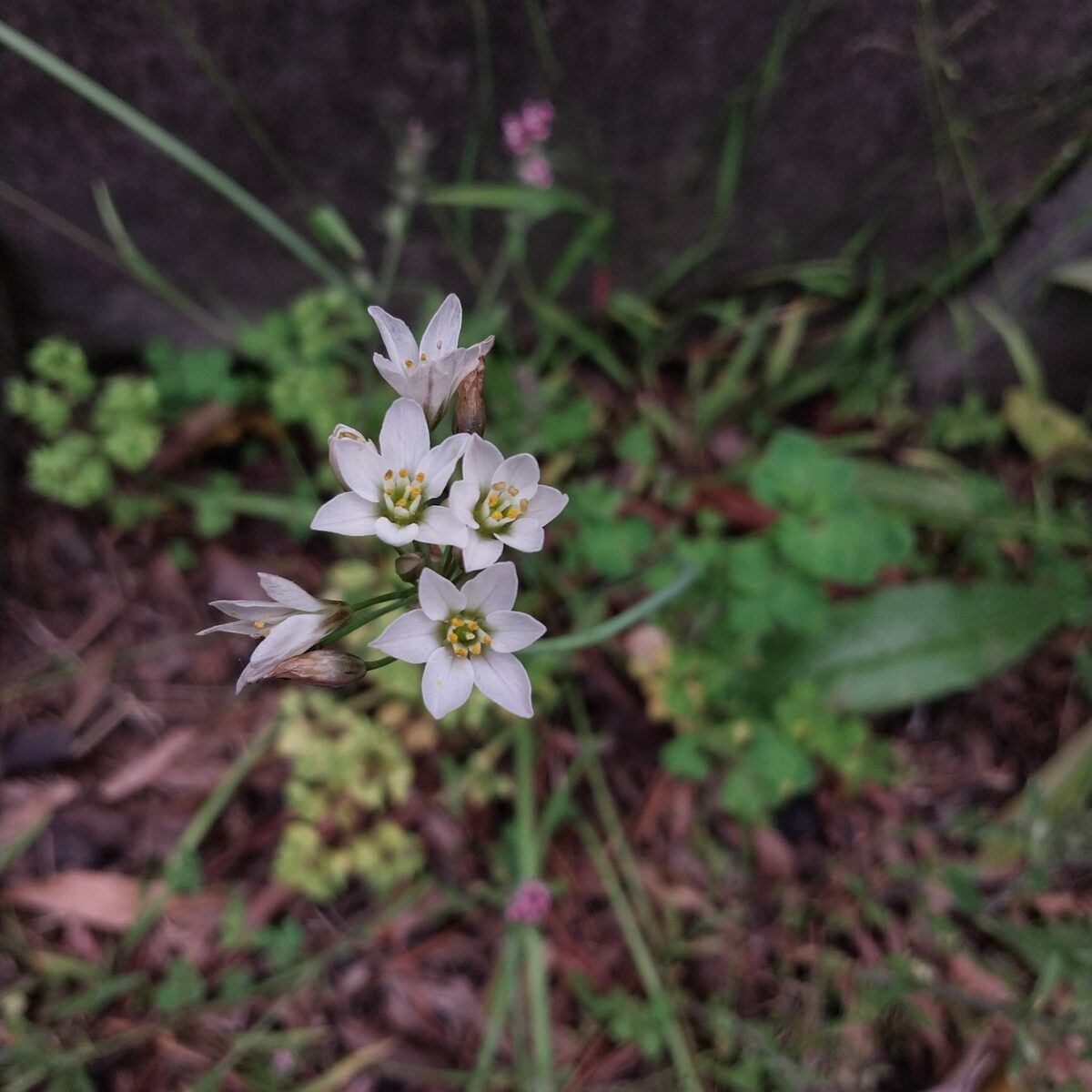
iNaturalist· cc-by-nc
(c) 空猫 T. N, some rights reserved (CC BY-NC), uploaded by 空猫 T. N
iNaturalist· cc-by-nc
(c) 空猫 T. N, some rights reserved (CC BY-NC), uploaded by 空猫 T. N
iNaturalist· cc-by
(c) ajikang, some rights reserved (CC BY)
Summary
Source: WikipediaAllium thunbergii, Thunberg's chive Thunberg garlic or sanbuchu, is an East Asian species of wild onion native to Japan (incl Bonin + Ryukyu Islands), Korea, and China (incl. Taiwan). It grows at elevations up to 3000 m. The Flora of China recognizes A. tunbergii and A. stenodon as separate species, but more recent sources combine the two. Allium thunbergii produces one or two egg-shaped bulbs up to 20 mm in diameter. Scapes are up to 50 cm tall. Leaves are longer than the scape, hollow, triangular in cross-section. Umbels are crowded with many red or purple flowers. The specific epithet thunbergii references the Swedish botanist Carl Peter Thunberg. This plant has gained the Royal Horticultural Society's Award of Garden Merit. Varieties Allium thunbergii var. deltoides (S.O.Yu, S.Lee & W.T.Lee) H.J.Choi & B.U.Oh - Gayasan National Park in Korea Allium thunbergii var. teretifolium H.J.Choi & B.U.Oh - Korea Allium thunbergii var. thunbergii - China, Japan, Korea
Description
An onion family plant. It is a bulb plant. The bulbs are usually single but occasionally in pairs. They are oval and 1-2 cm across. The outer covering is white or black brown. The leaves are linear. They are 2-4 mm wide and 3 angled. The scape is 25-40 cm long. It is covered with leaf sheaths for 1/4 of their length. The flower head has many loose flowers.
Edible Uses
Young plants and leaves can be eaten raw or cooked in soups and similar dishes. Raw leaves have a pleasant mild onion flavour and a good fibre-free texture. The bulbs, up to 2cm in diameter, are best cooked and can be pickled in brine, vinegar, and syrup. The flowers are eaten raw and make an attractive garnish in salads, with a pleasant mild onion flavour.
Traditional Uses
Young plants are leaves are eaten raw. They are also used in soups and used as a pot herb. The bulbs are pickled.
This uses section is brief — help expand it
Medicinal Uses
No specific medicinal uses have been recorded for this species, but members of this genus are generally considered healthy additions to the diet. They contain sulphur compounds responsible for their onion flavour, and eaten regularly they help reduce blood cholesterol levels, act as a digestive tonic, and support the circulatory system.
Known Hazards
Although no individual reports regarding this species have been seen, there have been cases of poisoning caused by the consumption, in very large quantities and by some mammals, of certain members of this genus. Dogs seem to be particularly susceptible.
Distribution
It is a temperate plant. It grows in forest margins and slopes from near sea level to 1300 m altitude in N China.
Where It Grows
Asia, China, Japan, Korea, Taiwan,
Cultivation
Prefers a sunny position in a light well-drained soil. Plants are not hardy in the colder areas of Britain, they tolerate temperatures down to between -5 and -10°c. The bulbs should be planted fairly deeply. Most members of this genus are intolerant of competition from other growing plants. There is at least one named variety, selected for its ornamental value. 'Ozawa' is smaller than the type, growing to 30cm. Grows well with most plants, especially roses, carrots, beet and chamomile, but it inhibits the growth of legumes. This plant is a bad companion for alfalfa, each species negatively affecting the other. Members of this genus are rarely if ever troubled by browsing deer.
Propagation
Sow seed in spring in a cold frame. Prick seedlings into individual pots when large enough to handle — for quicker clumps, place three plants per pot. Grow under glass for at least the first winter, then plant out in spring once vigorous and large enough. Division in spring is very easy; plants can be divided successfully at any point during the growing season and the divisions planted straight out into permanent positions.
Other Uses
The plant's juice works as a moth repellent. The whole plant is also said to repel insects and moles.
Notes
There are about 300-700 Allium species. Most species of Allium are edible (Flora of China). All alliums are edible but they may not all be worth eating! They have also been put in the family Alliaceae.
Synonyms
Also Known As
Dallaeng-i, Qiu xu xie, Yama-rakkyo
References (6)
- A monograph of the genus Allium 84. 1827
- Chen Xinqi, Liang Songyun, Xu Jiemei, Tamura M.N., Liliaceae. Flora of China. p 127
- Facciola, S., 1998, Cornucopia 2: a Source Book of Edible Plants. Kampong Publications, p 7
- Hwang, H., et al, 2013, A Study on the Flora of 15 Islands in the Western Sea of Jeollanamdo Province, Korea. Journal of Asia-Pacific Biodiversity Vol. 6, No. 2 281-310
- Ong, H. G., et al, 2015, Ethnobotany of the wild edible plants gathered in Ulleung Island, South Korea. Genet Resourc Crop Evol. Springer
Show all 6 references Hide references
- Plants for a Future database, The Field, Penpol, Lostwithiel, Cornwall, PL22 0NG, UK. http://www.scs.leeds.ac.uk/pfaf/