Allium atrosanguineum
Schrenk
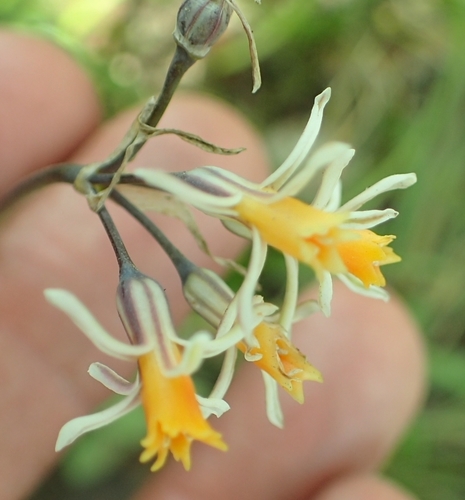
iNaturalist· cc-by-nc
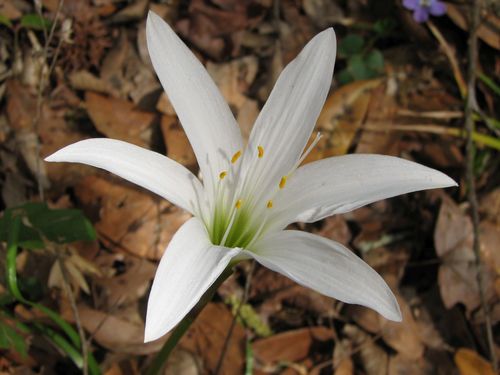
(c) Илья Сухов, some rights reserved (CC BY-NC), uploaded by Илья Сухов
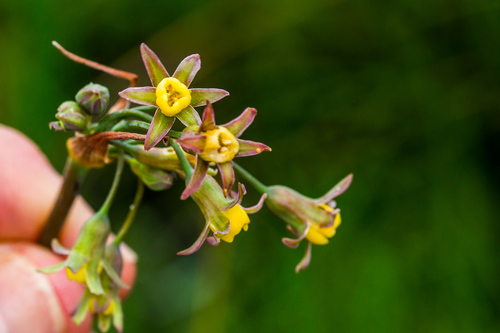
iNaturalist· cc-by-nc-sa
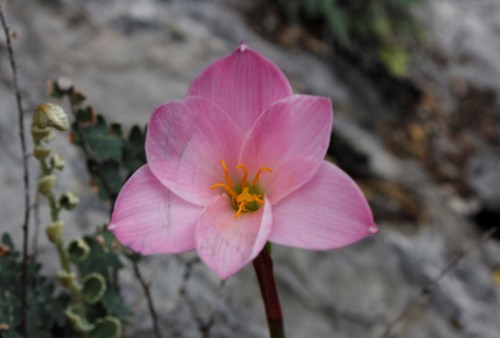
(c) Bogdan V. Kryzhatyuk, some rights reserved (CC BY-NC-SA), uploaded by Bogdan V. Kryzhatyuk
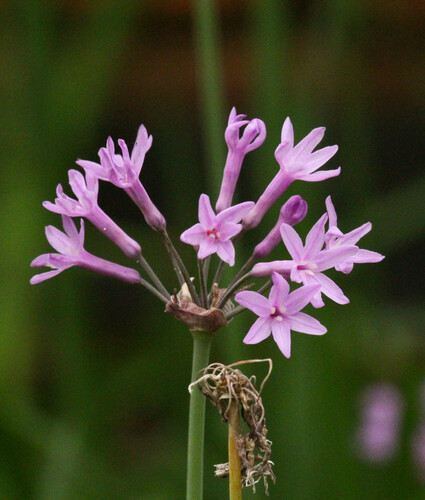
iNaturalist· cc-by-nc
(c) vladimir_epiktetov, some rights reserved (CC BY-NC), uploaded by vladimir_epiktetov
Summary
Source: WikipediaAllium atrosanguineum is an Asian species of onion native to China, Siberia, Mongolia, and Central Asia. It grows high in the mountains at elevations of 2400–5400 m. Allium atrosanguineum produces cylindrical bulbs up to 10 mm in diameter. Scapes are round in cross-section, up to 60 cm tall. Leaves are round in cross-section, usually shorter than the scapes. Umbels appear spherical from a distance, with many flowers. Tepals are pink, yellow, copper-colored, brass-colored or purple, sometimes with small dark spots. Three varieties are generally recognized: Allium atrosanguineum var. atrosanguineum—Tepals purple - red with small spots — western China (Qinghai, Sichuan, Xinjiang), Central Asia (Kazakhstan, Kyrgyzstan, Tajikistan, Uzbekistan, Afghanistan), Pakistan, Siberia (Tuva, Buryatiya, Krasnoyarsk, Zabaykalsky Krai), Mongolia Allium atrosanguineum var. fedschenkoanum (Regel) G.H.Zhu & Turland - tepals pale yellow or pink — Central Asia (Kazakhstan, Kyrgyzstan, Tajikistan, Uzbekistan, Afghanistan), Pakistan, Tibet, Xinjiang Allium atrosanguineum var. tibeticum (Regel) G.H.Zhu & Turland — tepals copper-colored or brass-colored — Western China (Tibet, Gansu, Qinghai, Sichuan, Yunnan)
Description
A temperate onion species in the Amaryllidaceae family.
This description is brief — help expand it
Edible Uses
The entire plant is edible.
Distribution
It is a temperate plant.
Where It Grows
Central Asia, Kazakhstan, Pakistan, Tajikistan, Uzbekistan,
Synonyms
Also Known As
Evoj pijoz, Shezyee
References (3)
- Khassanov, F. O., 2007, Edible Alliums of Uzbekistan. in First Kazbegi workshop on "Botany, taxonomy and phytochemistry of wild Allium L. species of the Caucasus and Central Asia".
- Ryabushkina, N., et al, 2008, Brief Review of Kazakhstan Flora and Use of its Wild Species. The Asian and Australasian Journal of Plant Science and Biotechnology
- Ullah, I, et al, 2017, Analysis of nutrients and minerals of some wild edible plants. International Journal of Fauna and Biological Studies. 4(6):35-39