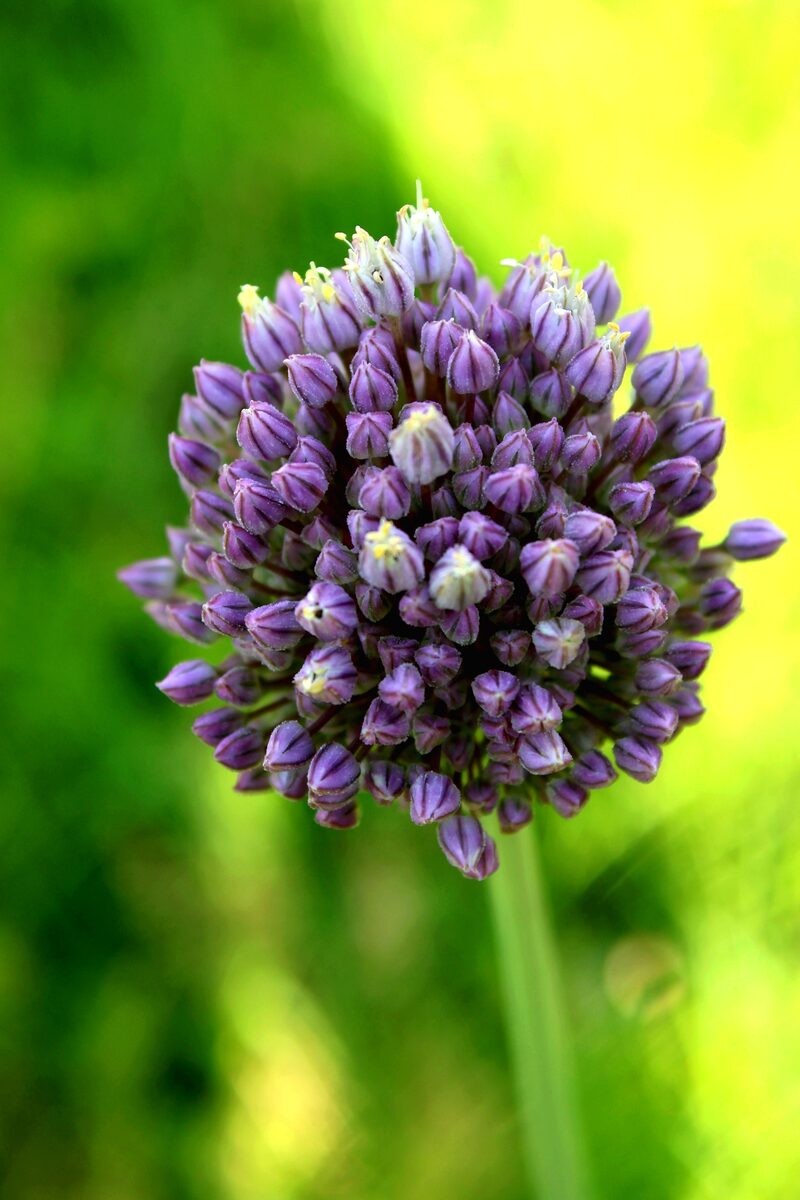
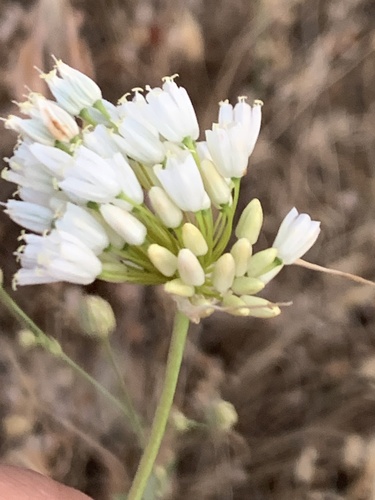
Allium ascalonicum
L.
Shallot
iNaturalist· cc-by-nc
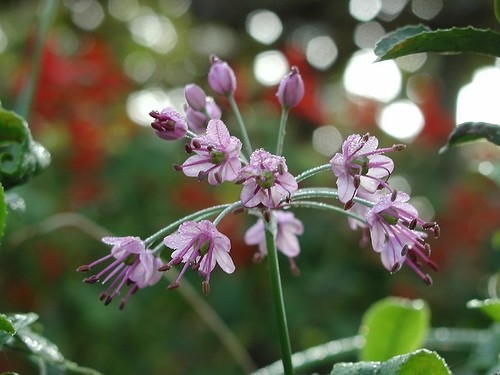
(c) Yael Orgad, some rights reserved (CC BY-NC), uploaded by Yael Orgad
iNaturalist· cc-by-nc
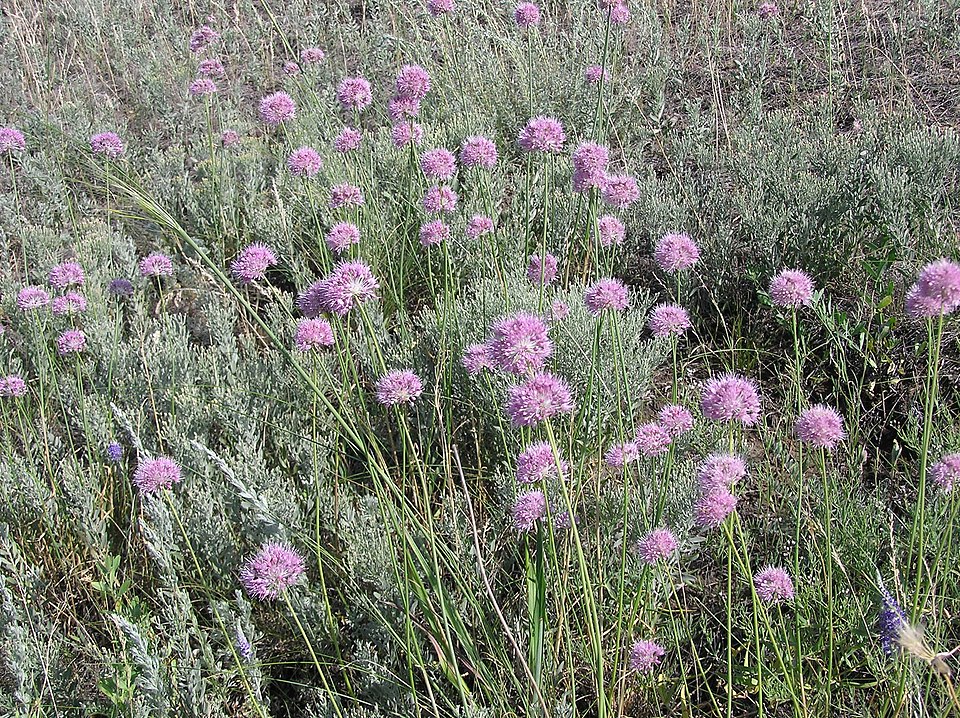
(c) Ron Frumkin, some rights reserved (CC BY-NC), uploaded by Ron Frumkin
iNaturalist· cc-by-nc
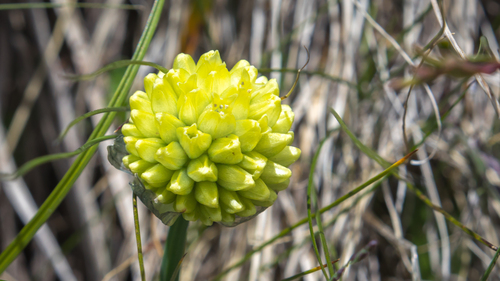
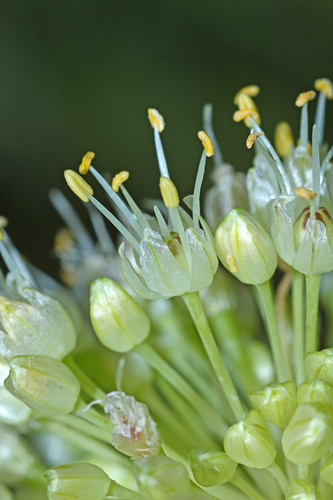
(c) Ron Frumkin, some rights reserved (CC BY-NC), uploaded by Ron Frumkin
Description
An onion family plant. It is a bulb plant. It grows to about 30 cm high. The bulb can be 6 cm across. The protective coat over the bulbs is purplish, brown or white. The leaves are 10-35 cm long by 3-10 mm wide. It often produces new shoots from the base. These form a group of small bulbs. The leaves are narrow and thin. They are flat on one side. They taper and can reach 40 cm high. They are purplish-red or brown. There are a cluster of single bulbs at the base. The flowers occur as 25-50 flowers in a head. The flowers are violet.
Edible Uses
Shallots are used in cooking. They may be pickled. Finely-sliced deep-fried shallots are used as a condiment in Asian cuisine, often served with porridge. Shallots taste similar to other cultivars of the common onion, but have a milder flavor. Like onions, when sliced, raw shallots release substances that irritate the human eye, resulting in production of tears. Fresh shallots can be stored in a cool, dry area (0 to 4 °C, 32 to 40 °F, 60 to 70% RH) for six months or longer. Chopped, dried shallots are available.
Traditional Uses
Both the bulbs and the leaves can be eaten as a vegetable. The bulbs are eaten raw or cooked. The leaves are eaten raw or cooked. The flowers are used raw or to flavour salads.
Distribution
A tropical plant. In Nepal it is grown between 500 and 2000 m altitude. It does best in fertile, well-drained sandy soil. Prefers a pH in the range 6 to 7, but tolerates a pH in the range 4.5 to 8.3. It tolerates a range of soils but does best in light well drained soils.
Where It Grows
Africa, Asia, Australia, Balkans, Brazil, Cambodia, Cape Verde, Central Africa, Central America, Chile, China, Croatia, Cuba, Czech, East Africa, East Timor, Ecuador, Ethiopia, Europe, Fiji, Georgia, Ghana, Guyana, Himalayas, India, Indochina, Indonesia, Japan, Kiribati, Malaysia, Myanmar, Nepal, Nigeria, Pacific, Philippines, SE Asia, Singapore, South Africa, Southern China, Slovakia, Dominican Republic, East Africa, East Timor, Egypt, Europe, Fiji, Finland, France, Germany, Ghana, Guatemala, Haiti, Hawaii, India, Iraq, Indonesia, Kurdistan, Madagascar, Malawi, Malaya, Mexico, Middle East, Myanmar, Nauru, Nigeria, North Africa, North America, Pacific, Panama, Papua New Guinea, PNG, Peru, Rotuma, Salvador, Scandinavia, SE Asia, Serbia, Sierra Leone, Slovakia, Slovenia, South America, Spain, Sri Lanka, Thailand, Timor-Leste, Tonga, Trinidad, Turkey, Türkiye, USA, USSR, Vanuatu, Venezuela, Vietnam, West Africa, West Indies, Zambia, Zimbabwe,
Cultivation
Plants can be grown from seed or by using bulbs. The clumps are uprooted and divided. Plants are spaced 15-20 cm apart. Bulbs are planted to half the bulb depth.
Production
The first leaves can be harvested after 2-3 months. The plant is easier to grow than onions, matures faster and keeps better, though yields are lower. Plants are very tolerant of high temperatures up to 30°C and bulbing only occurs at temperatures above 20°C. Plants rarely produce viable seed in temperate areas, they are usually propagated by means of their bulbs, each one dividing up in the growing season to produce from 2 to more than 12 new bulbs.
Other Information
It is a cultivated food plant.
Notes
There are about 300-700 Allium species. Most species of Allium are edible (Flora of China). All alliums are edible but they may not all be worth eating! Root (Fresh weight) Water: 79.8 Calories: 72 Protein: 2.5 Fat: 0.1 Carbohydrate: 16.8 Fibre: 0.69999 Ash: 0.8 Calcium: 37 Phosphorus: 60 Iron: 1.2 Sodium: 12 Potassium: 334 Vitamin A: 0 Thiamine: 0.05999 Riboflavin: 0.01999 Niacin: 0.2 Vitamin C: 8 They have also been put in the family Alliaceae.
Nutrition
| Part | Moisture | kJ | kcal | Protein | Vit A | Vit C | Iron | Zinc |
|---|---|---|---|---|---|---|---|---|
| Leaves - raw | 79.8 | 301 | 72 | 2.5 | 119 | 8 | 1.2 | 0.4 |
| Bulbs | 84.3 | 247 | 59 | 1.8 | — | 2 | — | — |
| Flowers | — | — | — | — | — | — | — | — |
Synonyms
Also Known As
Aka wakegi, Albasa, Alubosa, An-yaba, Anyenze, Basale, Bawang merah, Brambang abang, Chalote, Chhyapi, Chota piaz, Doakhom, Elewe, Gandana, Gundhun, Hyeene, Hanh huong, Hom daeng, Irravengayam, Irulli, Jungli piyaj, Khtim kraham, Kon tsung-tau, Kyet-thun-ni, Rathu-lunu, Ratu-lunu, Sabala sopradaa, Sabolai, Safa, šalotka, Samana sabola, Shalamta, Siba, Sibuyas, Sinna vengayam, Sjalot, Te anian, Tongolomadinika, Varasa, Yabas, Yabasi
References (38)
- Abbiw, D.K., 1990, Useful Plants of Ghana. West African uses of wild and cultivated plants. Intermediate Technology Publications and the Royal Botanic Gardens, Kew. p 38
- Ambasta S.P. (Ed.), 2000, The Useful Plants of India. CSIR India. p 28
- Barrau, J., 1976, Subsistence Agriculture in Melanesia. Bernice P. Bishop Museu, Bulletin 219 Honolulu Hawaii. Kraus reprint. p 54
- Bianchini, F., Corbetta, F., and Pistoia, M., 1975, Fruits of the Earth. Cassell. p 84
- Burkill, H. M., 1985, The useful plants of west tropical Africa, Vol. 5. Kew.
Show all 38 references Hide references
- Burkill, I. H., 1966, A Dictionary of the Economic Products of the Malay Peninsula. Ministry of Agriculture and Cooperatives, Kuala Lumpur, Malaysia. Vol 1 (A-H) p 99
- Bussman, R. W., et al, 2021, Unity in diversity—food plants and fungi of Sakartvelo (Republic of Georgia), Caucasus. Journal of Ethnobiology and Ethnomedicine (2021) 17:72 p 5
- Epenhuijsen C.W. van., 1974, Growing Native vegetables in Nigeria. FAO Rome, p 29
- Facciola, S., 1998, Cornucopia 2: a Source Book of Edible Plants. Kampong Publications, p 5
- Fl. palaest. 12. 1756 (perhaps to be attributed to Strand)
- Fowler, D. G., 2007, Zambian Plants: Their Vernacular Names and Uses. Kew. p 64
- Grubben, G. J. H. and Denton, O. A. (eds), 2004, Plant Resources of Tropical Africa 2. Vegetables. PROTA, Wageningen, Netherlands. p 35
- Hadfield, J., 2001, The A-Z of Vegetable Gardening in South Africa. Struik p 135
- Hedrick, U.P., 1919, (Ed.), Sturtevant's edible plants of the world. p 33
- Hutton, W., 1997, Tropical Herbs and Spices of Indonesia. Periplus. p 51
- Jiwajinda, S., et al, 2002, Suppressive Effects of Edible Thai Plants on Superoxide and Nitric Oxide Generation. Asian Pacific Journal of Cancer Prevention, Vol 3, 2002
- Kiple, K.F. & Ornelas, K.C., (eds), 2000, The Cambridge World History of Food. CUP p 1890
- Lazarides, M. & Hince, B., 1993, Handbook of Economic Plants of Australia, CSIRO. p 13
- Manandhar, N.P., 2002, Plants and People of Nepal. Timber Press. Portland, Oregon. p 81
- Martin, F.W. & Ruberte, R.M., 1979, Edible Leaves of the Tropics. Antillian College Press, Mayaguez, Puerto Rico. p 201 (As Allium ascalonicum)
- Molla, A., Ethiopian Plant Names. http://www.ethiopic.com/aplants.htm
- Ochse, J.J. et al, 1931, Vegetables of the Dutch East Indies. Asher reprint. p 441
- Omawale, 1973, Guyana's edible plants. Guyana University, Georgetown p 71
- Phatlamphu, N., et al, 2021, Ethnobotany of edible plants in Muang District, Kalasin Province, Thailand, Biodiversitas Vol. 22, No. 12 pp 5432-5444
- Plants for a Future database, The Field, Penpol, Lostwithiel, Cornwall, PL22 0NG, UK. http://www.scs.leeds.ac.uk/pfaf/
- Rajapaksha, U., 1998, Traditional Food Plants in Sri Lanka. HARTI, Sri Lanka. p 280
- Smith, A.C., 1979, Flora Vitiensis Nova, Lawaii, Kuai, Hawaii, Volume 1 p 147
- Solomon, C., 2001, Encyclopedia of Asian Food. New Holland. p 340
- Terra, G.J.A., 1973, Tropical Vegetables. Communication 54e Royal Tropical Institute, Amsterdam, p 19
- Thaman, R. R., 1987, Plants of Kiribati: A Listing and Analysis of Vernacular Names. Smithsonian Institution. p 16
- Tindall, H.D., & Williams, J.T., 1977, Tropical Vegetables and their Genetic Resources, International Board for Plant Genetic Resources, Rome, p 60
- Torre, de la L., et al, 2008, Enciclopedia de las Plantas Útiles del Ecuador. Herbario QCA. Pontificia Universidad Católica del Ecuador. p 151
- van Wyk, B., 2005, Food Plants of the World. An illustrated guide. Timber press. p 48
- Walter, A. & Lebot, V., 2007, Gardens of Oceania. ACIAR Monograph No. 122. p 223
- Williamson, J., 2005, Useful Plants of Malawi. 3rd. Edition. Mdadzi Book Trust. p 20
- Wiriadinata, H., Ethnobotany of Economic Plants in the Baliem Valley, Jayawijaya, Irian Jaya, Indonesian Institute of Science, Bogor, Indonesia
- World Checklist of Useful Plant Species 2020. Royal Botanic Gardens, Kew
- Zeven, A. C. & de West, J. M. J., 1982, Dictionary of cultivated plants and their regions of diversity. Wageningen. p 87