Allium paradoxum
(M. Bieb.) G. Don.
Few-flowered leek
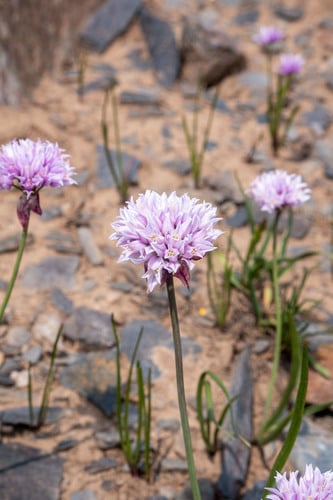
iNaturalist· cc-by-nc
(c) Теймуров А.А., some rights reserved (CC BY-NC), uploaded by Теймуров А.А.
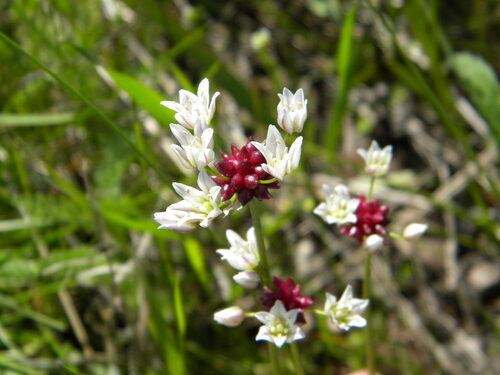
iNaturalist· cc-by-nc
(c) harleymathieson, some rights reserved (CC BY-NC)
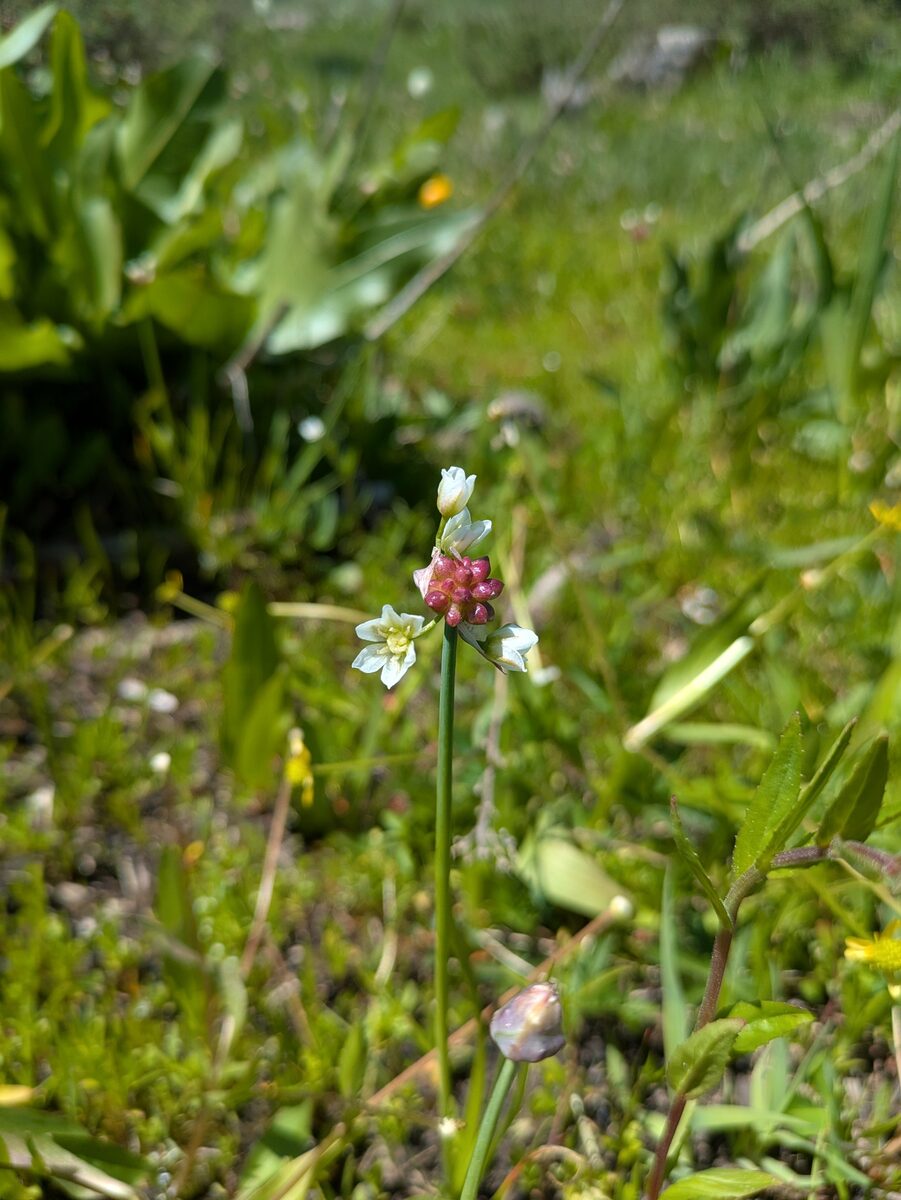
iNaturalist· cc-by-nc
(c) sruccius, some rights reserved (CC BY-NC)
Summary
Source: WikipediaAllium paradoxum, the few-flowered garlic or few-flowered leek, is an Asian species of wild onion in the Amaryllis family. It is native to mountainous regions of Iran, Caucasus, and Turkmenistan and invasive in Europe.
Description
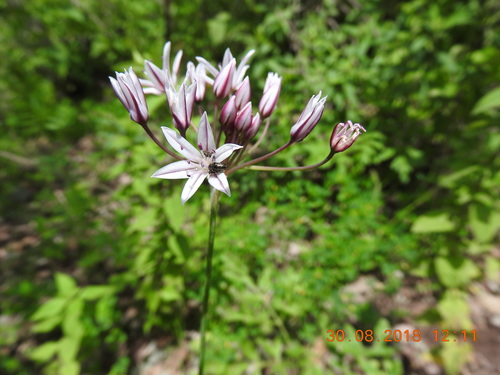
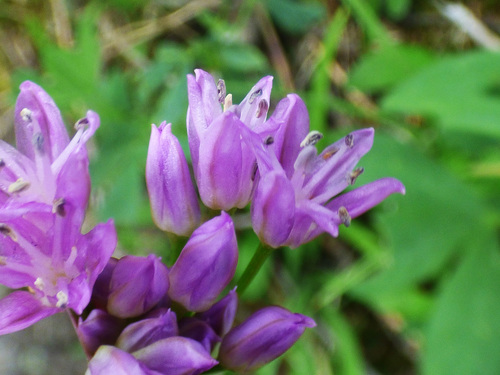
An onion family plant. A bulb plant. It grows to 25 cm high. Each bulb has a single leaf. It is 20-30 cm long by 25 mm wide. It has a keeled midrib. There are 1-10 flowers in a head. They are white. There are also bulbils on the flower head.
Edible Uses
The bulb is up to 10mm in diameter, has a mild garlic flavour, and can be used raw or cooked as a flavouring in salads and cooked dishes. It is best harvested in early summer after the plant has died back and will keep in storage for at least 6 months. The leaves are available from late autumn through spring and make a good leek substitute — young leaves are pleasant raw in salads, while older leaves work well cooked as a vegetable or flavouring. Their flavour is milder and more delicate than that of onions. The flowers are juicy with a mild garlic flavour and make a tasty, decorative garnish when eaten raw.
Traditional Uses
The bulbs are eaten raw or cooked. The leaves are eaten raw or cooked. The flowers are used raw.
This uses section is brief — help expand it
Medicinal Uses
No specific medicinal uses have been recorded for this species, but members of this genus are generally considered healthy dietary additions. They contain sulphur compounds responsible for their onion flavour, and regular consumption is associated with reduced blood cholesterol levels, a tonic effect on the digestive system, and support for circulatory health.
Distribution
It grows naturally in Iran in waste places on damp soils and is naturalised in a number of places in Britain. It prefers a sunny position and a light well drained soil and can grow in wet clay soils. They can tolerate shade. It suits hardiness zones 7-9.
Where It Grows
Armenia, Australia, Britain, Caucasus, Europe, Iran, Iraq, Middle East, Slovenia,
Cultivation
Plants can be grown from seed, bulbils or by dividing the clumps.
Propagation
Seed is best sown as soon as it is ripe in a greenhouse or cold frame, as it germinates quickly. Grow on under glass for the first year and plant out dormant bulbs in late summer of the following year if sufficiently developed, or continue in pots for a further year. Stored seed can be sown in spring in a greenhouse. Bulbils harvested in mid to late spring can be planted immediately or stored and planted out in late summer. Division is done in summer after the plants have died back — the bulbs divide fairly freely and can be replanted directly into permanent positions.
Other Uses
The plant juice acts as a moth repellent. The whole plant is also said to repel insects and moles.
Notes
There are about 300-700 Allium species. Most species of Allium are edible (Flora of China). All alliums are edible but they may not all be worth eating! They have also been put in the family Alliaceae.
Synonyms
Also Known As
Dikiy luk, Nenavadni luk, Pîçk, Sekhtoruk, Sirmi, Skordotsank
References (7)
- Cundall, P., (ed.), 2004, Gardening Australia: flora: the gardener's bible. ABC Books. p 127
- Lim, T. K., 2015, Edible Medicinal and Non Medicinal Plants. Volume 9, Modified Stems, Roots, Bulbs. Springer p 5
- Mem. Wern. Nat. Hist. Soc. 6:72. 1832 [1827]
- Motamed, S. M., et al, 2010, Antioxidant activity of some edible plants of the Turkne Sahra region in northern Iran. Food Chemistry 119: 1637-1642
- Pieroni, A., et al, 2017, The spring has arrived: traditional wild vegetables gathered by Yarsanis (Ahl-e Haqq) and Sunni Muslims in Western Hawraman, SE Kurdistan (Iraq). Acta Soc Bot Pol 86(1):3519
Show all 7 references Hide references
- Pieroni, A., et al, 2020, Wild food plants traditionally gathered in central Armenia: archaic ingredients or future sustainable foods? Environment, Development and Sustainability. Springer p 6
- Plants for a Future database, The Field, Penpol, Lostwithiel, Cornwall, PL22 0NG, UK. http://www.scs.leeds.ac.uk/pfaf/