Allium flavum
L.
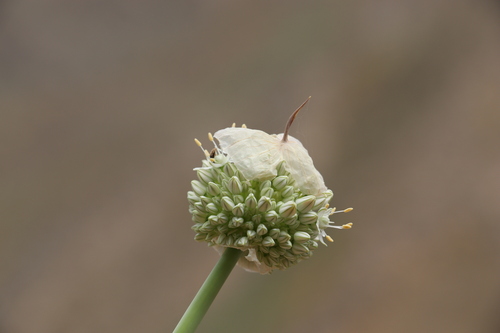
Small yellow onion, Oriental Royal Salep
iNaturalist· cc-by
(c) Nuuuuuuuuuuul, some rights reserved (CC BY)
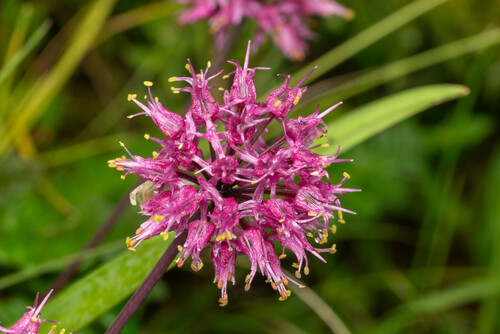
iNaturalist· cc-by-nc-sa
(c) ImAges ImprObables, some rights reserved (CC BY-NC-SA)
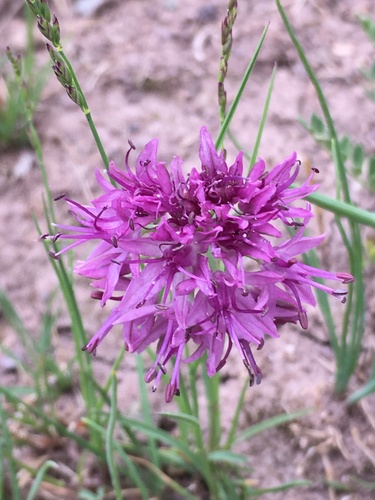
iNaturalist· cc-by-nc-sa
(c) David GENOUD, some rights reserved (CC BY-NC-SA)
Summary
Source: WikipediaAllium flavum, the small yellow onion or yellow-flowered garlic, is a species of flowering plant in the genus Allium. A bulbous herbaceous perennial, it is native to the lands surrounding the Mediterranean, Black, and Caspian Seas, from areas like France and Morocco to Iran and Kazakhstan.
Description
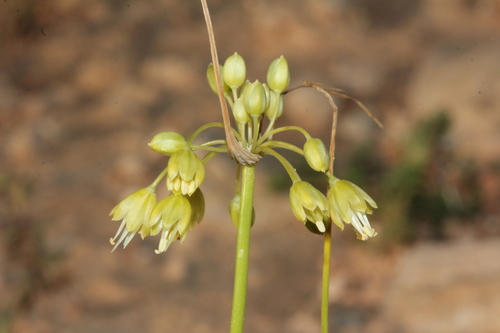
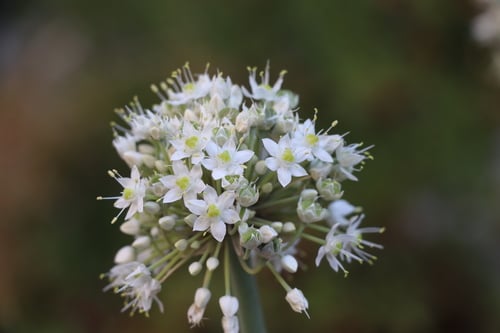
An onion family plant. A bulb plant. A very variable plant with forms ranging in height from 8-50 cm The bulb is small,15 mm tall and 10 mm in across. The plant keeps growing from year to year. The leaves are blue-green and 20 cm long. There are 2-3 leaves and they sheath the lower part of the stem. The leaves are cylinder shaped. The bract around the flower has 2 valves and a long tail like appendage up to 11 cm long. The flowers have a sweet scent. The flowers are pale yellow and usually produced in loose heads. The flowers droop but the seed heads are carried erect.
Edible Uses
The bulb can be eaten raw or cooked, though it is quite small — around 15mm tall and 10mm in diameter. The leaves are also edible raw or cooked. The flowers can be eaten raw.
Traditional Uses
The bulbs are eaten raw or cooked. The leaves are eaten raw or cooked. The flowers are used raw to flavour salads.
This uses section is brief — help expand it
Medicinal Uses
No specific medicinal uses have been recorded for this species. However, as with other members of this genus, it is considered a healthy dietary addition. Alliums contain sulphur compounds responsible for their onion flavour, and regular consumption is associated with reduced blood cholesterol, a tonic effect on the digestive system, and support for the circulatory system.
Known Hazards
Although no individual reports regarding this species have been seen, there have been cases of poisoning caused by the consumption, in large quantities and by some mammals, of certain members of this genus. Dogs seem to be particularly susceptible.
Distribution
It is a temperate and Mediterranean climate plant. It grows naturally on dry slopes in Southern and central Europe. It prefers a sunny position and a light well drained soil. It can grow on clay soils and wetter areas. It is frost hardy. It suits hardiness zones 7-10.
Where It Grows
Albania, Australia, Canada, Europe, France, Greece, Italy, Mediterranean, North America, Slovenia, Turkey, Türkiye,
Cultivation
A very easily grown plant, it prefers a sunny position in a light well-drained soil. It succeeds in clay soils and also in areas of higher rainfall, so long as the soil drains fairly well. A very variable species with forms ranging in height from 8 - 50cm. Closely related to A. carinatum. The bulbs should be planted fairly deeply. Most members of this genus are intolerant of competition from other growing plants. Grows well with most plants, especially roses, carrots, beet and chamomile, but it inhibits the growth of legumes. This plant is a bad companion for alfalfa, each species negatively affecting the other. Members of this genus are rarely if ever troubled by browsing deer.
Propagation
Sow seed in spring in a cold frame. Prick out seedlings into individual pots once large enough to handle — placing three plants per pot will produce clumps more quickly. Grow on in the greenhouse for at least the first winter and plant out into permanent positions in spring once vigorous. Bulbs can also be divided in late summer or autumn. Larger bulbs can go straight into permanent positions, but smaller bulbs are best potted up and grown on for a year before planting out.
Other Uses
The plant's juice can be used as a moth repellent, and the whole plant is said to deter insects and moles. This species is also noted for its scented qualities.
Notes
There are about 300-700 Allium species. Most species of Allium are edible (Flora of China). All alliums are edible but they may not all be worth eating! They have also been put in the family Alliaceae.
Synonyms
Also Known As
Rumeni luk
References (9)
- Blamey, M and Grey-Wilson, C., 2005, Wild flowers of the Mediterranean. A & C Black London. p 486
- Cakir, E. A., 2017, Traditional knowledge of wild edible plants of Iğdır Province (East Anatolia, Turkey). Acta Soc Bot Pol. 2017;86(4):3568.
- Cundall, P., (ed.), 2004, Gardening Australia: flora: the gardener's bible. ABC Books. p 126
- Ertug, F, Yenen Bitkiler. Resimli Türkiye Florası -I- Flora of Turkey - Ethnobotany supplement
- Joyce, D., 1998, The Garden Plant Selector. Ryland, Peters and Small. p 280
Show all 9 references Hide references
- Marinelli, J. (Ed), 2004, Plant. DK. p 224
- Plants for a Future database, The Field, Penpol, Lostwithiel, Cornwall, PL22 0NG, UK. http://www.scs.leeds.ac.uk/pfaf/
- Ryan, S., 2008, Dicksonia. Rare Plants Manual. Hyland House. p 120
- Sp. pl. 1:298. 1753