Acacia drepanolobium
Harms ex Sjostedt
Whistling thorn, Ant-galled acacia
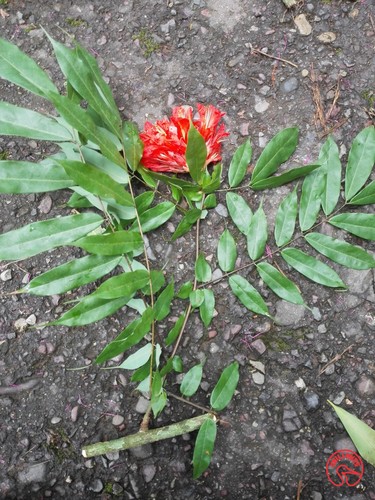
iNaturalist· cc-by-nc
(c) leg9, some rights reserved (CC BY-NC)
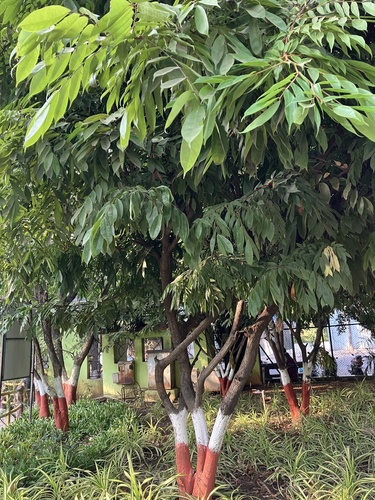
iNaturalist· cc-by-nc
(c) leg9, some rights reserved (CC BY-NC)
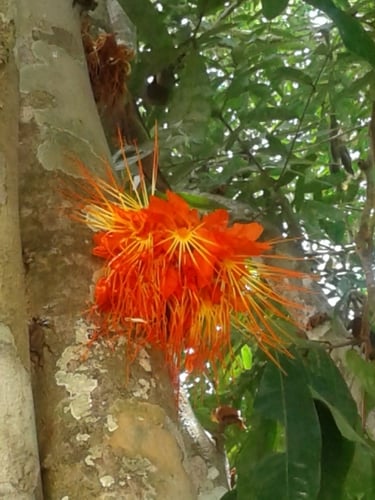
iNaturalist· cc-by-nc
(c) leg9, some rights reserved (CC BY-NC)
Description
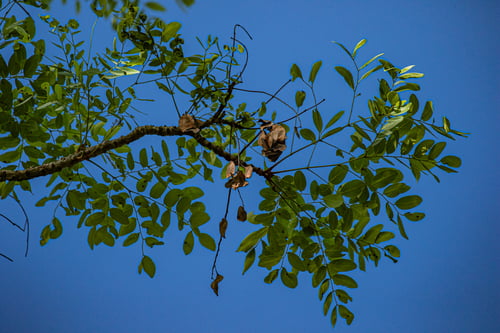
A shrub or small tree. It grows 5 m tall. There are prickles along the stem. The leaves are twice divided and there are 8-18 pairs of pinnae. There are up to 50 pairs of pinnules on each pinnae. The flowers are yellow. They are in large clusters at the ends of branches. The pods are flattened.
Edible Uses
Young green pods are eaten fresh. Young galls are soft and fleshy when fresh, initially dark green and bitter, but turn reddish-purple and are then best eaten. Leaves are also edible.
Traditional Uses
The young green pods are eaten. The young galls are edible. The galls are soft and fleshy when fresh. They are dark green and bitter when young and turn reddish purple later and are then best eaten.
Distribution
It is a tropical plant. It grows in woody grassland. It grows well on black cotton and clay soils. In East Africa it grows between 700-2,500 m altitude. It is usually on dry rocky hillsides. It is in areas with rainfall of 500-1,300 mm per year. It can grow in arid places.
Where It Grows
Africa, Central Africa, Congo DR, East Africa, Ethiopia, Kenya, Somalia, Sudan, Tanzania, Uganda,
Notes
There are about 1,350 Acacia species. Over 1,000 occur in Australia. Also as Mimosaceae.
Synonyms
Also Known As
Adugo, Black galled acacia, Dunga, Eiyellel, Eluai, Fulaay, Kiunga, Luai, Lunga, Mukuruit, Muruai, Muuga
References (15)
- Brouk, B., 1975, Plants Consumed by Man. Academic Press, London. p 260
- Dharani, N., 2002, Field Guide to common Trees & Shrubs of East Africa. Struik. p 189
- Glover et al, 1966b,
- Grivetti, L. E., 1980, Agricultural development: present and potential role of edible wild plants. Part 2: Sub-Saharan Africa, Report to the Department of State Agency for International Development. p 45
- Grubben, G. J. H. and Denton, O. A. (eds), 2004, Plant Resources of Tropical Africa 2. Vegetables. PROTA, Wageningen, Netherlands. p 559
Show all 15 references Hide references
- Ichikawa, M., 1980, The Utilization of Wild Food Plants by the Suiei Dorobo in Northern Kenya. J. Anthrop. Soc. Nippon. 88(1): 25-48
- ILDIS Legumes of the World http:www;ildis.org/Legume/Web
- Jardin, C., 1970, List of Foods Used In Africa, FAO Nutrition Information Document Series No 2.p 50
- Kuhnlein, H. V., et al, 2009, Indigenous Peoples' food systems. FAO Rome p 239
- Martin, F.W. & Ruberte, R.M., 1979, Edible Leaves of the Tropics. Antillian College Press, Mayaguez, Puerto Rico. p 197
- Maundu, P. et al, 1999, Traditional Food Plants of Kenya. National Museum of Kenya. p 41
- Mutie, F. G., 2020, Conservation of Wild Food Plants and Their Potential for Combatting Food Insecurity in Kenya as Exemplified by the Drylands of Kitui County. Plants 2020, 9, 1017
- Peters, C. R., O'Brien, E. M., and Drummond, R.B., 1992, Edible Wild plants of Sub-saharan Africa. Kew. p 125
- Royal Botanic Gardens, Kew (1999). Survey of Economic Plants for Arid and Semi-Arid Lands (SEPASAL) database. Published on the Internet; http://www.rbgkew.org.uk/ceb/sepasal/internet [Accessed 26th April 2011]
- Schwed. Zool. Exped. Kilimandjaro 8:116., t. 6, fig. 7-8, t. 7, fig. 2-3. 1908