Dioclea reflexa
Hook. f.
Marbles vine, Sea purse
iNaturalist· cc-by-nc
(c) Miguel A Mejias, PhD., some rights reserved (CC BY-NC)
iNaturalist· cc-by-nc
(c) Miguel A Mejias, PhD., some rights reserved (CC BY-NC)
iNaturalist· cc-by-nc
(c) Miguel A Mejias, PhD., some rights reserved (CC BY-NC)
Description
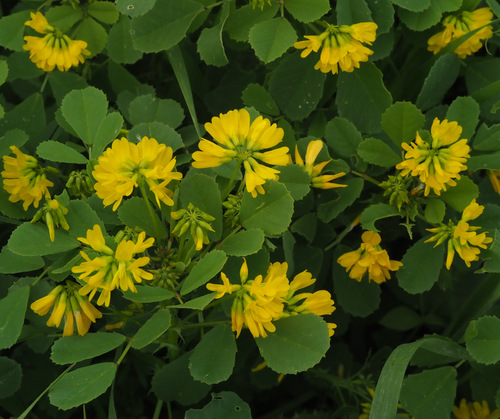
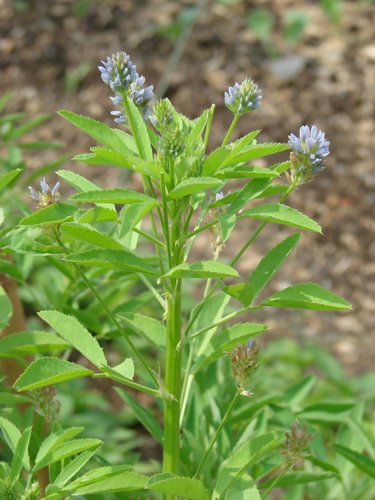
A woody creeper or liana. It grows 6 m long. The stem is 3 cm across. The leaves have 3 leaflets. The leaf stalks are 407 cm long. The leaflets are narrowly oval and broad at the base and taper to a short tip. They are 6-14 cm long by 4-9 cm wide. The flowers are in groups 30 cm long. They are purple. The fruit are fairly stiff long pods. They are 12-18 cm long by 5-6 cm wide. They are slightly constricted between the seeds. There are 2-3 dark brown seeds. They are a flattened round shape and about 3 cm across.
Edible Uses
The seed is a potential food source. It contains around 14% protein, 8% fats and 58% carohydrates, but there needs to be further work carried out to see if there are any antinutritional substances The endosperm, which is rich in gum is pulverized and used as thickener in many traditional food preparations, while there are several reports on its suitability in processed foods, including use as a rheology modifier. The cake and seed flour has appreciable levels of protein that could serve as an important protein source in human foods. The mature pods are 10 - 15 (occasionally to 20)cm. long, around 5cm wide, and around 2cm thick. They contain 3 - 4 hard biconvex seeds, 26 - 29mm in greatest diameter. They are usually tan, brown, or dusky coloured, and rarely mottled. An oil is obtained from the seed. It has both unsaturated fatty acids (especially oleic acid) and saturated fatty acids (especially palmitic acid and stearic acid).
Traditional Uses
The seeds are used as thickening in soup. Caution: The seeds have been shown to have mild antibacterial properties.
This uses section is brief — help expand it
Medicinal Uses
A decoction of the root is used to alleviate coronary pain. A methanolic extract of the seed has shown the capacity to boost haematological parameters and protect the kidney and blood from oxidative and related injuries under acute and chronic toxicological challenges. A decoction or poultice of the leaves is applied topically to treat aches and pains, skin rashes and sores. The seed of this species (and many other members of the genus) contain lectins that have a range of actions within the body that are of interest to the pharmaceutical industry. Many have the potential as the basis of new drugs to treat a range of diseases including cancer.
Known Hazards
The seeds of many species in this genus are likely to be used as an emergency food in times of need. We have no specific information on this species, but the seeds of many (if not all) of the species in this genus contain antinutritional substances. This is not unusual - the seeds of many commonly eaten legumes (including the various Phaseolus species) also often contain antinutritional substances -these are largely removed in the cooking or other preparatory process (such as sprouting). Unless there is clear information that the seeds of this species are completely safe to eat, then it would be unwise to eat them raw; or to consume large quantities of them in one meal; or to consume then on a regular basis over a long period of time.
Distribution
It is a tropical plant. It grows in swamp forest near the coast and mangrove swamps. The seeds can float for 2 years and then still grow. It occurs throughout the tropics, near the sea.
Where It Grows
Africa, Belize, Cameroon, Central Africa, Central African Republic, CAR, Central America, Congo DR, Costa Rica, Cuba, East Africa, Guiana, Guianas, Guinea, Guinée, Guinea-Bissau, Guyana, Hispaniola, Kiribati, Madagascar, Nigeria, Niger, Pacific, Panama, Puerto Rico, Sahel, Sao Tome and Principe, Senegal, Sierra Leone, South America, Suriname, Venezuela, West Africa, West Indies,
Cultivation
Plants are grown from seeds.
Propagation
The seed has a very tough seedcoat and a firm flesh. Many species in the genus grow near rivers or the sea and their seeds can be carried for many months over long distances in the water, whilst retaining viability. It is believed that the seed of some species can retain viability for over 100 years in the soil so long as the seedcoat is not damaged. In order to get the seeds to germinate within one's own lifetime, it is generally necessary to damage the seedcoat without damaging the flesh inside. This can be done quite easily by either cutting a notch into the seedcoat, or abrading it with sandpaper. Once this is done, soak the seed for 12 hours in warm water and it should germinate quite quickly.
Other Uses
The reddish-brown seeds are nearly spherical and slightly flattened with one side rounded, the other straight. They are worn as pendants and used in necklaces in the Old and New World tropics. The seeds are used like marbles in a traditional child's game in Nigeria. The seeds are used in Africa as an insecticide and arachnicide. An aqueous extract of the seeds produced 100% mortality in third stage mosquito larvae of Aedes aegypti.
Notes
Seeds float almost worldwide.
Synonyms
Also Known As
Bapiana, Bejuco de mato, Dauwa, Furafande, Irlinore, Lukoso, Maya prieta, Te barariku
References (4)
- Burkill, H. M., 1985, The useful plants of west tropical Africa, Vol. 3. Kew.
- Terashima, H., et al, 1992, Ethnobotany of the Lega in the Tropical Rainforest of Eastern Zaire (Congo): Part Two, Zone de Walikale, African Study Monographs, Suppl. 19:1-60
- Thaman, R. R., 1987, Plants of Kiribati: A listing and analysis of vernacular names. Atoll Research Bulletin No. 296
- World Checklist of Useful Plant Species 2020. Royal Botanic Gardens, Kew