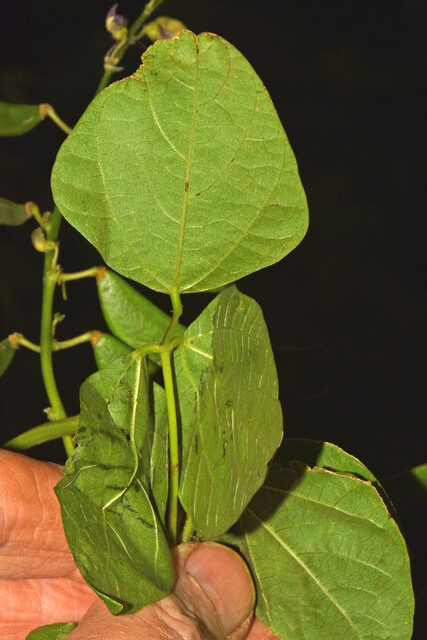
Dimorphandra polyandra
Benoist
iNaturalist· cc-by-nc
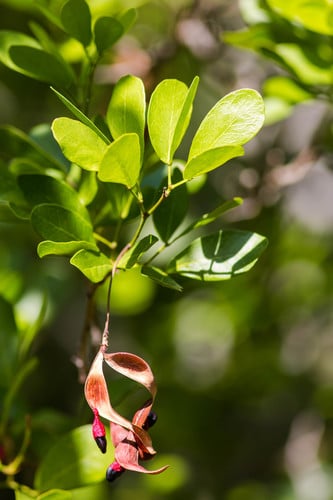
(c) coqwallon, some rights reserved (CC BY-NC)
iNaturalist· cc-by-nc
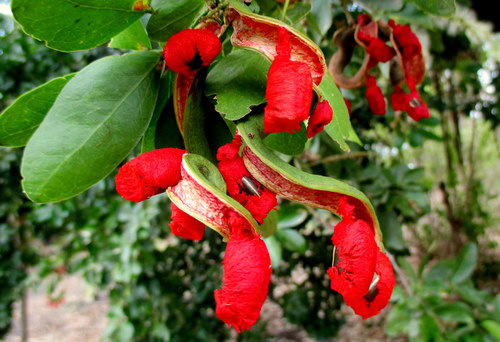
(c) coqwallon, some rights reserved (CC BY-NC)
iNaturalist· cc-by
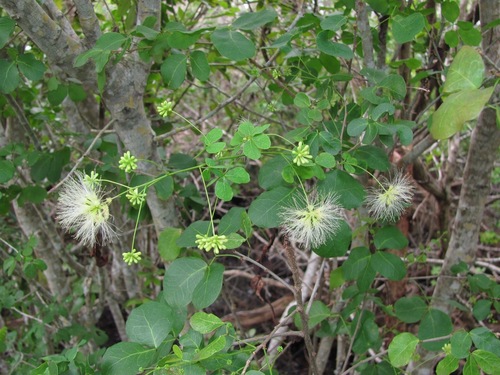
(c) Guillaume Delaitre, some rights reserved (CC BY)
Description
A tropical tree in the Fabaceae family.
This description is brief — help expand it
Edible Uses
The seeds are eaten.
Distribution
It is a tropical plant.
Where It Grows
Amazon, Brazil, French Guiana, Guianas, Guyana, Suriname, Venezuela,
Other Uses
The heartwood is light yellow when freshly cut, quickly turning light brown to brown or reddish brown; it is not clearly demarcated from the 4 - 6cm wide band of sapwood. The texture is coarse; the grain usually straight but sometimes it is slightly irregular interlocked. The wood is of moderate weight, moderately hard; not very durable, being susceptible to dry wood borers and moderately resistant to fungi and termites. It seasons normally, with only a slight risk of checking but a high risk of distortion; once dry it is moderately stable to stable in service. It works with ordinary tools; nailing and screwing are good; gluing is correct. Because of a prevalence of brittleheart there can be low yields, with less than 30% of the wood being suitable for use. It is used for purposes such as joinery, light carpentry, furniture components, boxes and crates.
Synonyms
Also Known As
Aie-oueko, Dakama, Huruhurudan, Saramaccan
References (1)
- Grandtner, M. M. & Chevrette, J., 2013, Dictionary of Trees, Volume 2: South America: Nomenclature, Taxonomy and Ecology. Academic Press p 200