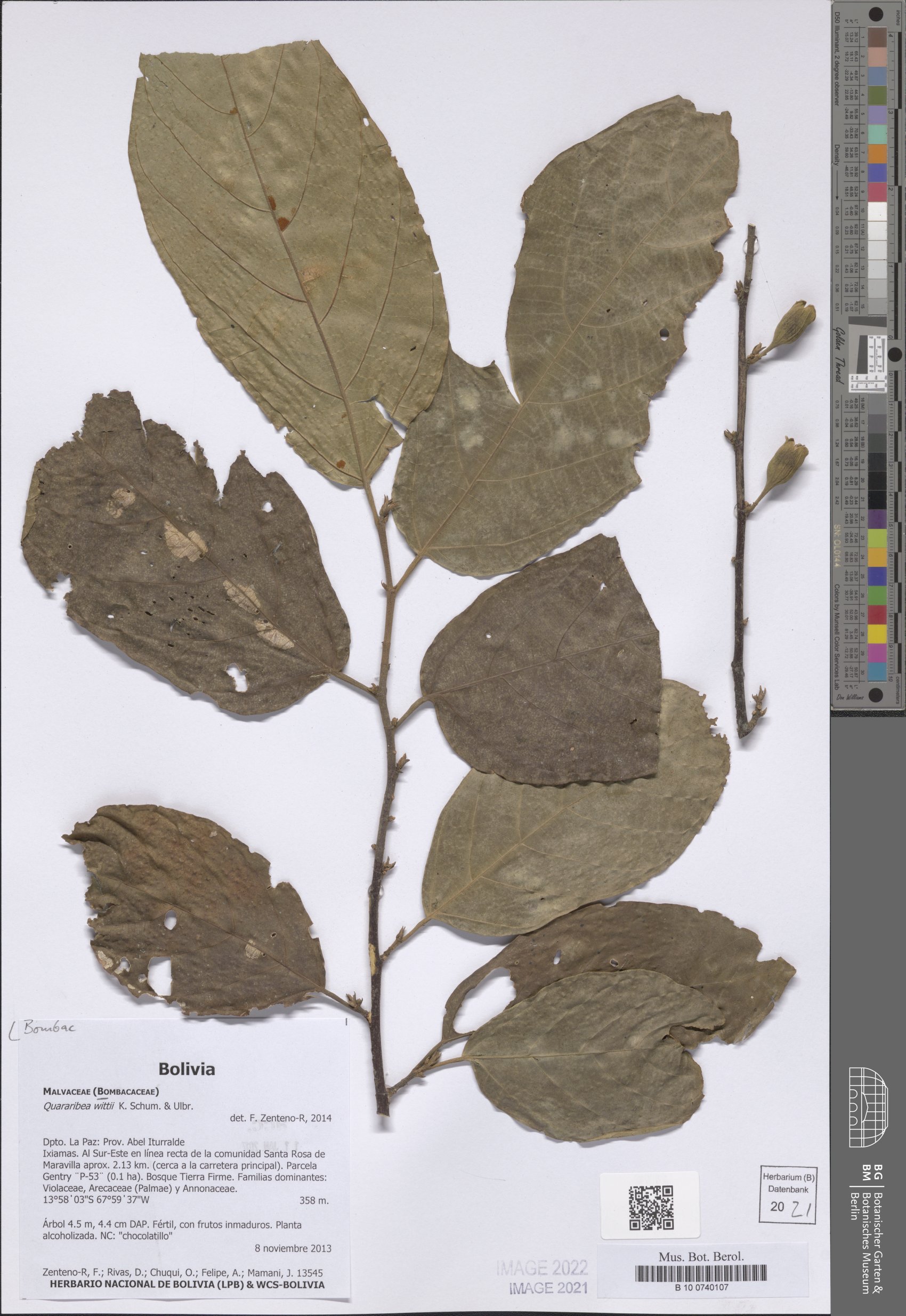
Hibiscus rostellatus
Guill. et Perr.
iNaturalist· cc-by-nc
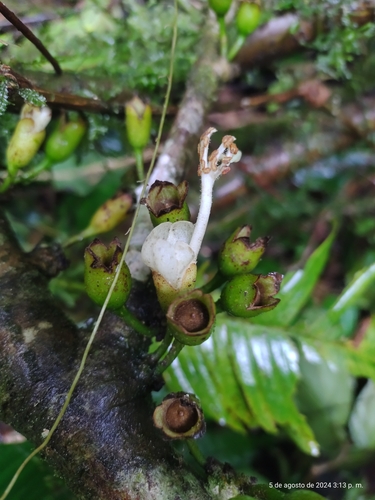
(c) Oliver Haumann, some rights reserved (CC BY-NC), uploaded by Oliver Haumann
iNaturalist· cc-by-nc
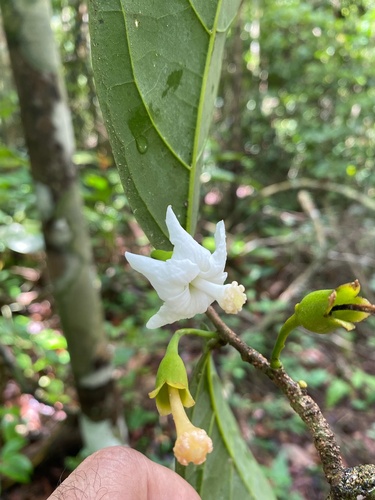
(c) paullatham36, some rights reserved (CC BY-NC)
Summary
Source: WikipediaHibiscus rostellatus is a species of flowering plant in the family Malvaceae, native to seasonally dry tropical Africa. Its fruit is edible, and is cooked and eaten by local peoples.
Description
An erect shrub. It grows 3-5 m high. The stems have bristles. The fruit is a capsule 1 cm high.
This description is brief — help expand it
Edible Uses
The leaves are eaten as a vegetable.
Traditional Uses
The leaves are eaten as a vegetable.
This uses section is brief — help expand it
Medicinal Uses
The leaves are diuretic, hepatic, laxative, pectoral, stomachic, vulnerary. They are used in the treatment of various diseases.
Known Hazards
The foliage often has stinging hairs on it.
Distribution
A tropical plant. It grows as an under-shrub near swamps in forests in Africa. It grows in wet grass savannah.
Where It Grows
Africa, Asia, Burkina Faso, Central Africa, Congo, Ghana, Guinea, Guinée, Guinea-Bissau, India, Indochina, Laos, SE Asia, Senegal, Vietnam, West Africa,
Propagation
Seed - sow in situ or in containers. Germination is usually fairly rapid and no special pretreatment is needed, although germination will be faster if the seed is abraded or soaked prior to sowing. Prick out container-grown seedlings into individual pots when they are large enough to handle and plant them out into their permanent positions when they are 10cm or more tall. Cuttings of half-ripe wood in a frame. They generally strike readily, particularly if cuttings are taken on an angle through a node and rooting hormone is applied to their ends.
Other Uses
The foliage is used to repel reptiles.
Notes
There are about 220 Hibiscus species.
Synonyms
Also Known As
Adavi gogu, Bup che, Dana-cutcha, Danasoni gogu, Gumchi, Huligowri, Kiasi, Konda gogu, Lalon, Nuranampu-puli, Paccapuli, Piri-pirika, Puli
References (17)
- Abbiw, D.K., 1990, Useful Plants of Ghana. West African uses of wild and cultivated plants. Intermediate Technology Publications and the Royal Botanic Gardens, Kew. p 42
- Ambasta, S.P. (Ed.), 2000, The Useful Plants of India. CSIR India. p 266 (As Hibiscus furcatus)
- Burkill, H. M., 1985, The useful plants of west tropical Africa, Vol. 4. Kew.
- A. Guillemin et al., Fl. Seneg. tent. 1:55. 1831
- Dalziel, 1937,
Show all 17 references Hide references
- Enumeratio plantarum 736. 1809 (As Hibiscus furcatus)
- Hedrick, U.P., 1919, (Ed.), Sturtevant's edible plants of the world. p 345 (As Hibiscus furcatus)
- Grubben, G. J. H. and Denton, O. A. (eds), 2004, Plant Resources of Tropical Africa 2. Vegetables. PROTA, Wageningen, Netherlands. p 562
- Jardin, C., 1970, List of Foods Used In Africa, FAO Nutrition Information Document Series No 2.p 81
- Macmillan, H.F. (Revised Barlow, H.S., et al), 1991, Tropical Planting and Gardening. Sixth edition. Malayan Nature Society. Kuala Lumpur. p 356 (As Hibiscus furcatus)
- Martin, F.W. & Ruberte, R.M., 1979, Edible Leaves of the Tropics. Antillian College Press, Mayaguez, Puerto Rico. p 203
- Peters, C. R., O'Brien, E. M., and Drummond, R.B., 1992, Edible Wild plants of Sub-saharan Africa. Kew. p 145
- Pham-Hoang Ho, 1999, An Illustrated Flora of Vietnam. Nha Xuat Ban Tre. p 525 (As Hibiscus furcatus)
- Ramachandran, V.S. and Nair, V.J., 1981, Ethnobotanical studies in Cannanore District, Kerala State (India). J Econ. Tax. Bot. Vol 2 pp 65-72 (As Hibiscus furcatus)
- Singh, H.B., Arora R.K.,1978, Wild edible Plants of India. Indian Council of Agricultural Research, New Delhi. p 26 (As Hibiscus furcatus)
- Terra, G. J. A., 1973, Tropical Vegetables. Communication 54e Royal Tropical Institute, Amsterdam, p 50 (Also as Hibiscus furcatus)
- World Checklist of Useful Plant Species 2020. Royal Botanic Gardens, Kew