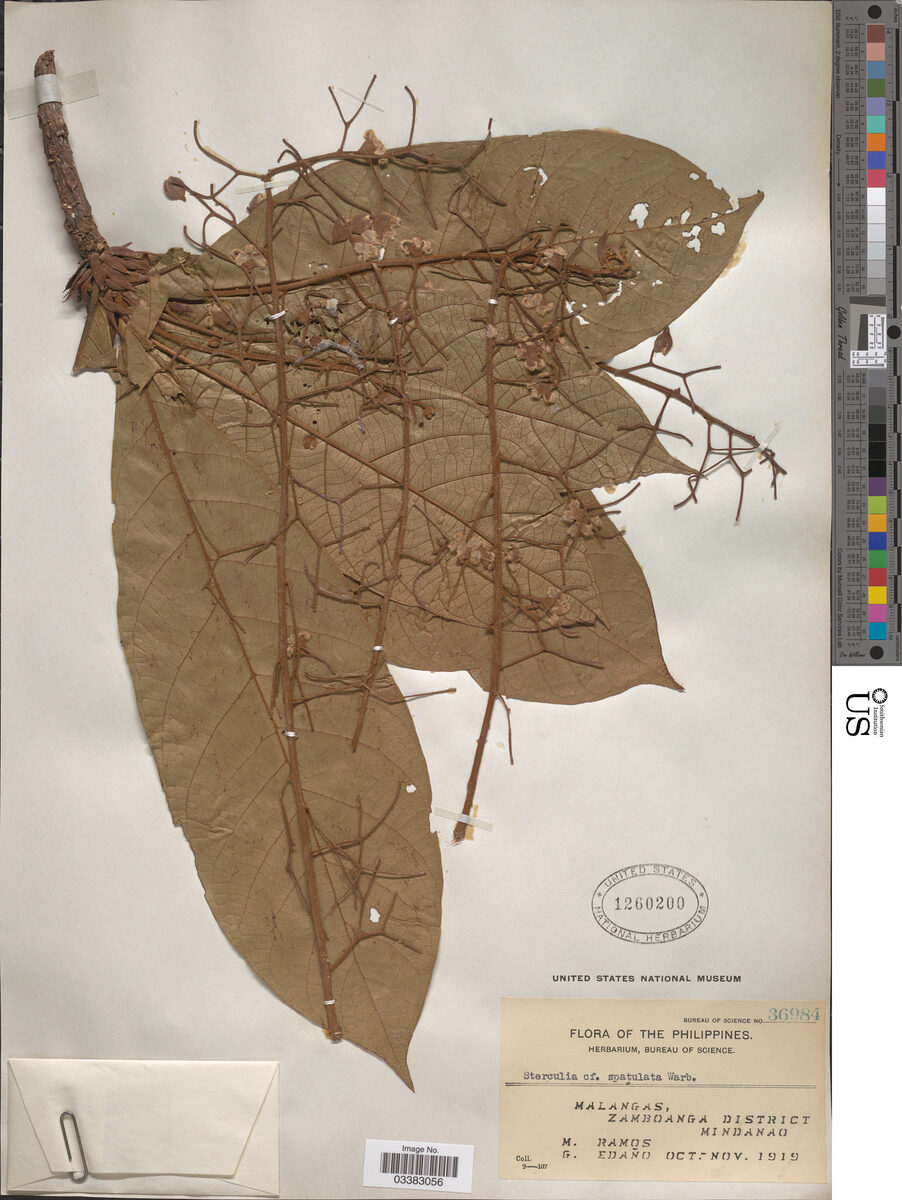
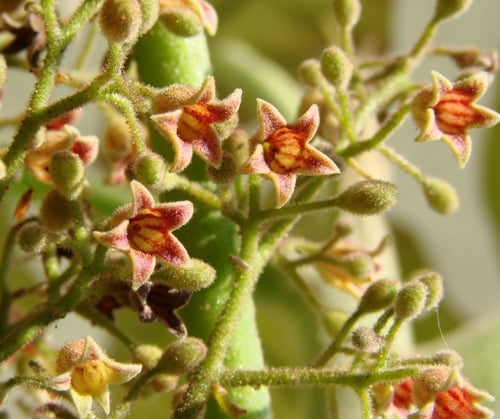
Hibiscus lunariifolius
Willd.
iNaturalist· cc-by-nc
(c) Troos van der Merwe, some rights reserved (CC BY-NC), uploaded by Troos van der Merwe
iNaturalist· cc-by-sa
(c) Nicola van Berkel, some rights reserved (CC BY-SA), uploaded by Nicola van Berkel
Summary
Source: WikipediaHibiscus lunariifolius, the lunaria-leaf hibiscus, is a species of flowering plant in the family Malvaceae, native to India and Sri Lanka, and introduced to quite a number of seasonally dry tropical areas in Africa. It is cultivated in Nigeria for its fiber, a good quality analog of jute.
Description
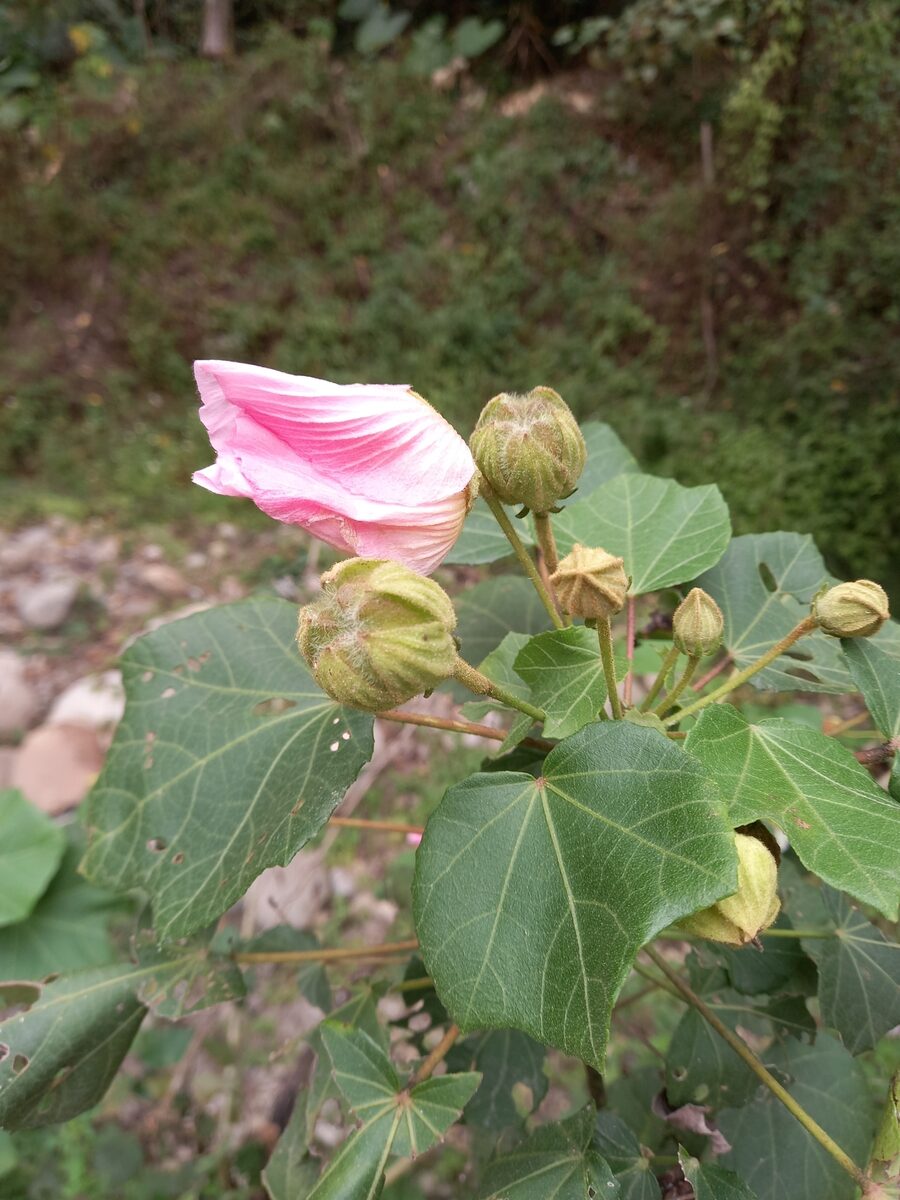
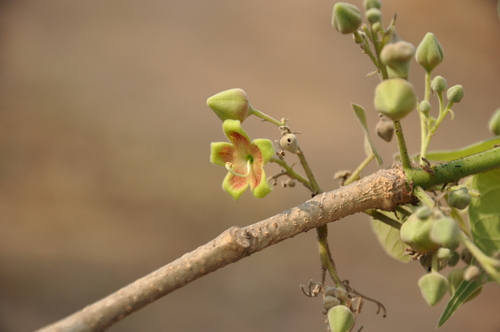
A shrub. It grows 1 m tall. The leaf blade is 10 cm long by 9 cm wide. It is oval and can have 3 lobes. The flowers are large and yellow with a purple centre. They are 3-5 cm across. The leaves and stems have stinging hairs. The fruit is a capsule 15 mm long by 12 mm wide. The seeds are 2.5 mm long and wide.
Edible Uses
The seeds are eaten in soups and the unripe fruit are eaten as a vegetable. The leaves are used in savoury preparations.
Traditional Uses
The seeds are eaten in soups. The unripe fruit are eaten. The leaves are used in savoury preparations.
This uses section is brief — help expand it
Medicinal Uses
The leaves are used topically to treat skin problems and parasitic infections. The stems are used to treat malnutrition and debility.
Distribution
A tropical plant. It grows on hillsides and in rocky places. It can grow in arid places.
Where It Grows
Africa, Asia, Benin, Botswana, Côte d'Ivoire, East Africa, Ethiopia, Ghana, India, Ivory Coast, Jamaica, Kenya, Liberia, Middle East, Myanmar, Nigeria, SE Asia, Sierra Leone, South Africa, Southern Africa, Sri Lanka, Tanzania, Togo, Uganda, West Africa, West Indies, Yemen, Zambia, Zimbabwe,
Propagation
Seed - sow in situ or in containers. Germination is usually fairly rapid and no special pretreatment is needed, although germination will be faster if the seed is abraded or soaked prior to sowing. Prick out container-grown seedlings into individual pots when they are large enough to handle and plant them out into their permanent positions when they are 10cm or more tall. Cuttings of half-ripe wood in a frame. They generally strike readily, particularly if cuttings are taken on an angle through a node and rooting hormone is applied to their ends.
Other Uses
A fibre is obtained from the stem. Of good quality, of similar quality to jute (Corchorus species).
Notes
There are about 220 Hibiscus species.
Synonyms
Also Known As
Antotoron, Baji, Chinbaung-yaing, Gabai, Kattuvedai, Lawun, Pete kuuku, Vendai
References (13)
- Abbiw, D.K., 1990, Useful Plants of Ghana. West African uses of wild and cultivated plants. Intermediate Technology Publications and the Royal Botanic Gardens, Kew. p 42
- Ambasta, S.P. (Ed.), 2000, The Useful Plants of India. CSIR India. p 266
- Arinathan, V., et al, 2007, Wild edibles used by Palliyars of the western Ghats, Tamil Nadu. Indian Journal of Traditional Knowledge. 6(1) pp 163-168
- Burkill, H. M., 1985, The useful plants of west tropical Africa, Vol. 4. Kew.
- Flora Zambesiaca. http://apps.kew.org/efloras
Show all 13 references Hide references
- Goode, P., 1989, Edible Plants of Uganda. FAO p 30
- Grubben, G. J. H. and Denton, O. A. (eds), 2004, Plant Resources of Tropical Africa 2. Vegetables. PROTA, Wageningen, Netherlands. p 562
- Jardin, C., 1970, List of Foods Used In Africa, FAO Nutrition Information Document Series No 2.p 81
- Reis, S. V. and Lipp, F. L., 1982, New Plant Sources for Drugs and Foods from the New York Botanical Garden herbarium. Harvard. p 178
- Royal Botanic Gardens, Kew (1999). Survey of Economic Plants for Arid and Semi-Arid Lands (SEPASAL) database. Published on the Internet; http://www.rbgkew.org.uk/ceb/sepasal/internet [Accessed 3rd May 2011]
- Sarvalingam, A., et al, 2014, Wild edible plant resources used by the Irulas of the Maruthamalai Hills, Southern Western Ghats, Coimbatore, Tamil Nadu. Indian Journal of Natural Products and Resources 5(2):198-201
- Sp. pl. 3(1):811. 1800
- World Checklist of Useful Plant Species 2020. Royal Botanic Gardens, Kew