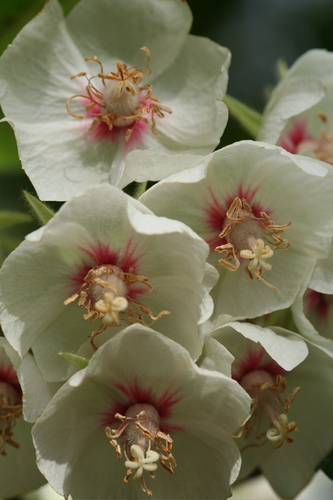
Grewia venusta
Fresen.
iNaturalist· cc-by-nc
(c) AMADOU BAHLEMAN FARID, some rights reserved (CC BY-NC), uploaded by AMADOU BAHLEMAN FARID
iNaturalist· cc-by-nc
(c) AMADOU BAHLEMAN FARID, some rights reserved (CC BY-NC)
Description
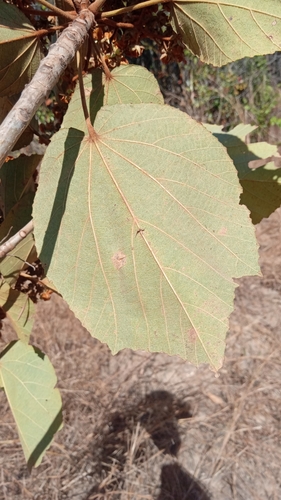
A shrub or small tree. It grows to 6 m high. The trunk is 30 cm across. The bark is rough and black. The leaves are 5-10 cm long by 2-5 cm wide. The leaves vary is shape and hairiness. There are teeth along the edge. The flowers are bright yellow. They are star shaped. They occur in clusters on short stalks in the axils of leaves. The fruit are black when ripe. They are almost round and 7-8 mm across.
Edible Uses
The ripe fruit are eaten fresh. The stems are used in soup. The bark is processed and used in association with fried beans. Leaves and seeds are also edible parts.
Traditional Uses
The ripe fruit are eaten. The stems are used in soup. The bark is processed and used in association with fried beans.
This uses section is brief — help expand it
Distribution
It is a tropical plant. It grows in savannah regions.
Where It Grows
Africa, Burkina Faso, Cameroon, Central Africa, Ghana, Nigeria, Senegal, Togo, West Africa,
Notes
There are about 200 Grewia species. They are mostly tropical. The fruit of most may be edible. These were in the Sparrmanniaceae and the Tiliaceae.
Synonyms
Also Known As
Dargajii, Hwer-za, Ogbolo, Roronchi, Yoal-rataaga
References (8)
- Abbiw, D.K., 1990, Useful Plants of Ghana. West African uses of wild and cultivated plants. Intermediate Technology Publications and the Royal Botanic Gardens, Kew. p 47
- Alyegba, S. S. et al, 2013, Ethnobotanical Survey of Edible Wild Plants in Tiv Communities of Benue State, Nigeria. Journal of Natural Sciences Research. Vol.3, No.7
- Atato, A., et al, 2010, Diversity of Edible Wild Fruit Tree Species of Togo. Global Science Books.
- Batawila, K., et al, 2007, Diversite et gestion des legumes de cueillete au Togo. African Journal of Food, Agriculture, Nutrition and Development 7( 3& 4): 68
- Belem, B., et al, 2007, Use of Non Wood Forest Products by local people bordering the “Parc National Kaboré Tambi”, Burkina Faso. The Journal of Transdisciplinary Environmental Studies vol. 6, no. 1 p 9
Show all 8 references Hide references
- Keay, R.W.J., 1989, Trees of Nigeria. Clarendon Press, Oxford. p 113
- Moksia, F., et al, 2019, Diversity and Socio-Economic Value of Wild Edible Plants in the Mounts Mandara Region, Cameroon. International Journal of Sciences. Vol. 8:10
- Vivien, J., & Faure, J.J., 1996, Fruitiers Sauvages d'Afrique. Especes du Cameroun. CTA p 354