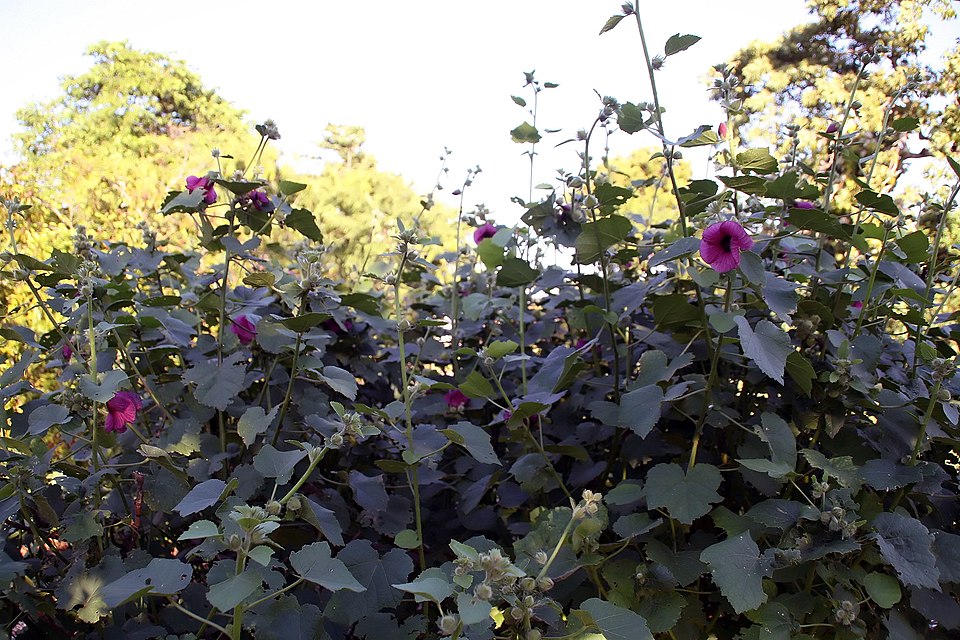
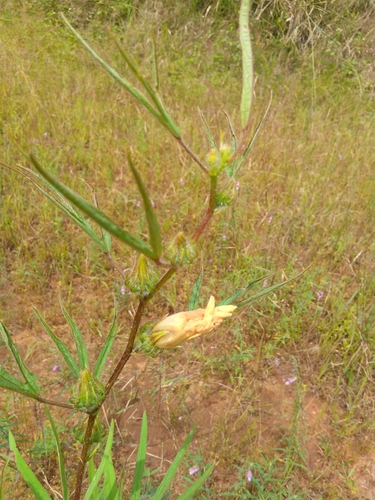
Hibiscus acetosella
Welw. ex Hiern.
Red-leaf hibiscus
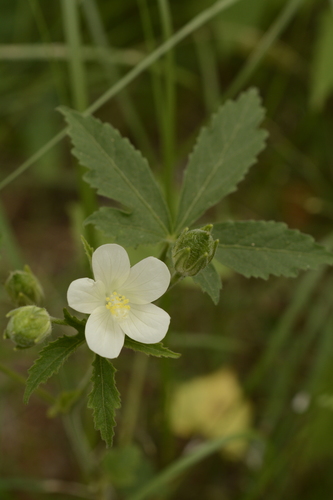
iNaturalist· cc-by-nc
(c) ccaneydunod, some rights reserved (CC BY-NC), uploaded by ccaneydunod
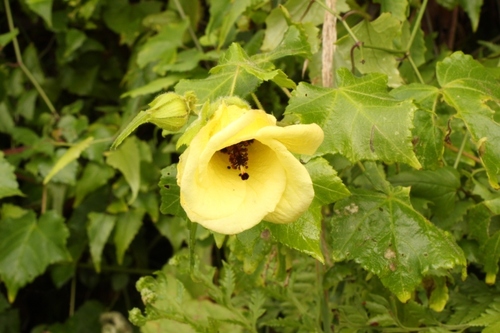
iNaturalist· cc-by-nc-sa
(c) Benjamin J. Dion, some rights reserved (CC BY-NC-SA), uploaded by Benjamin J. Dion
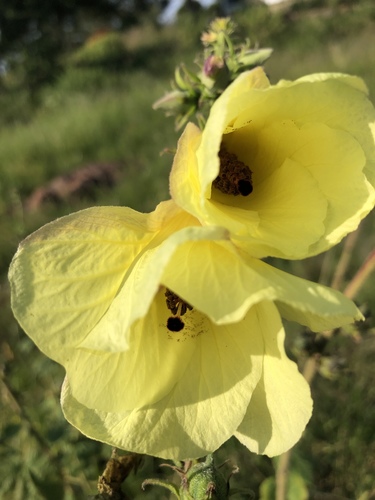
iNaturalist· cc-by-nc
(c) thatplantguy, some rights reserved (CC BY-NC), uploaded by thatplantguy
Summary
Source: WikipediaHibiscus acetosella, the cranberry hibiscus or African rosemallow, is a flowering plant of the family Malvaceae. The epithet acetosella is of Latin origin and is a diminutive of the Latin name for sorrel which comes from the sour taste experienced when eating the young leaves of both plants. Hibiscus acetosella is also known colloquially as false roselle, maroon mallow, red leaved hibiscus, and red shield hibiscus. It is one of the approximately 200–300 species that are seen in sub-tropic and tropic regions. This ornamental is usually found in abandoned fields or open areas, marshes, and forest clearings. Cranberry hibiscus is a member of a perennial group known as hardy hibiscus. In contrast to the tropical hibiscus, hardy hibiscus can tolerate colder conditions, are more vigorous, longer lasting, and have larger flowers. In colder climates, Hibiscus acetosella is easily an annual, but is often regarded as a perennial to zone 8–11. During one season, the plant can grow 90–170 cm (3.0–5.6 ft) tall and 75 cm (30 in) wide as a shrub-subshrub.
Description
An annual plant. It grows 2-5 m high. It has a few hairs. It has leaves growing close to the ground The leaves are shiny and red or green. They are usually deeply lobed. They are 10 cm long. The flowers are pink. They are in the axils of leaves. The fruit are oval and about 2.5 cm long and have bristles. It can be used as a hedge plant.
Edible Uses
Leaves can be eaten raw or cooked. They have an acid, mucilaginous character and can be added to salads or used in soups and stews. Cooked with other foods, they impart a sorrel-like acidity. Yellow-flowered types with green leaves are most popular for cooking, though red-flowered types with dark red leaves are also eaten. Pinkish-brown-leaved decorative types are used in fresh salads for their distinctive sour taste. The red flowers, and possibly the leaves, are occasionally used to make a tea, similar to the use of the red calyces of Hibiscus sabdariffa. The root is edible but very fibrous, with a mucilaginous texture and little flavour.
Traditional Uses
The leaves are eaten raw or cooked. They can be steamed or put into soups and stews. They are often wilted in the sun. The young pods can also be used. The seeds can be roasted and used as a coffee drink. The flower petals are eaten as a drink. The root can be eaten but has little taste and is fibrous.
Medicinal Uses
A leaf infusion in water is used as a post-fever tonic and as a treatment for anaemia. Crushed leaves soaked in cold water produce an infusion used for washing babies and young children suffering from body pains.
Distribution
A tropical plant. It is best in sites sheltered from strong winds. It needs fertile, well-drained soil and full sun. It can grow in arid places. In XTBG Yunnan.
Where It Grows
Africa*, Angola*, Asia, Brazil, Burundi, Cameroon, Central Africa, China, Congo DR, Côte d'Ivoire, Dominican Republic, East Africa, Ethiopia, Hawaii, India, Indonesia, Ivory Coast, Kenya, Malawi, Mozambique, Nigeria, Northeastern India, Pacific, Pan tropical, Rwanda, Sao Tome and Principe, SE Asia, Senegal, Sierra Leone, South Africa, Southern Africa, Sudan, Tanzania, Uganda, USA, West Africa, West Indies, Zambia, Zimbabwe,
Cultivation
Plants are grown from seeds. Seed are planted about 1 cm deep and 1 m apart. It can also be grown by cuttings. It can be grown as a hedge.
Propagation
Sow seed in early spring in a warm greenhouse. Germination is usually quite rapid. Prick seedlings into individual pots when large enough and plant out into permanent positions in early summer, providing some protection until plants are well established. An outdoor sowing in situ during April may work, though plants may not flower or set seed in a cool summer. Cuttings are easy to take.
Other Uses
The plant is grown as a hedge in food gardens, serving as both a food source and a barrier. The cultivar 'Red Shield' is particularly well suited as a hedge plant. It is highly resistant to root-knot nematodes, making it an excellent crop to follow tomatoes or other solanaceous vegetables affected by nematodes. The flowers are rich in nectar and pollen, attracting bees, butterflies, and other pollinators. Leaves and seeds can serve as food for wildlife, and the dense foliage offers some habitat for beneficial insects and contributes to leaf litter that may shelter invertebrates.
Production
By pruning as a hedge, large amounts of leaves can be produced in a small space. The leaves are usually collected in the rainy season. Young leaves are plucked from the plant.
Other Information
It is a commercially cultivated vegetable. It is a popular leafy green. It is grown as a vegetable in Angola. Leaves are sold in local markets.
Notes
There are about 220 Hibiscus species. It is resistant to root knot nematode.
Nutrition
| Part | Moisture | kJ | kcal | Protein | Vit A | Vit C | Iron | Zinc |
|---|---|---|---|---|---|---|---|---|
| Leaves | — | — | — | 78 | — | — | — | — |
Synonyms
Also Known As
Alagi, Asam susur, Damudamu, False roselle, Gamet, Gwali, Gwanya, Kembang sepatu afrika, Kololwe, Limanda, Linyololo, Lumaka, Lumanda, Makawang kulo, Ngaingai, Nsa bwaki, Som kop, Thakhlao maikhri gajao, Usse
References (39)
- Acipa, A. et al, 2013, Nutritional Profile of some Selected Food Plants of Otwal and Ngai Counties, Oyam District, Northern Uganda. African Journal or Food, Agriculture, Nutrition and Development. 13(2)
- Agea, J. G., et al 2011, Wild and Semi-wild Food Plants of Bunyoro-Kitara Kingdom of Uganda: etc. Environmental Research Journal 5(2) 74-86
- Andabati, B., & Muyonga, J., 2014, Phenolic content and antioxidant activity of selected Ugandian traditional medicinal foods. African Journal of Food Science. 8(8), pp 427-434
- Arora, R. K., 2014, Diversity in Underutilized Plant Species - An Asia-Pacific Perspective. Bioversity International. p 41
- Brickell, C. (Ed.), 1999, The Royal Horticultural Society A-Z Encyclopedia of Garden Plants. Convent Garden Books. p 521
Show all 39 references Hide references
- Burkill, H. M., 1985, The useful plants of west tropical Africa, Vol. 4. Kew.
- Cat. afr. pl. 1:73. 1896 (Welw. ex Ficalho, Bol. Soc. Geogr. Lisb. 2:608. 1881, nom. nudum)
- Edwards. S., et al, (Eds), 1995, Flora of Ethiopia and Eritrea. Vol.2, Part 2 Canellaceae to Euphorbiaceae. Uppsala, Sweden. p 162
- Facciola, S., 1998, Cornucopia 2: a Source Book of Edible Plants. Kampong Publications, p 147
- Food Composition Tables for use in Africa FAO http://www.fao.org/infoods/directory No. 690
- Fowler, D. G., 2007, Zambian Plants: Their Vernacular Names and Uses. Kew. p 45
- Fox, F. W. & Young, M. E. N., 1982, Food from the Veld. Delta Books. p 261
- Godfrey, J. et al, 2013, Harvesting, preparationand preservation of commonly consumed wild and semi-wild food plants in Bunyoro-Kitara Kingdom, Uganda. Int. J. Med. Arom. Plants. Vol.3 No.2 pp 262-282
- Goode, P., 1989, Edible Plants of Uganda. FAO p 39
- Grubben, G. J. H. and Denton, O. A. (eds), 2004, Plant Resources of Tropical Africa 2. Vegetables. PROTA, Wageningen, Netherlands. p 312
- Jardin, C., 1970, List of Foods Used In Africa, FAO Nutrition Information Document Series No 2.p 81
- Kays, S. J., and Dias, J. C. S., 1995, Common Names of Commercially Cultivated Vegetables of the World in 15 languages. Economic Botany, Vol. 49, No. 2, pp. 115-152
- Koni, J. & Bostoen, K., 2008, Noms et usages des plantes utiles chez les Nsong. (RD Congo, Bandundu, bantu B85F). University of Gothenburg
- Latham, P., 2004, Useful Plants of Bas-Congo province. Salvation Army & DFID p 148
- Lautenschläger, T., et al, 2018, First large-scale ethnobotanical survey in the province of Uíge, northern Angola. Journal of Ethnobiology and Ethnomedicine (2018) 14:51
- Martin, F.W., & Ruberte, R.M., 1979, Edible Leaves of the Tropics. Antillian College Press, Mayaguez, Puerto Rico. p 37, 203
- Martin, F.W. & Ruberte, R.M., 1979, Edible Leaves of the Tropics. Antillian College Press, Mayaguez, Puerto Rico. p 203 (As Hibiscus eetveldianis)
- Medhi, P. & Borthakur, S. K., 2012, Phytoresources from North Cachur Hills of Assam -3: Edible plants sold at Hflong market. Indian Journal or Natural Products and Resources. 3(1) pp 84-109
- Ojelel, S., et al, 2019, Wild edible plants used by communities in and around selected forest reserves of Teso-Karamoja region, Uganda. Journal of Ethnobiology and Ethnomedicine (2019) 15:3
- Peters, C. R., O'Brien, E. M., and Drummond, R.B., 1992, Edible Wild plants of Sub-saharan Africa. Kew. p 144
- Plants for a Future database, The Field, Penpol, Lostwithiel, Cornwall, PL22 0NG, UK. http://www.scs.leeds.ac.uk/pfaf/
- Plowes, N. J. & Taylor, F. W., 1997, The Processing of Indigenous Fruits and other Wildfoods of Southern Africa. in Smartt, L. & Haq. (Eds) Domestication, Production and Utilization of New Crops. ICUC p 184 (As Abelmoschus acetosella)
- PROSEA handbook Volume 13 Spices. p 277
- Royal Botanic Gardens, Kew (1999). Survey of Economic Plants for Arid and Semi-Arid Lands (SEPASAL) database. Published on the Internet; http://www.rbgkew.org.uk/ceb/sepasal/internet [Accessed 3rd May 2011]
- Schippers, R.R., 2004. Hibiscus acetosella Welw. ex Hiern. [Internet] Record from Protabase. Grubben, G.J.H. & Denton, O.A. (Editors). PROTA (Plant Resources of Tropical Africa), Wageningen, Netherlands. < http://database.prota.org/search.htm>. Accessed 16 October 2009.
- Sukarya, D. G., (Ed.) 2013, 3,500 Plant Species of the Botanic Gardens of Indonesia. LIPI p 640
- Terashima, H., & Ichikawa, M., 2003, A comparative ethnobotany of the Mbuti and Efe hunter-gatherers in the Ituri Forest, Democratic Republic of Congo. African Study Monographs, 24 (1, 2): 1-168, March 2003
- Terra, G. J. A., 1973, Tropical Vegetables. Communication 54e Royal Tropical Institute, Amsterdam, p 50
- Termote, C., et al, 2011, Eating from the wild: Turumbu, Mbole and Bali traditional knowledge of non-cultivated edible plants, District Tshopo, DRCongo, Gen Resourc Crop Evol. 58:585-618
- Terra, G. J. A., 1973, Tropical Vegetables. Communication 54e Royal Tropical Institute, Amsterdam, p 50 (As Hibiscus eetveldianis)
- USDA, ARS, National Genetic Resources Program. Germplasm Resources Information Network - (GRIN). [Online Database] National Germplasm Resources Laboratory, Beltsville, Maryland. Available: www.ars-grin.gov/cgi-bin/npgs/html/econ.pl (10 April 2000)
- Wiersema, J. H. & Leon, B., 2013, World Economic Plants. A Standard Reference CRC Press. 2nd Ed. p 348
- Williamson, J., 2005, Useful Plants of Malawi. 3rd. Edition. Mdadzi Book Trust. p 130
- World Checklist of Useful Plant Species 2020. Royal Botanic Gardens, Kew