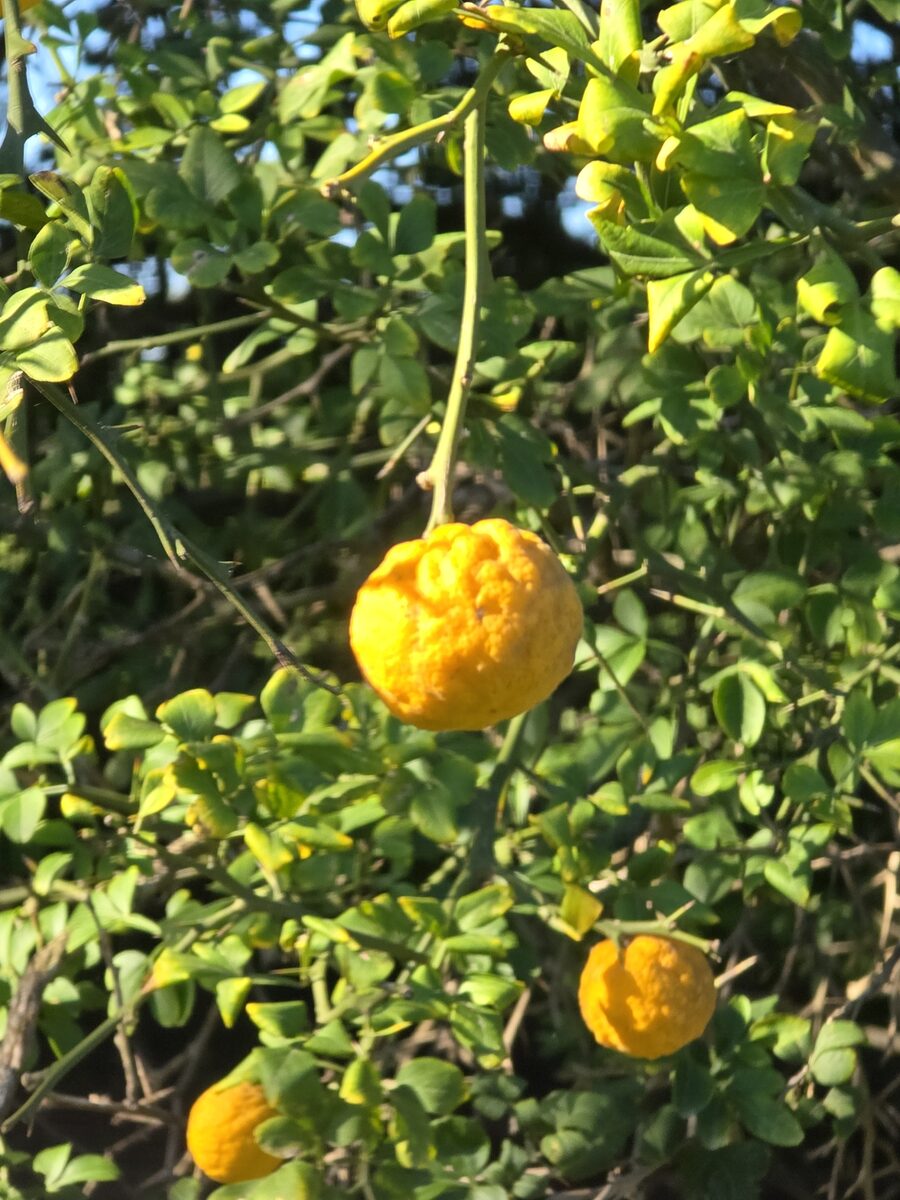
Hesperethusa crenulata
(Roxb.) M. Roem.
Hesperethusa
wikimedia· cc-by-sa
Wikimedia Commons - Ansel Jean-Luc
wikimedia· cc-by
Wikimedia Commons - Vijay Barve
Description
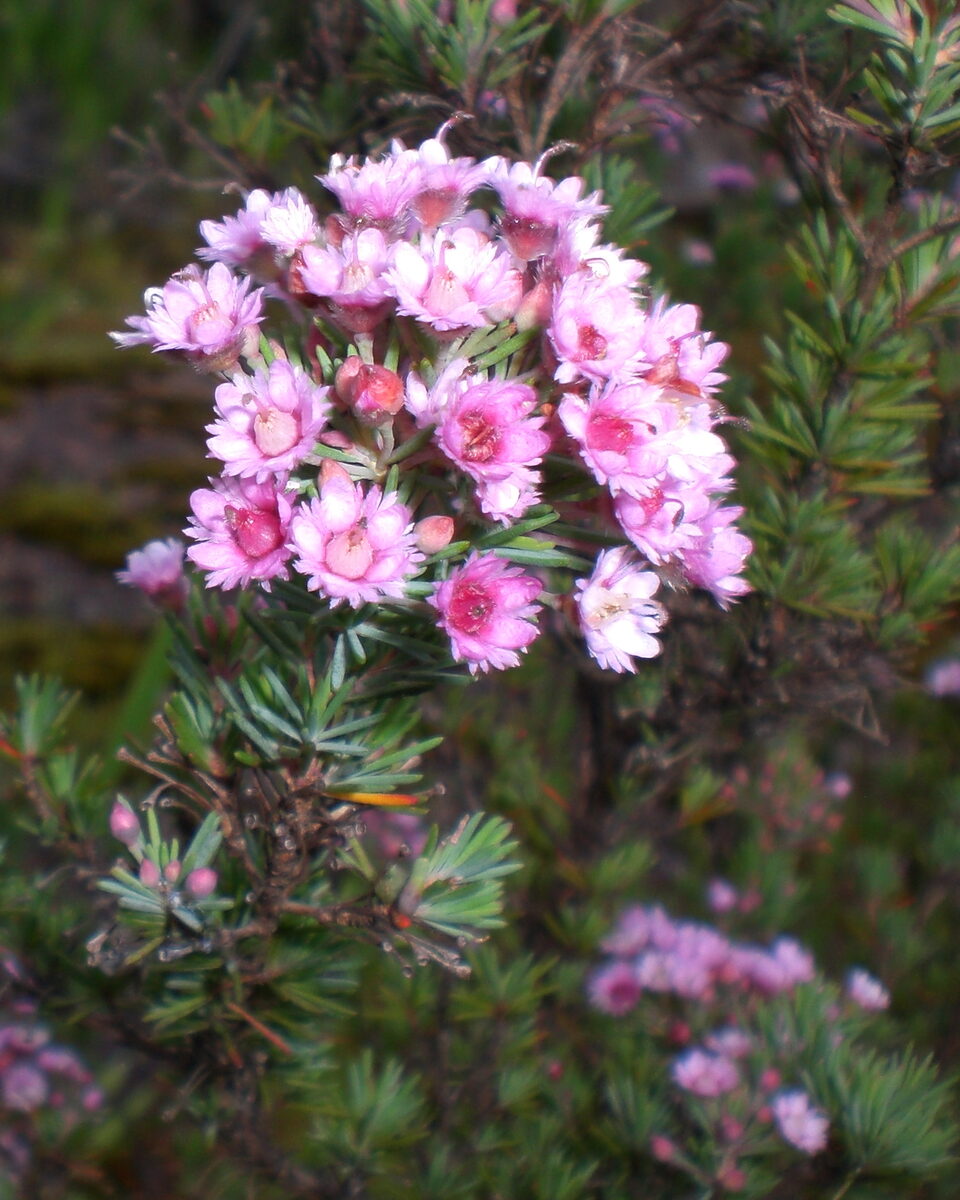
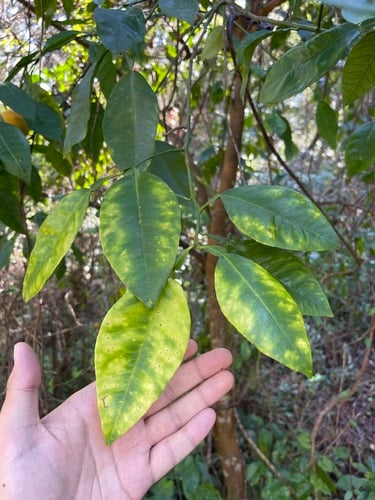
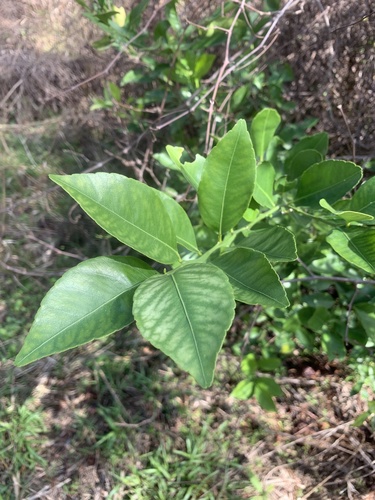
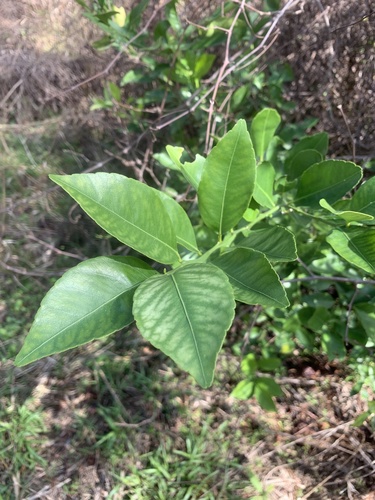
A small tree. It grows 7-9 m tall. It has spines. They are straight and 2 cm long. The leaves have leaflets along the stalk and one at the end. There are 2-3 pairs of leaflets 3-5 cm long by 1-3 cm wide. They are dotted with glands. They are wavy along the edge. The flowers are in groups of a few flowers in the axils of leaves. There are 4 white petals and they have a scent. The fruit is round and has 1-3 seeds.
Edible Uses
The fruit is used to make a fruit juice with astringent properties and jams. Ripe fruit can be used as a pickle (mashed with green chili pepper, sugar and salt only). In some parts of India, mainly Gujarat, the fruit pulp is used to make chutney, which is then used as a main condiment in and on top of meals, especially in winter. The wood apple is ubiquitous in Tamil Nadu, where the ripe fruit is eaten mixed with sugar or another sweetener. The name of the wood apple (vilam) is used as the canonical example of a two-syllable prosodic foot in traditional Tamil song. In Myanmar, the wood is used to make the distinctive local face cream thanaka.
Traditional Uses
The fruit is acidic and eaten. They are cooked and used for flavouring. They are eaten with fish and meat dishes.
This uses section is brief — help expand it
Distribution
A tropical plant. A light demanding tree. It grows in high mountains. It is in dense and wet secondary forest. It occurs between 600-900 m altitude. It also grows on dry hills.
Where It Grows
Asia, Cambodia, China, India, Indochina, Indonesia, Laos, Myanmar, Pakistan, SE Asia, Thailand, Vietnam,
Other Information
It is a cultivated food plant.
Synonyms
Also Known As
Beli, Belsian, Bhenta, Chanh coe, Che, Coe tum, Kara, Kattunarakan, Keiri, Naringi, Nayibullal, Nayvila, Ranlimbu, Sansph-ka, Thanaka, Thi-ha-yaza, Tondsha, Tor-elaga
References (4)
- Ambasta, S.P. (Ed.), 2000, The Useful Plants of India. CSIR India. p 264
- Forest Inventory and Planning Institute, 1996, Vietnam Forest Trees. Agriculture Publishing House p 638
- Martin, F. W., et al, 1987, Perennial Edible Fruits of the Tropics. USDA Handbook 642 p 74
- Seidemann J., 2005, World Spice Plants. Economic Usage, Botany, Taxonomy. Springer. p 176